
Saudi Arabia has emphasized that safeguarding navigation in the Strait of Hormuz represents a collective international responsibility, warning that unprecedented tension now threatens this vital waterway.
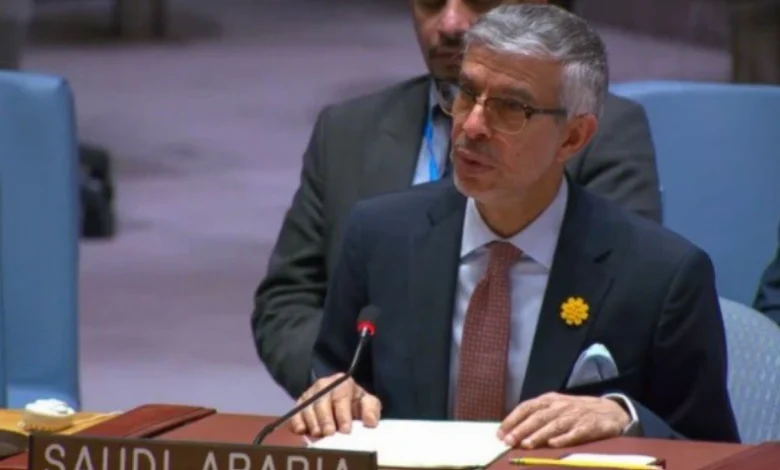
Saudi Permanent Representative to the UN, Dr. Abdulaziz Al-Wasel, addressed the UN Security Council on Monday regarding these developments, noting that recent escalations in the Gulf reflect a serious threat to a route critical to the global economy.
Impact on Global Stability
Al-Wasel stressed that any threat to freedom of navigation in the Strait of Hormuz directly impacts energy markets and stability. Furthermore, these disruptions jeopardize global supply chains and international economic security, requiring a unified stance from the entire international community.
Consequently, he reiterated Saudi Arabia’s call for the Security Council to explicitly condemn Iranian attacks targeting the Kingdom’s sovereign lands. The envoy also urged all parties to respect state sovereignty and adhere strictly to the fundamental principle of good neighborliness. He emphasized that nations must refrain from the use or threat of force to ensure regional peace and safety.
Al-Wasel called for firm measures to address Iranian violations and emphasized the need to secure all critical maritime trade routes. These routes remain essential for the steady flow of energy, food, and medical supplies to populations across the entire globe.
However, the envoy expressed deep regret that the Security Council failed to pass a resolution specifically addressing the Hormuz situation. He warned that threats to maritime navigation constitute a direct and immediate risk to international peace and long-term security.
A Path Toward Diplomacy
Saudi Arabia also condemned any actions or threats aimed at disrupting navigation in the Strait of Hormuz or Bab al-Mandab. The Kingdom maintains that international maritime law must govern and preserve the freedom of navigation for all peaceful trading vessels.
Moreover, Al-Wasel reaffirmed the Kingdom’s support for regional efforts to end the conflict and reduce these growing maritime tensions. Saudi Arabia continues to support mediation initiatives led by friendly nations and United Nations efforts to reach a peaceful resolution. Specifically, he voiced support for Pakistani-led mediation efforts aimed at achieving a lasting agreement that addresses root causes of instability.
“The dialogue and diplomacy remain the only path to achieving sustainable security and stability,” Al-Wasel told the gathered council.
Finally, he called on Iran to comply with international obligations and adhere to relevant Security Council resolutions, including Resolution 2817. This resolution specifically condemns threats to regional security and demands the protection of international navigation in all vital maritime zones.