Sudan Conflict: Drone Attack Targets Aid Truck amid Escalating Food Insecurity
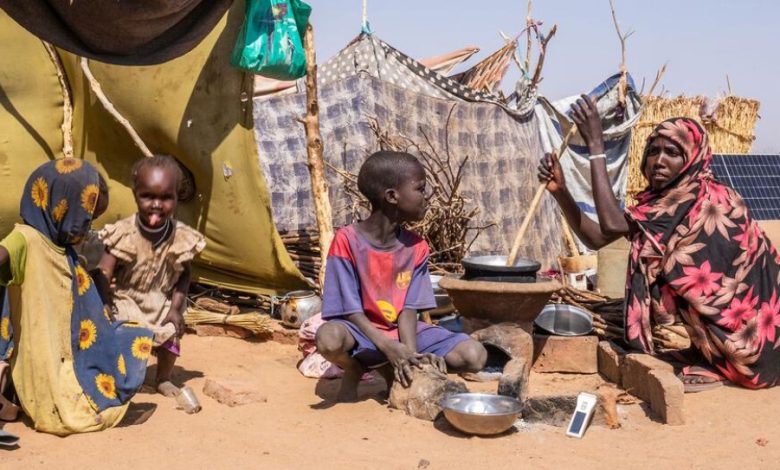
The UN Refugee Agency (UNHCR) condemned a drone attack that hit an aid truck in Sudan’s North Darfur, destroying supplies heading for more than 1,300 families in Tawila.
The attacks on aid deliveries further exacerbate an already dire humanitarian situation in Sudan as a new FAO assessment warned of an escalating food and livelihood crisis amid a sharp decline in cereal production.
Aid Truck Attack
The UNHCR said on Sunday that a drone attack targeted a truck loaded with relief items, including emergency shelter kits, in North Darfur on Friday while on its way to Tawila – shelter for over 700,000 displaced people who fled the fighting in other areas of Darfur.
The driver managed to escape the attack unhurt but the ensuing fire destroyed all the supplies, the UNHCR said in a statement.
Condemning the attack, the UN refugee agency said that this will “leave 1,314 families living in desperate conditions in Tawila without shelter.” However, the statement did not elaborate who was responsible for the attack.
“Attacks against aid convoys and facilities during armed conflict are always unacceptable. At a time when humanitarian partners are struggling to meet the immense needs of the civilian population in Sudan, the recurrent attacks on aid convoys and facilities in the past few months are particularly abhorrent,” the statement noted.
Increased Use of Drones
The UNHCR’s statement voiced “deep concern” over the sharp increase in the use of drones in the Sudan conflict since the start of 2026, which killed hundreds of civilians.
In mid-April, as the war hit its three-year mark, the UN Under-Secretary-General for Humanitarian Affairs and Emergency Relief Coordinator, Tom Fletcher, warned of a sharp rise in the use of unmanned aerial vehicles (UAVs) in the conflict.
“In the first three months of this year, nearly 700 civilians were reportedly killed in drone strikes,” he said in a statement.
Similarly, the Spokesperson for the UN High Commissioner for Human Rights, Marta Hurtado, issued a similar warning in March, pointing out that the Kordofan region – which has become the war’s main battleground – is subject to a heightened drone activity.
Acute Food Insecurity
In a recent assessment, the UN Food and Agriculture Organization (FAO) warned that a sharp decline in cereal production threatens to further exacerbate food insecurity across Sudan.
This reduction in cereal production – estimated at 22% compared to last year – is driven by the ongoing conflict, rising agricultural input costs, and disruptions to livelihoods and markets.
As a result, the assessment warned that 28.9 million people (about 61.7% of Sudan’s population) are facing acute food insecurity and are in urgent need of food and livelihood assistance. This figure includes an estimated 10.2 million people enduring severe food insecurity, particularly in Greater Darfur and South Kordofan.
The World Food Program (WFP) warned that the war in Sudan has left about 34 million people in need of aid, with nearly two in five struggle with acute or worse food insecurity. It said that more than 19 million people are facing acute hunger as famine continues to spread across Sudan.
In November 2025, the UN-backed Integrated Food Security Phase Classification (IPC) declared famine in Darfur’s El-Fasher and South Kordofan’s Kadugli. It also warned in early 2026 that famine was spreading across the Darfur region and threatens the greater Kordofan region.
Sudan War
The war in Sudan broke out in April 2023 between the Sudanese Armed Forces (SAF) and the paramilitary Rapid Support Forces (RSF), triggering what the UN called “the world’s largest humanitarian and displacement crisis.”
Recent data show that the conflict has killed at least 59,000 people and left around 11,000 people missing. It has also displaced 14 million people in Sudan and neighboring countries.
Furthermore, UN agencies concluded that the RSF committed “acts of genocide” and “widespread atrocities that amount to war crimes and possible crimes against humanity” during its takeover of El-Fasher, the capital city of North Darfur state.