New Research Uncovers HIV–Heart Disease Connection
In the heart of Nashville, Tennessee, at Meharry Medical College, a senior scientist in the Infectious Disease Division, Dr. Prem Prakash, is spearheading a scientific revolution that could reshape health outcomes for millions across Africa.
With a sharp focus on virology, immunology, and the comorbidities of HIV, his recent publications are shedding critical light on the intertwined epidemics of HIV/AIDS and cardiovascular diseases (CVD).
Published in top-tier journals such as Circulation Research, The Journal of the American College of Cardiology, and The Lancet, this work not only maps the global burden of these conditions but also uncovers mechanisms and environmental factors that exacerbate them – particularly in populations of African ancestry.
It holds profound implications for public health policies in African countries, with a special spotlight on Egypt, where rising CVD rates among people living with HIV (PLWH) intersect with unique environmental challenges.
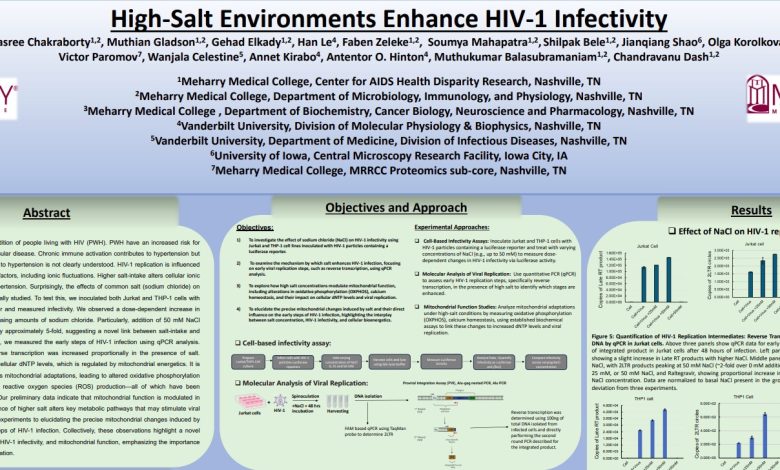
The research begins with a first-authored review in Circulation Research, titled “HIV-Associated Hypertension: Risks, Mechanisms, and Knowledge Gaps.”
This comprehensive piece details how HIV-1, the virus responsible for AIDS, has claimed approximately 40 million lives since the epidemic’s onset, with more than 39 million people currently infected globally.
The virus primarily targets CD4+ T cells, leading to their progressive depletion through mechanisms such as activation-induced cell death, viral cytopathic effects, and pyroptosis in uninfected cells.
While antiretroviral therapy (ART) has dramatically improved survival rates – preventing AIDS-related deaths and transforming HIV into a chronic condition – it has revealed a new threat: a heightened incidence of non-AIDS comorbidities, including cardiovascular diseases such as hypertension.
The review emphasizes that chronic immune activation and inflammation in PLWH contribute to vascular damage, elevating the risk of high blood pressure.
Key environmental factors, such as dietary sodium chloride, are highlighted as amplifiers of this risk, with calls to address knowledge gaps in post-ART hypertension pathways.
“Our findings underscore that HIV doesn’t stop at immune suppression—it triggers systemic inflammation that indirectly impacts heart health,” Dr. Prakash stated, stressing the need for integrated therapeutic strategies.
Expanding this work to a global scale, Dr. Prakash also contributed to the pivotal study “Global, Regional, and National Burden of Cardiovascular Diseases and Risk Factors in 204 Countries and Territories, 1990–2023,” published in The Journal of the American College of Cardiology.
This landmark study, part of the Global Burden of Disease (GBD) 2023 collaboration, reveals that CVDs remain the leading cause of death and disability worldwide, accounting for 437 million disability-adjusted life years (DALYs) in 2023 – a staggering 1.4-fold increase from 320 million in 1990.
The analysis examines 18 CVD subtypes and 12 modifiable risk factors, attributing 79.6% of the burden to elements such as high systolic blood pressure, dietary risks, high LDL cholesterol, and air pollution.
Population growth and aging are identified as primary drivers, contributing an additional 128 million and 139 million DALYs, respectively, since 1990.
Notably, the highest age-standardized CVD DALY rates persist in low- and lower-middle Socio-demographic Index (SDI) regions, including much of Africa, where metabolic risks – such as high body mass index and elevated fasting plasma glucose – are on the rise. This work ensures a nuanced understanding of how these trends disproportionately affect developing nations, where inadequate control of modifiable risks widens health disparities.
Complementing this is a contribution to “Global, Regional, and National Burden of HIV/AIDS, 1990–2021, and Forecasts to 2050” in The Lancet, which projects a sobering future unless interventions intensify.
From 1990 to 2021, new HIV infections decreased by 21.9%, yet the absolute number remains alarming: 1.3 million in 2021 alone. Mortality declined by 39.7% but still claimed 630,000 lives.
Sub-Saharan Africa, home to 29.5 million PLWH, bears the heaviest burden, accounting for 73% of global infections in 2021.
The study predicts that without sustained efforts, HIV incidence could plateau and mortality reductions may stall by 2050. This work contributes to modeling age-specific mortality and incidence, emphasizing that while ART extends life, it must be paired with strategies to combat emerging comorbidities such as CVD.
What makes this body of work truly transformative is its synthesis of these elements: HIV accelerates CVD through chronic inflammation and immune dysregulation, while environmental factors – such as air pollution, high-sodium diets, and metabolic stressors – compound the risks, especially in African populations.
It identifies critical knowledge gaps, including the precise pathways linking HIV to hypertension and the role of genetic predispositions in populations of African ancestry.
By correlating global data with regional trends, the research provides evidence-based recommendations for holistic care, urging the integration of CVD screening into HIV management programs.
Collaborating closely on this work is Dr. Gehad Elkady, a Ph.D. virologist and Egyptian citizen whose expertise in viral dynamics has enriched ongoing research on environmental influences affecting AIDS patients of African descent.
Dr. Elkady’s contributions have been instrumental in exploring how factors such as urban air pollution and dietary patterns interact with HIV to worsen CVD outcomes.
“Gehad’s firsthand knowledge from Egypt has bridged theoretical research with practical applications, allowing us to tailor insights for African contexts,” Dr. Prakash noted.
Their joint efforts aim to benefit millions by informing targeted interventions that address these environmental amplifiers.
For Egypt, this research offers a blueprint for policy reform. With an estimated 30,000 PLWH and CVD responsible for over 40% of national deaths, the country faces a growing comorbidity crisis amplified by environmental risks. High dietary sodium- prevalent in traditional Egyptian cuisine – aligns with findings on salt’s role in HIV-associated hypertension.
Air pollution in cities like Cairo, a key risk factor identified in the GBD study, further elevates CVD burden among PLWH.
Egyptian policymakers, particularly within the Ministry of Health and Population, could integrate these insights into the National AIDS Program by mandating routine cardiovascular assessments for HIV patients, promoting low-sodium public health campaigns, and enforcing stricter environmental regulations to reduce pollution exposure.
Such measures could significantly lower DALYs, improve quality of life, and align with global goals to reduce HIV and CVD burdens by 2050.
As projections warn, without action Egypt risks sustained high incidence rates; however, this research empowers proactive strategies to avert that trajectory.
Dr. Prakash’s pioneering efforts from the state of Tennessee in the United States are more than academic – they are a catalyst for change, equipping African nations like Egypt with the tools to combat dual epidemics.
By highlighting mechanisms, risks, and solutions, these publications pave the way for policies that save lives and foster healthier societies.
As collaborations with experts like Dr. Elkady continue, the future looks increasingly promising for people living with HIV across the continent.
Deadly HIV-Heart Disease Connection, Delivering Crucial
Insights for Africa and Egypt