By: Magdy Sadek
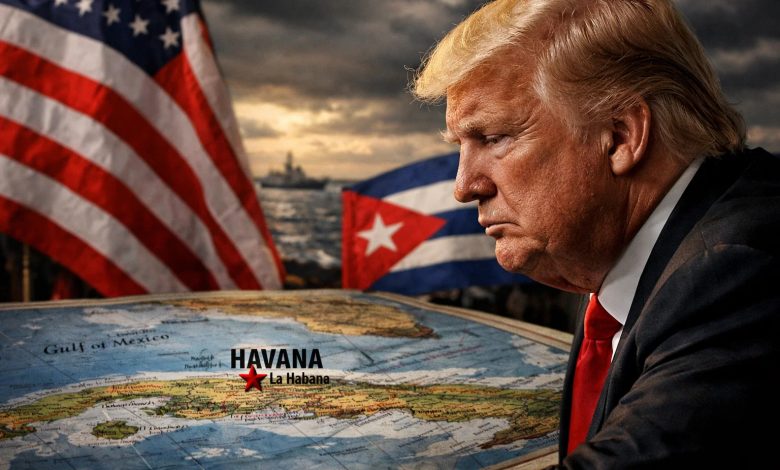
It appears that Cuba may be the next file on U.S. President Donald Trump’s desk following the Iranian crisis, especially as preparations for such a move seem to have begun before the escalation of the American-Israeli-Iranian conflict.
Observers believe the Venezuelan scenario — which ended with Nicolás Maduro’s removal and transfer to Washington — could be repeated in Cuba, with some modifications, targeting former Cuban President Raúl Castro, brother of revolutionary leader Fidel Castro, who led the uprising that ended American dominance over the island.
Cuba Is Next
Trump has repeatedly declared that “Cuba is next,” hinting at several possible options.
In a major escalation on May 20, 2026, the U.S. Department of Justice announced criminal charges against former Cuban President Raúl Castro, 94, accusing him of involvement in the killing of American citizens following the 1996 downing of two civilian planes belonging to the Miami-based exile group “Brothers to the Rescue.”
Washington also accuses Havana of sheltering organizations classified by the U.S. as terrorist groups, including Hamas and Hezbollah, while refusing intelligence cooperation and rejecting undocumented Cuban migrants deported from the United States. More than 850,000 Cuban migrants have headed to America in recent years.
Legal Cover for Escalation
Experts believe the indictment provides legal and political cover for possible U.S. action similar to what Washington pursued in Venezuela in January 2026, when Maduro was removed from power.
Unlike the rapid military intervention seen in Caracas, however, the strategy toward Cuba appears focused on economic pressure and intelligence operations.
The move comes as Cuba faces one of the worst energy crises in its modern history after losing Venezuelan oil supplies following Washington’s growing influence in Caracas.
Decades of Confrontation
Since Fidel Castro overthrew the pro-American Batista regime in 1959, the United States has maintained a sweeping economic embargo on Cuba.
The collapse of the Soviet Union in the early 1990s deepened Cuba’s economic isolation, pushing the island into the severe crisis known as the “Special Period.”
Over the decades, the Cuban regime transformed the U.S. embargo — known locally as el bloqueo — into a political tool, using it to justify economic hardship and portray opponents as agents of Washington.
At the same time, military efforts to overthrow the regime repeatedly failed, from the Bay of Pigs invasion in 1961 to numerous assassination attempts against Fidel Castro, who reportedly survived 638 plots during his rule.
Strategic Alliances
Realizing it could not survive alone against the United States, Cuba built strategic alliances with Venezuela, Russia, and China.
Through the ALBA alliance with Hugo Chávez, Cuba received heavily subsidized Venezuelan oil in exchange for doctors and security advisers sent to Caracas.
But Maduro’s fall in early 2026 cut off a vital economic lifeline for Havana, worsening blackouts, inflation, and shortages across the island.
Trump has since imposed punitive tariffs on countries supplying oil to Cuba and introduced new sanctions targeting senior Cuban military officials and GAESA, the military conglomerate that controls large parts of the Cuban economy.
Monroe Doctrine Revisited
The Trump administration has effectively revived the Monroe Doctrine under the slogan “America for Americans,” aiming to restore U.S. dominance in the Western Hemisphere.
Washington increasingly views Cuba as a direct security threat due to its close ties with Russia and China, as well as its role in hosting Russian intelligence operations near U.S. shores.
Secretary of State Marco Rubio, known for his hardline stance on communist governments and his Cuban roots, has led much of the escalation.
In a Spanish-language message marking Cuban Independence Day, Rubio sharply criticized the Cuban leadership and announced $100 million in humanitarian aid for the Cuban people, provided it bypasses the government and is distributed through trusted religious and charitable organizations.
At the same time, the U.S. aircraft carrier Nimitz entered the southern Caribbean alongside several warships.
A Historic Opportunity?
With the Iran war continuing, fuel prices rising, and inflation pressuring American voters, many within Trump’s administration see Cuba as an opportunity for a quick political victory.
Yet Cuba remains different from Venezuela. While Caracas had an organized opposition movement, Cuba’s military elite and the Castro inner circle remain more ideologically unified, with little visible internal opposition.
Still, the escalating rhetoric, sanctions, and strategic pressure suggest that the coming days may reveal whether Washington is preparing to replay the Venezuelan scenario — this time in Havana.
Related Topics:
US Intelligence Sounds Alarm over Cuba’s Military Drones, Iran Links: Report
Trump Ultimatum to Cuba: “Make a Deal Before It’s Too Late”
SOPC Signs MoUs with Brazil, Cuba to Boost Sports Cooperation