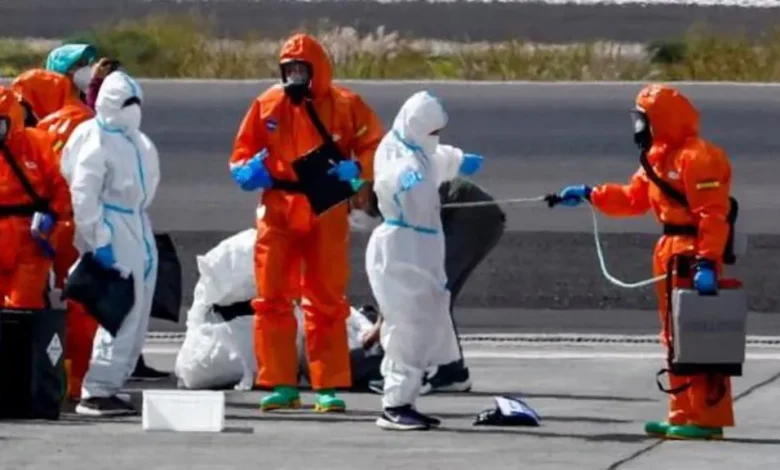
The first passengers from a hantavirus-stricken cruise ship have arrived in Madrid following a complex evacuation near Spain’s Canary Islands. Fourteen Spanish nationals landed in the capital on a chartered flight from Tenerife. These individuals now face mandatory quarantine at a military hospital.
Before boarding, staff in white hazmat suits hosed down the evacuees on the airport tarmac. Officials are currently evacuating passengers by nationality. French nationals reportedly constitute the second group to depart the island. Health Minister Mónica García stated that the operation was “proceeding normally” and noted that all passengers on the MS Hondius remain asymptomatic.
Strict Safety Protocols in Tenerife
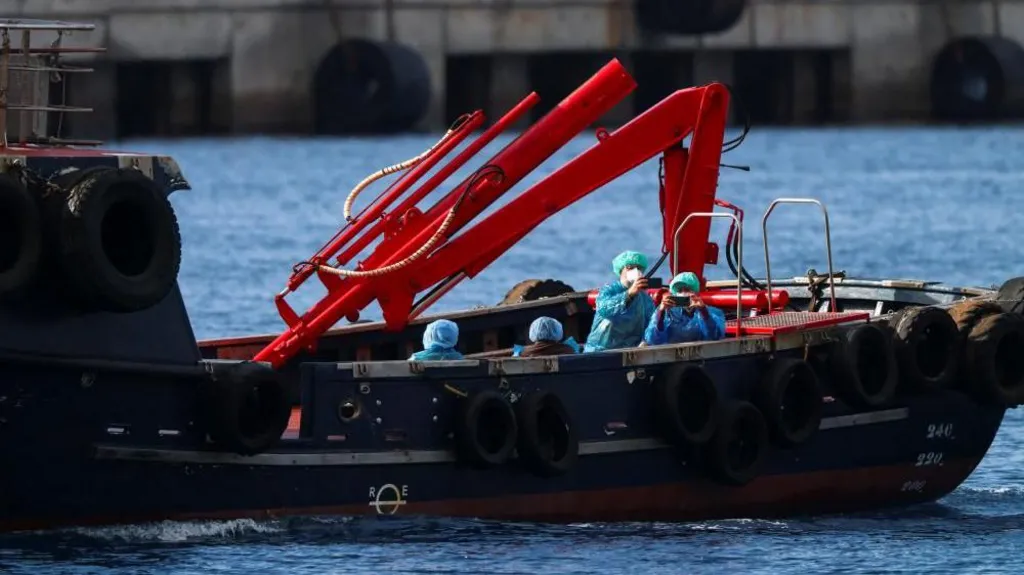
The MS Hondius docked at the port of Granadilla early Sunday, one month after the first fatality on board. Military police boats patrolled the surrounding waters while land-based teams assisted over 100 passengers and crew. Medical specialists boarded the vessel at 06:00 GMT to check for viral symptoms.
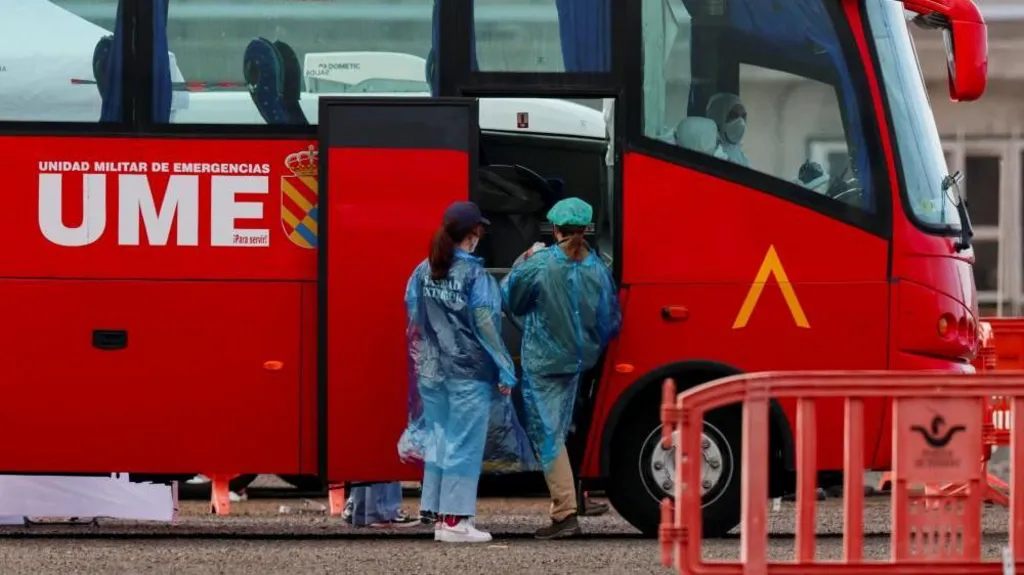
Passengers wore white medical masks as they waited on the ship’s deck. Small groups eventually boarded evacuation boats while maintaining social distance. From the port, buses transported them to the local airport. Authorities expect flights for Dutch, Greek, German, British, and American citizens to follow shortly. The final evacuation flight will depart for Australia on Monday.
Managing a Rare Viral Strain
The World Health Organization (WHO) recommends a 42-day quarantine period. This presents a challenge for travelers because the Andes strain of hantavirus has an incubation period of up to nine weeks. British passengers will enter an isolation facility for 72 hours. Medics will then determine if they can isolate at home.
Specialists at Candelaria Hospital remain on standby with ventilators and testing kits. Chief intensive care doctor Mar Martin expressed confidence in the local response. “We are absolutely ready,” Martin said. “We’ve never seen [hantavirus] before – but it’s a virus, with some complications, just like we manage every day. We are fully trained for that.”
Minister García described the operation as “unprecedented” but reassured the public that the risk of contagion remains low. “We believe that alarmism, misinformation and confusion are contrary to the basic principles of preserving public health,” she added.
WHO Director-General Tedros Adhanom Ghebreyesus is currently in Tenerife to oversee the process. He acknowledged the public’s anxiety following the pandemic. “Your concern is legitimate, because of the experience of Covid: that trauma is still in our minds,” he said. However, he urged the public to trust the government’s preparation.