
BlackRock forecasts Gulf sovereign wealth assets will exceed SAR 26.25 trillion ($7 trillion) as Saudi Arabia’s sweeping market reforms attract global investors.
Why it matters: Deeper, diversified, and globally connected capital markets will fund the next phase of economic transformation across Saudi Arabia and the Gulf Cooperation Council (GCC). Consequently, Saudi Arabia is rapidly opening its financial ecosystem to channel domestic savings and foreign capital into long-term development.
Driving the news: BlackRock, the world’s largest asset manager, outlined this roadmap in its new report titled Financing the Next Chapter: Building the GCC’s Capital Markets.
- Regional scale: The GCC economy will reach roughly SAR 11.25 trillion ($3 trillion) by 2030, while regional sovereign wealth fund assets will surpass SAR 26.25 trillion ($7 trillion).
- Five core priorities: BlackRock urges Gulf policymakers to mobilize long-term domestic savings, expand investment opportunities, strengthen market infrastructure and liquidity, attract international capital, and boost cross-border market connectivity.
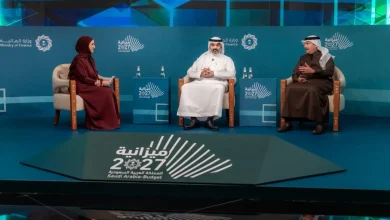
- Momentum in Riyadh: According to Saudi Arabia’s 2027 budget statement, real non-government gross fixed capital formation grew 1.2% year-on-year during the first half of 2026. Furthermore, the upcoming fiscal budget targets 3.9% growth in 2027, reflecting strong investor confidence despite regional geopolitical tensions.
- Foreign ownership: International investors held 12.5% of free-float shares on the Saudi Exchange (Tadawul) by the end of September 2026.
What they’re saying: “Saudi Arabia’s ongoing economic transformation creates growing opportunities for capital markets to play a larger role in financing growth,” Kashif Riad, Head of Financial Markets Advisory for the Middle East and Central Asia at BlackRock, said in a statement.
- Building depth: Riad added that the Kingdom achieved tangible progress in developing its financial ecosystem. Therefore, the next phase focuses on deepening market liquidity and linking with global investors to support long-term economic ambitions.
- Resilient foundations: “Expanding the domestic investor base, increasing access to public and private markets, and continuing to attract foreign capital will enhance the diversity and resilience of the Saudi financial system, supporting Vision 2030 targets and private sector investments,” Riad noted.
Saudi Arabia’s Sweeping Financial Reforms Attract Global Capital
The big picture: Saudi Arabia executed over 1,000 economic and legislative reforms over the past decade to transform its financial sector into an international powerhouse.
- Abolishing restrictions: In early 2026, the Capital Market Authority (CMA) eliminated the Qualified Foreign Investor (QFI) framework and minimum asset thresholds. As a result, any non-resident foreign investor can now hold direct legal title and full shareholder rights in Tadawul-listed equities.
- Surging foreign inflows: Foreign direct investment (FDI) inflows climbed 33.5% to reach SAR 159.1 billion ($42.43 billion) in 2025, pushing total FDI stock past the trillion-riyal mark to SAR 1,058.8 billion ($282.35 billion).
- Business boom: Additionally, Saudi Arabia attracted over 1,200 new foreign establishments from 45 countries in October 2026 alone, bringing SAR 10.3 billion ($2.75 billion) in authorized capital. Non-oil activities now contribute a historic 57% of the Kingdom’s gross domestic product.
By the numbers:
- More than $7 trillion (SAR26.25 trillion): BlackRock’s forecast for GCC sovereign wealth fund assets by 2030.
- 25 trillion ($3 trillion): Forecast size of the combined GCC economy by 2030.
- 39 trillion ($906 billion): PIF assets under management at the end of 2025.
- 1 billion ($42.43 billion): Saudi Arabia’s annual FDI inflows in 2025, marking a 33.5% year-on-year increase.
- SAR6 trillion ($1.6 trillion): Saudi infrastructure investment deployed between 2021 and 2025 to build economic capacity.
- 5%: Foreign investors’ share of Saudi free-float equities as of September 2026.
- 3 billion ($115.3 billion): Value of foreign investors’ holdings in Saudi equities in September 2026.
- 2%: Annual growth in real non-government gross fixed capital formation during the first half of 2026.
- 9%: Saudi Arabia’s 2027 forecast for real non-government gross fixed capital formation.
- 202 trillion ($320.5 billion): Saudi Arabia’s projected FY2027 revenue.
- 392 trillion ($371.2 billion): Saudi Arabia’s projected FY2027 expenditure.
- SAR190 billion ($50.7 billion): Saudi Arabia’s projected FY2027 budget deficit.
PIF’s Evolution as a Global Financial Powerhouse
While sovereign wealth funds remain central anchors across the Gulf, Saudi Arabia’s Public Investment Fund (PIF) drives domestic diversification and shapes global investment trends.
- Massive scale: PIF grew its assets under management to SAR 3.39 trillion ($906 billion) by the end of 2025, while its operating profit surged 125% year-on-year. Moreover, S&P Global Ratings assigned PIF an ‘A+’ credit rating with a stable outlook in November 2026, validating its financial discipline.
- Strategic rebalancing: Under its 2026–2030 strategy, PIF shifted from pure capital deployment toward active asset management, operational excellence, and value realization across six domestic ecosystems.
- Empowering private capital: Specifically, PIF capped overseas allocations at 20% to lock 80% of its portfolio into high-impact local projects, such as NEOM, Oxagon, green hydrogen, and artificial intelligence, while preparing up to eight portfolio companies for public listings.
Mobilizing Domestic Savings and Retail Participation
BlackRock’s report emphasizes that accessible retail savings and investment channels strengthen household financial stability while creating a deep pool of domestic capital.
- Diverse instruments: Workplace-linked savings programs, diversified mutual funds, exchange-traded funds (ETFs), and Sharia-compliant financial products expand individual participation across Saudi and Gulf markets.
- Funding corporate growth: Developing local debt and equity markets diversifies corporate funding sources beyond traditional bank lending, fueling private sector expansion and national megaprojects.
- Regulatory trust: Effective regulatory frameworks, robust investor protection, financial literacy initiatives, and resilient market infrastructure build lasting confidence for sustainable capital inflows.
What’s next: The report calls for better savings tools for individuals. These include job-linked savings schemes, diversified funds, exchange-traded funds and Shariah-compliant products. Households would gain stability, and companies would gain a deeper pool of local capital.
BlackRock also stresses strong regulation, investor protection, financial education and resilient infrastructure. Together, these build trust and sustain inflows.
The bottom line: Sovereign wealth funds like PIF will remain foundational pillars of Gulf economies. However, balanced progress across domestic savings systems, market infrastructure, and global investor connectivity will ultimately power the next era of Saudi and GCC prosperity.