The big picture: Saudi Arabia’s trade surplus with its Gulf Cooperation Council (GCC) neighbors grew 12.05% year-on-year in the first half of 2026. It reached SAR 24.58 billion ($6.55 billion), up from SAR 21.94 billion ($5.85 billion) a year earlier. That’s according to an Al-Arabiya Business analysis of official data from the General Authority for Statistics (GASTAT).
Why it matters: The Kingdom is deepening its role as the Gulf’s trade and logistics backbone. Regional tensions are scrambling shipping routes elsewhere, yet Saudi non-oil exports to the bloc still rose 8.34%. Meanwhile, Saudi ports are moving a growing share of goods reaching neighboring markets.
Saudi Non-Oil Trade Dynamics
By the numbers:
- Non-oil trade surplus with the GCC: SAR 24.58 billion ($6.55 billion), up 12.05% year-on-year
- Surplus with the UAE: SAR 20.79 billion ($5.54 billion), up 3.8%
- Surplus with Kuwait: SAR 3.97 billion ($1.06 billion), up 23.2%
- Surplus with Qatar: SAR 2.44 billion ($649.33 million), down 31.99%
- Deficit with Oman: SAR 335 million ($89.33 million), narrowing 93%
- Deficit with Bahrain: SAR 2.28 billion ($607.81 million), up sharply from a year earlier
- Non-oil exports to the GCC: SAR 67.06 billion ($17.88 billion), up 8.34%
- Imports from the GCC: $11.37 billion (SAR 42.64 billion), up 6.8%
- Total non-oil trade with the GCC: $32.64 billion (SAR 122.42 billion), down 0.9%
- Non-oil growth: Non-oil commodity exports to GCC states increased 8.34% year-on-year to SAR 67.06 billion ($17.88 billion).
- National exports: National non-oil exports grew 11.58% to SAR 19.57 billion ($5.22 billion), compared to SAR 17.54 billion ($4.68 billion) in H1 2025.
- Re-export dominance: Re-exported non-oil goods rose 7.05% to SAR 47.48 billion ($12.66 billion).
- UAE re-exports: Specifically, the UAE received 88.87% of all Saudi re-exports, worth SAR 42.2 billion ($11.25 billion), marking a 15.5% increase.
- Oil export decline: Conversely, Saudi oil exports to GCC countries fell 41.4% to SAR 12.72 billion ($3.39 billion).
- Total exports: Therefore, total exports (oil and non-oil) to GCC partners declined 4.59% to SAR 79.78 billion ($21.27 billion).
- Top import origins: The UAE supplied most imports, providing SAR 30.99 billion ($8.27 billion), followed by Bahrain at SAR 5.54 billion ($1.48 billion).
- Total trade: Non-oil trade exchange reached SAR 122.42 billion ($32.64 billion), edging down 0.9% year-on-year.
Re-exports and Emirati Demand Drive the Gains
Riyadh’s re-export machine is doing much of the heavy lifting. Saudi Arabia shipped SAR 47.48 billion ($12.66 billion) in re-exported goods to the GCC, up 7.05% year-on-year. Domestic non-oil exports climbed even faster, rising 11.58% to SAR 19.57 billion ($5.22 billion).
The UAE absorbed the lion’s share of that traffic. Emirati buyers took in SAR 42.2 billion ($11.25 billion) of Saudi re-exports, or 88.87% of the total. That flow grew 15.5% year-on-year. However, Riyadh’s overall GCC exports, oil and non-oil combined, actually fell 4.59% to SAR 79.78 billion ($21.27 billion). Oil shipments to Gulf neighbors dropped 41.4% to SAR 12.72 billion ($3.39 billion), but non-oil trade offset that decline and kept the surplus climbing.
Imports told a similar story of Emirati dominance. The UAE supplied SAR 30.99 billion ($8.27 billion) of Saudi Arabia’s GCC imports, up 17.5%. Bahrain followed at SAR 5.54 billion ($1.48 billion), up 21%.
A Wartime Logistics Winner
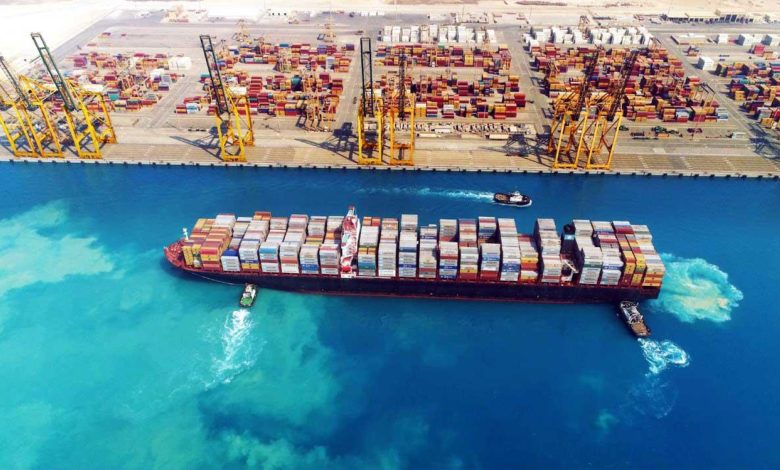
Regional instability is reshaping Gulf trade routes, and Saudi Arabia’s Red Sea ports are picking up the slack. Shipping giant MSC Cargo has expanded its Asia-to-Gulf cargo options through King Abdullah Port in Rabigh and Jeddah Islamic Port. Both now serve as primary gateways for shipments moving overland into Gulf markets.
The shift accelerated after the US-Israeli conflict with Iran disrupted Strait of Hormuz traffic earlier this year. Carriers turned toward Saudi Arabia’s western coast instead. Jeddah and King Abdullah now connect to Dammam, Riyadh and Jubail domestically, and onward to Bahrain, Kuwait, Qatar’s Hamad Port, Jebel Ali and Abu Dhabi. As a result, Saudi infrastructure has become a rare stable corridor for Gulf-bound goods when other routes look shakier.
This logistics push also dovetails with Saudi Arabia’s Vision 2030 diversification drive. The non-oil economy reached roughly 55% of GDP in 2025, growing 4.9% that year. Officials have also highlighted a 15% jump in non-oil exports over the same period. GCC trade therefore remains a proving ground, showing whether Saudi non-oil industries can compete beyond the domestic market.
The bottom line: Saudi Arabia’s Gulf trade surplus is growing, driven by resilient non-oil exports and a logistics network that’s benefiting from regional turbulence rather than suffering from it. Still, Qatar’s shrinking surplus and Bahrain’s widening deficit show the picture varies by partner. The second half of 2026 will test whether the re-export engine keeps pace.
What’s next: The Kingdom actively targets an ambitious non-oil export contribution of 50% to non-oil GDP by 2030. Thus, national industrial development programs continuously boost manufacturing and logistics infrastructure. Furthermore, as re-export capabilities grow, the Kingdom solidifies its position as the dominant commercial gateway in the Middle East. Overall, expanded trade connectivity supports long-term economic growth across all regional partner countries.