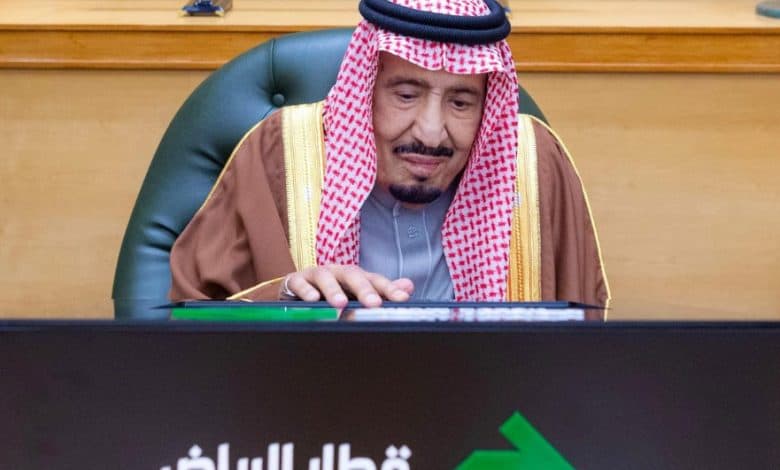
The Custodian of the Two Holy Mosques, King Salman bin Abdulaziz Al Saud, has on Wednesday inaugurated the Riyadh Metro project, reported the Saudi Press Agency (SPA).
The Riyadh Metro project is the backbone of the Public Transport Network of Saudi Arabia’s capital city and a key pillar of Riyadh’s transportation system.
During the inauguration ceremony, King Salman watched an introductory film about the project, one of the Kingdom’s largest projects during his prosperous era. The film highlighted the project’s top-quality design and technical specifications.

The Riyadh Metro project involves an extensive network consisting of 6 key lines, covering 176 kilometers and connecting 85 metro stations, including 4 main stations.
On this occasion, the Saudi Crown Prince, Prime Minister, and the Chairman of the Royal Commission for Riyadh (RCRC), Mohammed bin Salman, extended his gratitude to King Salman for his unwavering support for the Riyadh Public Transport Project, with its train and bus components.

In the project’s initial phase, the Riyadh Metro will transport up to 1.2 million passengers daily, with an eventual capacity of 3.6 million passengers daily once the project is fully operational.
Furthermore, the Riyadh Metro project is associated with a bus network designed to connect the capital’s districts with business and commercial centers, with a capacity of transporting over 500,000 passengers.
This revolutionary project enhances connectivity across Riyadh’s streets, reducing congestion and creating a more sustainable urban landscape.
#WATCH: Riyadh Metro Revolutionizes Transportation in Saudi Arabia#RiyadhMetro#مترو_الرياض pic.twitter.com/ZSPT8bZ5TJ
— Leaders MENA (@leadersmena) November 25, 2024
Moreover, the Riyadh Metro project prioritizes sustainability with eco-friendly design and measures to reduce water and energy consumption, improve air quality, harness local materials, and promote waste recycling.
The project also utilizes renewable energy sources, such as photovoltaic cells, and other green materials with low volatile organic compounds to emphasize its commitment to environmental sustainability.