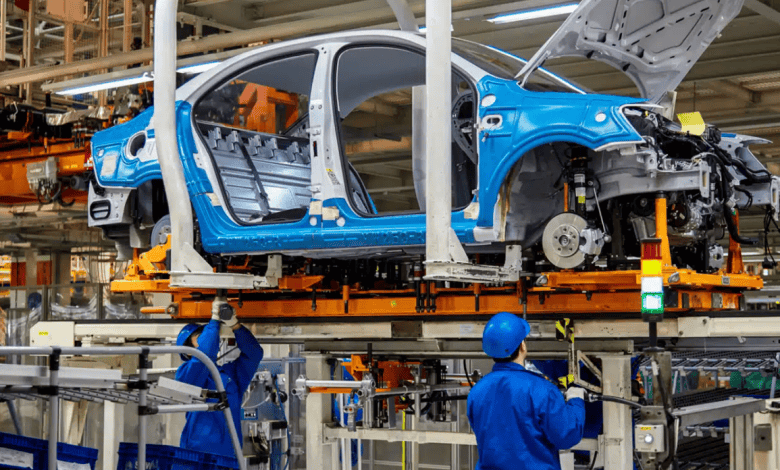
As US industries try to decouple from China, Mexico is emerging as a vibrant manufacturing hub.
Mexico’s manufacturing sector is thriving as it attracts companies that faced supply chain disruptions during Covid-19 pandemic or want to reduce dependence on the US and China amid their growing geopolitical rivalry that casts its shadows on trade.
Nearshoring
Countries are trying to bring production facilities near home markets, in what is called nearshoring. Mexico stands to benefit as nearshoring continues and supply chains are reorganized, Alberto Ramos, head of Latin American economics research at Goldman Sachs, told CNN.
According to Ramos, there has been a fierce competition between Mexico and China for the US manufacturing market, but as the US-China relationship is shifting, Mexico has a chance for long-term success.
More companies are building production facilities in Mexico. In 2023, Tesla (TSLA) announced that it would build a new plant in Monterrey. The main competitor to Tesla, Chinese EV maker BYD, unveiled plans in February for a major expansion in Mexico.

Top Exporter
Last year, Mexico surpassed China as the top exporter to the US, reported the Associated Press (AP). According to figures from the US Commerce Department, the value of Mexican imported goods to the US rose nearly 5% from 2022 to 2023, to over $475bn. Meanwhile, the value of Chinese imports dropped 20% to $427bn.
Those exports were driven by manufacturing, which make up 40% of Mexico’s economy, according to Morgan Stanely. The increase in US imports from Mexico continued in February.
According to analysts at Morgan Stanely, the value of Mexico’s exports to the US is expected to grow from $455bn to nearly $609bn in the next five years.
Attractive Manufacturing Hub
Mexico’s manufacturing sector has potential to boom, thanks to a number of factors: reduced labor costs, geographic proximity to US markets, and the US-Mexico-Canada (USMCA) Agreement, signed in 2020 to make trade in North America more cost effective and efficient.
The automotive industry is one of the most prominent industries in Mexico. The country hosts an array of car factories for US companies, including General Motors, Ford, Stellantis and a dozen more.
These auto makers depend on parts from Mexico to build cars or trucks, given they are cheaper than those made in the US. Agreements like USMCA reduce barriers for companies in the US, Mexico and Canada in moving, selling and buying parts across North America.
An Opening for China
Amid its trade war with China, the US hiked tariffs on Chinese imports in 2018, making it more expensive for Chinese goods to enter American markets and discouraging companies from depending on Chinese supply chains.
As Mexico increases its exports to the US, Chinese companies might find a route to circumvent US tariffs on their goods. According to Container Trade Statistics analyzed by Xeneta, a market analytics platform, China shipping container exports to Mexico were up around 60% in January compared to a year ago.
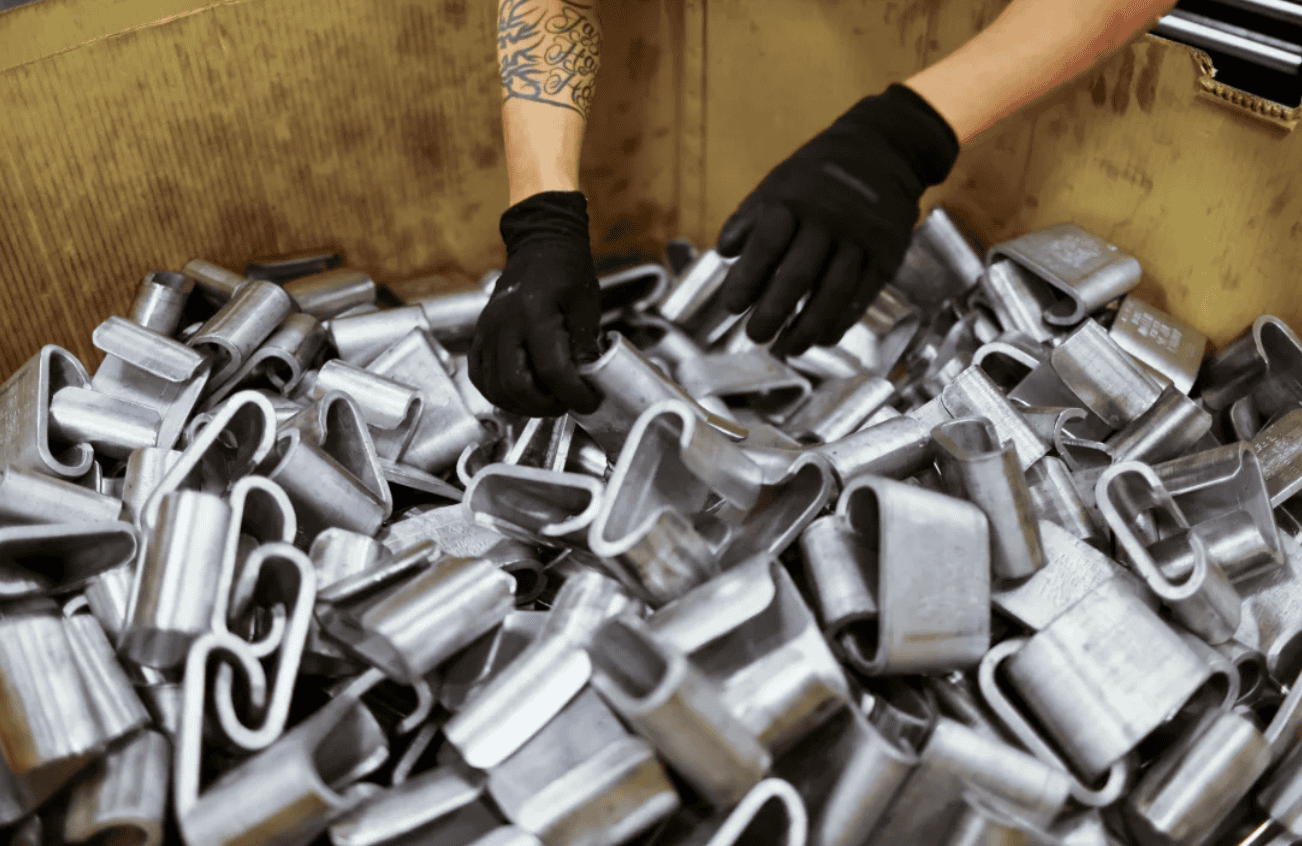
Peter Sand, chief analyst at Xeneta, noted that this surge in exports could signal that this increase in trade is “due to importers trying to circumvent US tariffs.” Other analysts suggested that the boom in Mexican manufacturing sector may be boosted by products made outside the country.
Jose Enrique Sevilla-Macip and John Raines, analysts at S&P Global Market Intelligence, said that the increase in Mexican exports to the US has been “roughly matched by simultaneous and closely correlated growth in Mexican imports from China.”
The US government noticed that China might be evading US tariffs on steel and aluminum through American imports from Mexico. As a result, the Biden administration announced that it is working with the Mexican government to prevent China and other countries from avoiding tariffs.