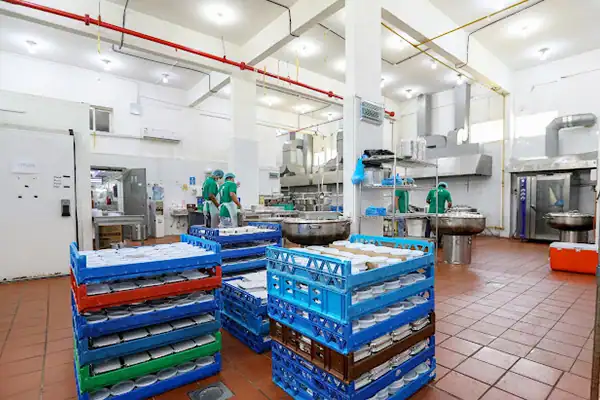
Saudi Arabia’s Ministry of Municipalities and Housing has introduced sweeping new requirements for central kitchens across the Kingdom. These regulations mandate the employment of certified food safety specialists and adherence to stricter technical and operational standards.
The revised regulations call for surveillance cameras across all work areas and reliable electronic payment systems. Central kitchens must also upgrade worker facilities, including toilets, restrooms, and changing rooms. Additionally, they must adopt rigorous waste management systems and meet precise criteria for ventilation, cooling, and water drainage. These measures aim to regulate the central kitchens sector, ensuring food safety and public health.
Ali Al Tamimi, director of commercial licensing at the Ministry, said the new requirements stipulate central kitchens must cover at least 100 square meters. They must also employ a food safety specialist to reduce risks. The rules mandate layouts that facilitate worker movement and prevent cross-contamination. Regular inspections of food preparation, storage, and service areas are also required, particularly where high-risk foods are handled.
A Qualitative Shift in Management
The ministry described the changes as a qualitative shift in the management and operation of central kitchens. These new standards aim to raise food safety levels, improve efficiency, and create a more attractive environment for investors. The requirements also set clear licensing conditions, site selection rules in line with the Saudi Building Code, and parking provisions.
Officials urge investors and food business operators to review the comprehensive guidelines published on the Ministry’s official platforms. Ensuring compliance with these new regulations is crucial for maintaining food safety and operational integrity. For more information, the guide to central kitchen requirements is available here.