
KAUST Researchers Develop Mathematical Solution to Protect Aircraft from 5G Interference
Researchers at King Abdullah University of Science and Technology (KAUST) have introduced a new mathematical method designed to safeguard aircraft from interference caused by mobile communication signals.
The study, published in IEEE Transactions on Wireless Communications, presents the concept of an “ideal exclusion zone” that shields critical aircraft systems while improving the performance of fifth-generation (5G) networks. The findings are expected to guide aviation and telecommunications regulators in setting policies for network deployment near air traffic routes.
This marks the first application of stochastic geometry—a mathematical tool for modeling randomly placed network elements—to predict how 5G signals interact with aircraft radio altimeters.
Bandwidth Challenge
Data transmission relies on electromagnetic waves across defined frequency ranges. The wider the bandwidth, the faster data can be transmitted.
5G technology operates over the widest bandwidths, enabling faster and larger data transfers. However, some of these frequencies overlap with those used by other critical systems.
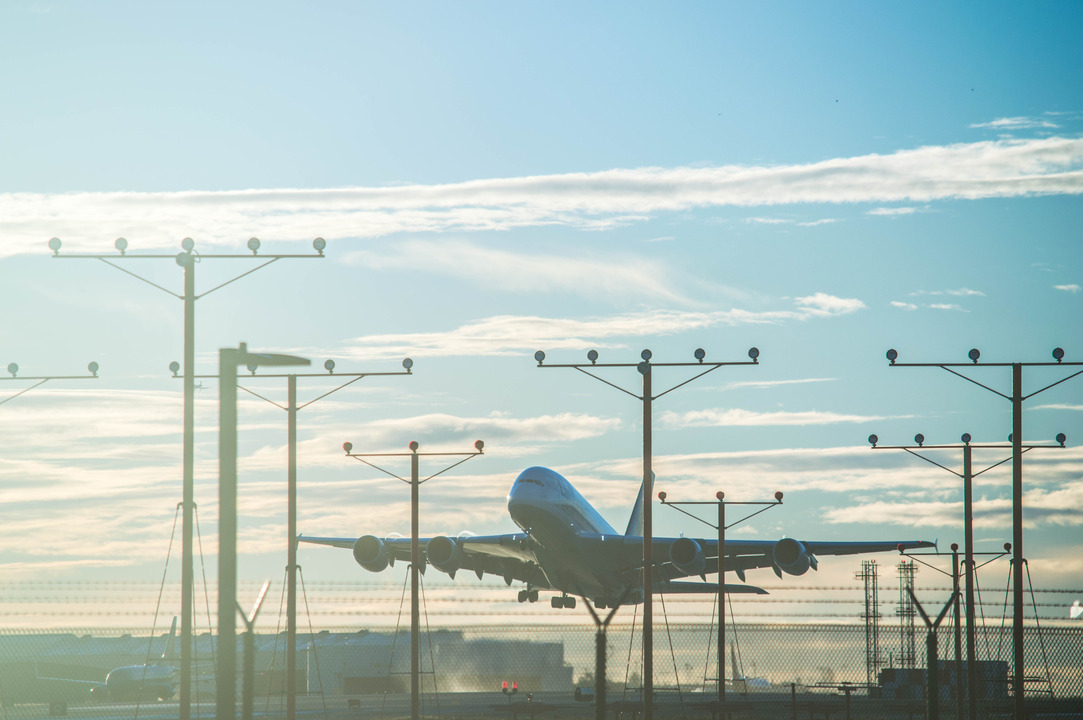
According to the study’s lead researcher, Professor Mohamed-Slim Alouini, 5G frequencies lie close to those used by aircraft radio altimeters, raising the risk of interference. He also emphasized the need for exclusion zones to keep these systems safe.
Proposed Solution: Exclusion Zones
Although 5G has already caused flight cancellations worldwide due to interference, the KAUST team proposes exclusion zones where 5G towers operate only at lower frequency bands, relying on earlier spectrum allocations rather than newer, higher-frequency ones.
Using stochastic geometry, the team analyzed different shapes of exclusion zones. Triangular zones around runways proved most effective in preserving radio altimeter signals while minimizing the loss of 5G performance.
Key Findings
- Just one 5G tower inside an exclusion zone caused a 20% drop in network performance.
- With three towers, the performance dropped by up to 50%.

The study’s implications extend worldwide, as many countries have already imposed 5G restrictions near airports due to concerns about radio altimeter interference. Supported by Saudi Arabia’s Communications, Space & Technology Commission (CST), the research is expected to influence global aviation and telecommunications policies, enabling the safe coexistence of 5G networks and aircraft systems.
Related Topics:
Higher Education: Saudi Arabia’s Emergence as Global Destination
Saudi Students Organize Qur’an Competitions in UK
Saudi Women in the Workforce: How Does the Kingdom achieve real Empowerment?
International Mining Conference to Host Global Geological Survey Leaders in Jan.