Brazil Hosts BRICS Summit, Seeks to Avoid Provoking U.S. Under Trump
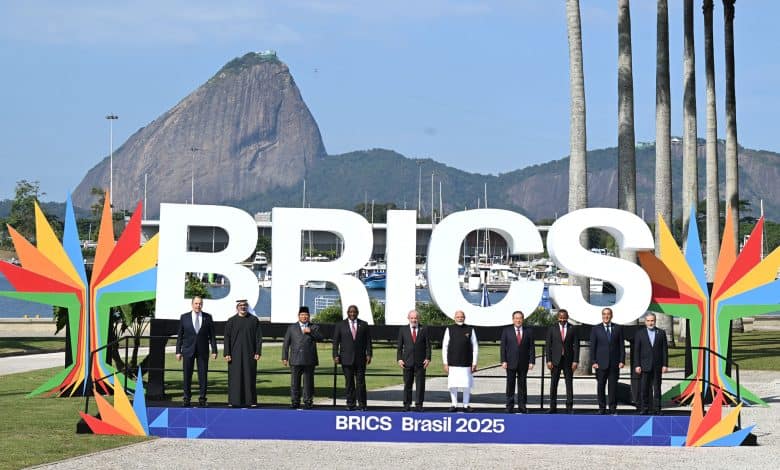
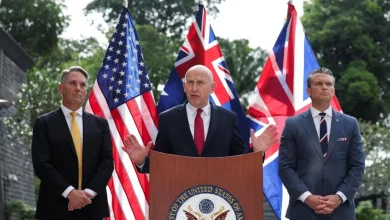
Brazil will host the BRICS summit of emerging economies Sunday and Monday, navigating sensitive issues such as Israel’s recent attack on Iran, the humanitarian crisis in Gaza, and U.S. trade tariffs under former President Donald Trump with notable caution.
Analysts and diplomats highlight challenges to BRICS’ unity following its expansion last year, which doubled its membership and complicated efforts to position the bloc as a new global power center.
The summit’s restrained agenda is widely seen as a deliberate effort by member states to steer clear of provoking Trump’s administration.
Brazilian President Luiz Inácio Lula da Silva is prioritizing topics like artificial intelligence and climate change, even as several key leaders will be absent from the talks.
China’s President Xi Jinping will miss the BRICS summit for the first time since assuming office in 2012, while Russian President Vladimir Putin will participate via video link amid an international arrest warrant linked to Russia’s invasion of Ukraine.
Careful Language on Controversial Issues
The Rio de Janeiro summit marks a contrast with last year’s more confrontational meeting in Russia, where Moscow pushed to create alternatives to U.S.-dominated payment systems as a means to sidestep Western sanctions.
A source involved in the summit’s preparation, speaking anonymously, said some members have sought stronger language condemning the Gaza crisis and Iran-related tensions, but Brazil aims to keep discussions technical and low-profile.
Oliver Stuenkel, a political science professor at Brazil’s Getulio Vargas Foundation, expects the final statement to be deliberately vague on Ukraine and Middle Eastern conflicts.
The absence of Putin and Xi, who favor a tougher anti-Western stance, is likely to soften the summit’s tone, contrasting with Brazil and India’s preference for a non-aligned approach.
A Brazilian official told Reuters the group plans to issue three joint statements and a final declaration, all tempered to avoid escalating geopolitical tensions.
João Alfredo Nyegray, a geopolitics expert at the Pontifical Catholic University of Paraná, said the summit had the potential to offer an alternative voice amid global instability but is hampered by the withdrawal of Egypt’s President Abdel Fattah al-Sisi and uncertain representation from Iran, Saudi Arabia, and the UAE.
“This moment calls for high-level coordination, but instead we see fragmentation,” Nyegray noted.
Brazil Cautious Amid U.S. Trade Concerns
As chair of BRICS, Brazil has outlined six strategic priorities: healthcare cooperation, trade and investment, climate change, governance of artificial intelligence, peace and security, and institutional development.
The emphasis on less contentious topics like intra-BRICS trade and global health reflects Brazil’s cautious approach after Trump’s return to the White House.
Ana Garcia, a professor at the Federal Rural University of Rio de Janeiro, said Brazil is keen to avoid antagonizing the Trump administration to protect its economy from tariff retaliation.
Trump has threatened to impose 100% tariffs on BRICS countries should they challenge the dominance of the U.S. dollar — a risk Brazil is working hard to avoid, even as it continues to call for reform of Western-led global institutions.
Key Leaders Absent as BRICS Expands
Iranian President Masoud Pezeshkian and Egypt’s Abdel-Fattah el-Sissi will also be absent.
Both countries joined BRICS in 2024 alongside Ethiopia, Indonesia, and the UAE. Saudi Arabia, invited to participate in discussions, has yet to confirm its membership.
With the bloc now including 10 strategic partners — such as Belarus, Cuba, and Vietnam — Brazil has added “institutional development” to the agenda to manage the group’s rapid growth and improve cohesion.
Despite the absences, the summit remains a critical forum for emerging economies to explore alternatives amid geopolitical and economic uncertainty caused by Trump-era trade policies, according to Bruce Scheidl, a BRICS expert at the University of Sao Paulo.
For Lula, the summit offers a respite from domestic political challenges, including declining popularity and tensions with Congress.
It also provides a platform to advance climate negotiations ahead of the COP30 talks scheduled for November in Belém, Brazil.
Related Topics:
Brazil to Host Next BRICS Summit in Rio de Janeiro
Saudi Arabia’s Entry into BRICS: What Does It Mean for the Global South?
Russian First Deputy PM Comments on Saudi Arabia Joining BRICS