Shielding the Skies, Securing the Land: Riyadh and Aden Counter Houthi Escalation
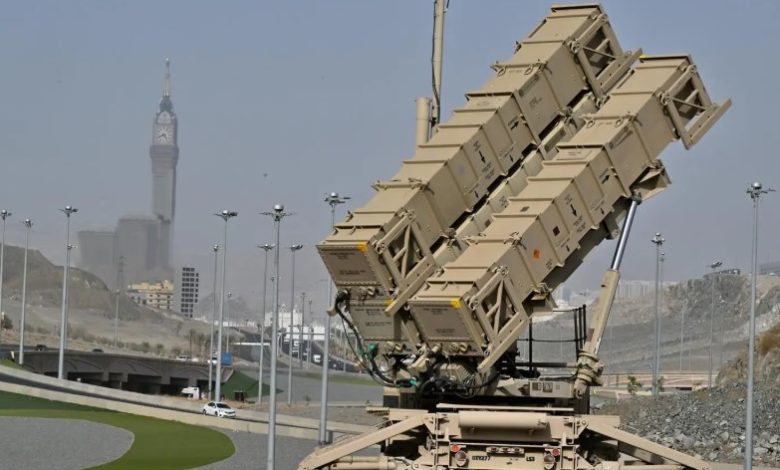
As Saudi air defenses intercept Houthi missiles and neutralize threats at their source, the Yemeni Armed Forces are making advances on the ground to recapture territory.
This military push is backed by a legislative drive in Aden to criminalize the terrorist militia and its affiliated entities, activities, and sources of funding. Taken together, these efforts signal a coordinated multi-front strategy aimed at eliminating the Houthi threat and restoring regional stability.
Saudi Defense Vigilance
Driving the News: The Saudi-led Coalition to Restore Legitimacy in Yemen intercepted and destroyed two Houthi cruise missiles targeting the Riyadh region on Wednesday, November 18, 2026.
The Big Picture: Since July 2026, the Iranian-backed Houthi militia has launched drones and missiles targeting several Saudi cities, including attempted attacks on Makkah and Madinah, as well as airports and energy facilities. Saudi Arabia’s air defenses have demonstrated exceptional operational readiness and efficiency in protecting the Kingdom’s airspace and critical infrastructure from external threats around the clock.
Eliminating the Source
Between the Lines: Prior to the Wednesday attacks, the spokesperson for the Coalition, Major General Turki Al-Malki, said in a statement that the Coalition had carried out a military operation to undermine Houthi ballistic missile and drone capabilities and neutralize the militia’s threat to maritime security.
The Impact: The operation destroyed 60 legitimate military targets across Sanaa, Al-Hudaydah, Amran, and Saada, including tunnels leading to mountain storage facilities housing ballistic missiles and workshops used to assemble and store drones.
New Military Leadership
State of Play: Saudi Arabia has appointed Lt. Gen. Fayyad bin Hamed Al-Ruwaili – the current Chief of the General Staff – as the commander of the Joint Forces, replacing Lt. Gen. Fahad bin Hamad Al-Salman, who has been appointed as an adviser to the Minister of Defense for military affairs. The reshuffle was made by a royal decree on the recommendation of the Saudi Defense Minister, Prince Khalid bin Salman.
Why It Matters: The appointment of Lt. Gen. Al-Ruwaili to lead the Joint Forces marks a vital move designed to streamline operational integration and reinforce Coalition deterrence across the region.
Inside Operation Dawn of Yemen
Go Deeper: On November 17, Yemeni Armed Forces spokesperson Majid Al-Nuzaili reported that the forces conducted 660 air and ground operations against Houthi forces across several fronts in Marib, Al-Jawf, and Taiz over the preceding 24 hours.
By the Numbers:
- 24 airstrikes
- 46 drone strikes
- 39 rocket-launcher strikes
- 551 artillery strikes
- 178 casualties among field commanders and fighters
- 74 military vehicles and equipment destroyed
The Backstory: The internationally recognized government in Yemen launched Operation Dawn of Yemen on October 5, 2026, to restore state institutions, liberate the capital Sanaa, secure critical maritime routes, and end the Iranian-backed Houthi coup.
Criminalizing the Terrorist Militia
The Context: Beyond the military push, Yemen’s legitimate government is driving legal efforts to confront the Houthi terrorist militia, cutting off its financial and political lifelines. On November 18, Yemeni Presidential Leadership Council Chairman Rashad Al-Alimi issued a 55-article law designating the Houthi militia as a terrorist organization, following the unanimous approval of the Yemeni Parliament.
Zoom In: The law covers all political, military, security, administrative, and civil entities affiliated with the group, criminalizing its activities, financing, and weapons supply. It extends the terrorist classification to individuals providing financial or moral support. Moreover, it mandates asset freezes and legal prosecution, with penalties ranging from 10 years in prison up to the death penalty.
Houthi Humanitarian Violations Exposed
The Deep Dive: The recent Houthi escalation has resulted in severe humanitarian conditions across Yemeni governorates, inflicting unbearable suffering upon innocent civilians. In a recent briefing, Yemen’s Ministry of Human Rights stated that it had documented 3,334 violations from August 1 to November 15. These violations include arbitrary detentions, enforced disappearances, shelling of civilian neighborhoods, and recruitment of minors.
The Siege of Taiz: As the Houthis escalated attacks and tightened their siege of Taiz in September, the humanitarian crisis has worsened. According to the briefing, the siege severed vital access routes, including the Taiz–Al-Kadhah–Mokha road and the Hayjat Al-Abd road connecting Taiz to Aden, halting commercial and humanitarian supplies of food, water, fuel, and medicine. Meanwhile, the broader escalation across western Yemen has displaced over 347,000 people, primarily into Taiz, Lahj, and Aden, amid warnings that the fighting has approached Kharaz Refugee Camp in Lahj, endangering roughly 9,000 refugees alongside vulnerable displaced families and women in urgent need of shelter, healthcare, and protection.
The Bottom Line: By strengthening military deterrence and legal accountability, Saudi Arabia and Yemen are working together to decisively end Houthi aggression and alleviate the suffering of the Yemeni people.