
Saudi Economy Shows Resilience: Inflation Slows to 1.7% in October Amid Global Risks
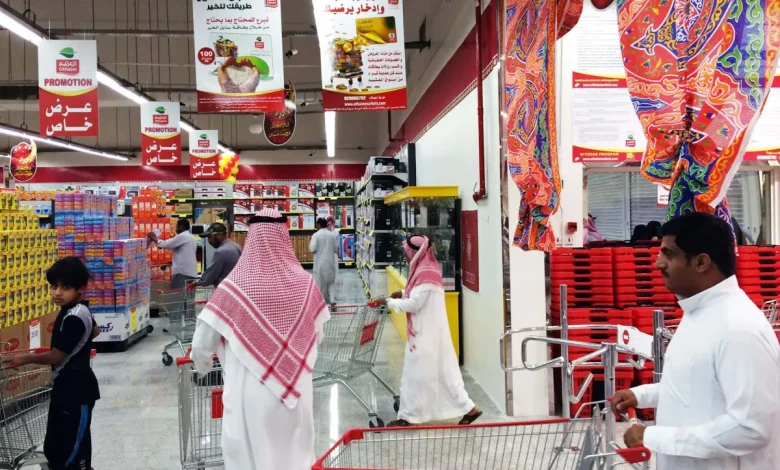
Driving the news: Saudi Arabia’s annual inflation slowed to 1.7% in October, down from 1.9% in September. The figure marks the lowest reading in six months, according to the General Authority for Statistics (GASTAT) data published Sunday.
The big picture: Consumer prices stay calm while global trade, shipping and energy markets stay volatile. Meanwhile, the Kingdom’s non-oil economy keeps growing.
Why it matters: Stable prices protect household budgets. They also help businesses plan investments with confidence. Furthermore, the reading shows how well the Kingdom shields consumers from outside shocks.
Geopolitical tensions, trade disruptions and supply chain strains continue to threaten prices worldwide. As a result, analysts watch the Saudi figure closely. It shows how far those pressures reach everyday living costs.
The Gulf comparison also helps. Oman’s annual inflation eased to 2.9% in October, while Kuwait recorded 2.2% in July. Saudi Arabia therefore sits at the low end of the regional range.
Housing Still Leads the Pressure
Housing remains the biggest driver of consumer prices. Costs for housing, water, electricity, gas and other fuels rose 3.5% year on year. Actual rents rose by the same 3.5%. Consequently, this group stays the largest contributor to inflation.
Other categories added smaller increments:
- Insurance and financial services rose 3.5%, as insurance prices jumped 6.5%.
- Recreation, sport and culture rose 2.7%, as holiday packages climbed 4.6%.
- Transport rose 2.3%, led by a 9.5% jump in passenger transport.
Several categories moved the other way. Furniture and home maintenance fell 0.5%. Clothing and footwear dipped 0.2%. Personal care and other goods and services slid 0.6%. These declines helped offset the rent pressure.
By the numbers:
- 7%: Saudi Arabia’s annual inflation rate in October.
- 9%: The annual inflation rate in September.
- 1%: The monthly increase in the consumer price index.
- 5%: The annual rise in housing-related prices.
- 5%: The annual rise in actual housing rents.
- 1%: The annual rise in food and beverage prices.
- 3%: The annual rise in transport prices.
- 75 SAR ($1 USD): The Saudi Riyal’s fixed peg to the US Dollar, which anchors monetary stability and curbs imported inflation across the Kingdom.
- 5 trillion SAR ($1.2 trillion USD): The approximate size of Saudi Arabia’s nominal gross domestic product (GDP), making it the largest economy in the Middle East.
- 7 trillion SAR ($453.3 billion USD): Approximate net foreign assets held by the Saudi Central Bank (SAMA), providing a massive buffer against global financial volatility.
- 375 billion SAR ($100 billion USD): Annual non-oil government revenues that increasingly fund mega-projects and reduce reliance on hydrocarbon price swings.
- 9%: The International Monetary Fund’s (IMF) projected average inflation rate for Saudi Arabia in 2026, down from 2% in 2025.
Non-oil Strength Cushions the Economy
The calm price picture comes with solid momentum outside the energy sector. Non-oil activities grew 1.9% year on year in the third quarter of 2026, accelerating from 0.8% in the previous quarter. In addition, non-oil activity added 1.1 points to annual GDP growth.
The headline picture is more mixed, and it deserves a plain statement. Overall GDP shrank 3.8% year on year in the third quarter, following a 4.7% contraction in the second. A sharp drop in oil activity drove that decline. Even so, the quarter brought a recovery. GDP expanded 1.3% quarter on quarter, helped by a rebound in oil output.
The longer record shows the economy’s depth. The economy grew 4.5% in full-year 2025, with non-oil activities up 4.9%. Moreover, real GDP grew 3.0% in the first quarter of 2026, with oil and non-oil sectors each expanding 2.9%. These results reflect Vision 2030’s diversification push.
What the IMF Expects
The Fund’s forecasts point to a sharp rebound. The IMF’s October outlook sees the economy contracting 3.3% in 2026 before it rebounds to 7.9% growth in 2027. Inflation should stay tame throughout. The Fund projects inflation of 1.9% in 2026 and 2.2% in 2027.
October’s reading comes in below the Fund’s full-year average for 2026. Therefore, the data suggests price pressure is easing faster than forecasters expected.
What’s next: Watch three indicators in the coming months. Rents matter most, because they drive the largest share of inflation. Oil output matters next, because it sets the pace of headline GDP. Finally, global shipping and energy prices will decide whether imported costs stay low.
Overall, the Kingdom enters the final stretch of 2026 with contained inflation, a growing non-oil sector and a forecast rebound. Those fundamentals give policymakers room to keep reforming and investing.