From Rooftops to Factories: Saudi Arabia Raises Renewable Energy Self-Consumption Cap to 50 MW
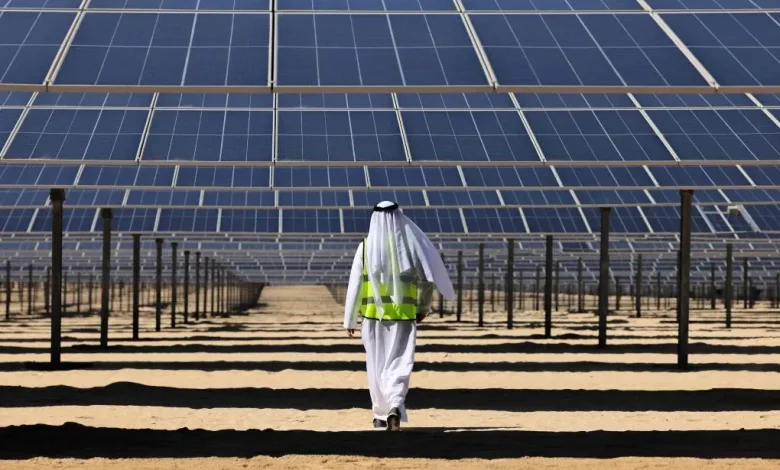
Driving the news: Saudi Arabia just opened the door wider for homes and businesses to produce their own clean power. The Saudi Electricity Regulatory Authority (SERA) issued an updated renewable energy self-consumption regulation, raising the maximum system size to 50 megawatts (MW). It also simplifies installation, grid connection and operation.
Why it matters: Consumers, from households to large industrial sites, can now cut power costs and lower emissions with fewer hurdles. Moreover, the move signals that the Kingdom wants the private sector to share the energy transition.
The big picture: SERA released the update about three years after the previous framework. Meanwhile, the Kingdom keeps accelerating renewable projects under its Vision 2030 energy and emissions goals.
What Changed in the Regulation
SERA said the regulation governs renewable generation systems that serve homes and facilities for their own use. It sets technical, operational and maintenance requirements. It also explains consumer rights and the way net billing works. As a result, the authority expects stronger transparency, grid safety and reliability.
Zoom in: The update merges two earlier documents. Saudi Arabia first issued a small-scale solar framework in 2020, then a wider self-consumption framework in 2022. Now, one text covers both renewable self-consumption and small solar photovoltaic (PV) systems.
SERA also sorted grid-connected systems into four categories by capacity. The range starts at 1 kilowatt (kW) and reaches 50 MW. Each category carries its own rules for connection, licensing and metering. Consequently, a rooftop owner and a factory operator no longer follow the same process.
Between the lines: The ceiling jump is sizeable. SERA’s 2024 presentation to regional regulators set the maximum capacity per premises at 30 MW. The new 50 MW limit lifts that cap by roughly 67%.
Wider Technologies, Clearer Roles
The regulation covers more than solar. It also includes wind power, biofuels and energy from waste treatment. Furthermore, it covers energy storage systems, whether they connect to the grid or run independently.
The text also assigns duties to every party. The consumer, the qualified contractor or consultant, and the electricity service provider each hold defined roles. These roles span connection, operation, billing, maintenance and complaint handling. Therefore, consumers know whom to contact and what to expect.
By the numbers:
- 50 MW: the new maximum capacity for systems under the framework, up from 30 MW per premises under the earlier rules.
- 4: capacity categories, from 1 kW to 50 MW.
- About 3 years: the gap since the previous framework.
- SAR 700 ($187): total fees for systems of 50 kW or less under the authority’s 2023 schedule. That sum combines a SAR 150 enquiry fee and a SAR 550 connection fee. Larger systems paid SAR 2,300 ($613). The latest announcement did not mention fees.
- SAR 3,000 ($800): the fine for ignoring the small-scale solar framework, under a separate SERA enforcement regulation.
- 3 gigawatts (GW): installed solar and wind capacity as of August 2026, with a pipeline of 44.5 GW.
- 63-fold: the rise in operating renewable capacity since 2020.
- 100 to 130 GW: the Kingdom’s renewable capacity goal for 2030, alongside net-zero emissions by 2060.
- 12%: the share of renewables in Saudi electricity production in 2025.
Why Riyadh is Betting on Self-Generation
Saudi Arabia wants renewables to supply about half of its electricity by 2030. However, that goal depends on more than giant solar farms. Self-consumption adds a second track, because every factory roof, farm and commercial building can become a small power plant.
Regional momentum backs the push. The International Energy Agency expects Saudi Arabia to add about 60 GW of renewable capacity between 2026 and 2031, roughly half of the region’s additions. In addition, KAPSARC’s tracker shows operating capacity has grown more than 63-fold since 2020. Clearly, the Kingdom already moves fast.
Raising the cap to 50 MW invites industrial users to build large on-site plants. These users consume enough power to justify big systems. Consequently, they could shift a meaningful slice of demand away from conventional generation.
The Challenge Ahead
The gap to the 2030 target remains wide. GlobalData says the country would need to add more than 23 GW of renewables every year to reach 130 GW. The firm forecasts about 74.2 GW by 2030 instead. Meanwhile, analysts warn that war-related supply-chain disruption and tighter financing threaten the targets.
Self-consumption will not close that gap alone. Still, it offers a faster route. Private owners can install systems without waiting for a utility-scale tender. Therefore, simpler rules may unlock capacity that large auctions cannot deliver quickly.
What’s next: Consumers, contractors and investors should study the full regulation before they plan projects. The four categories decide which licences and meters each system needs. Likewise, the net billing terms will shape how fast a system pays for itself.
SERA has not yet published new fee details in the announcement. Interested parties should therefore check the authority’s official channels. In the meantime, the message from Riyadh is clear: the Kingdom wants more of its clean power to come from its own consumers.