
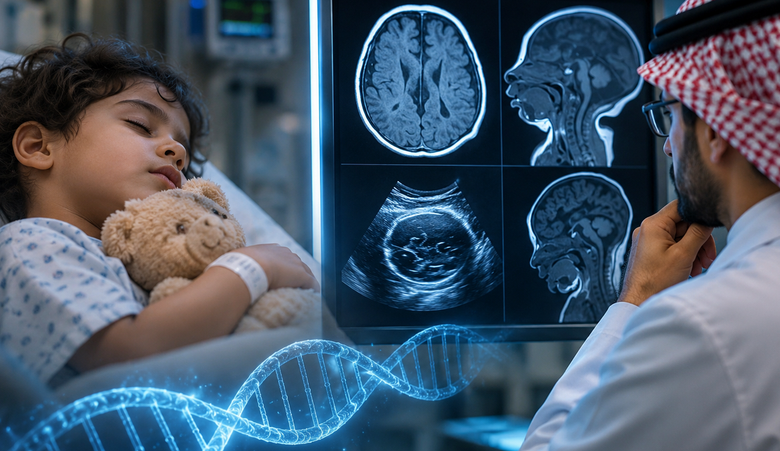
Saudi scientists have found the genetic cause of a rare, deadly brain disorder that strikes infants and children.
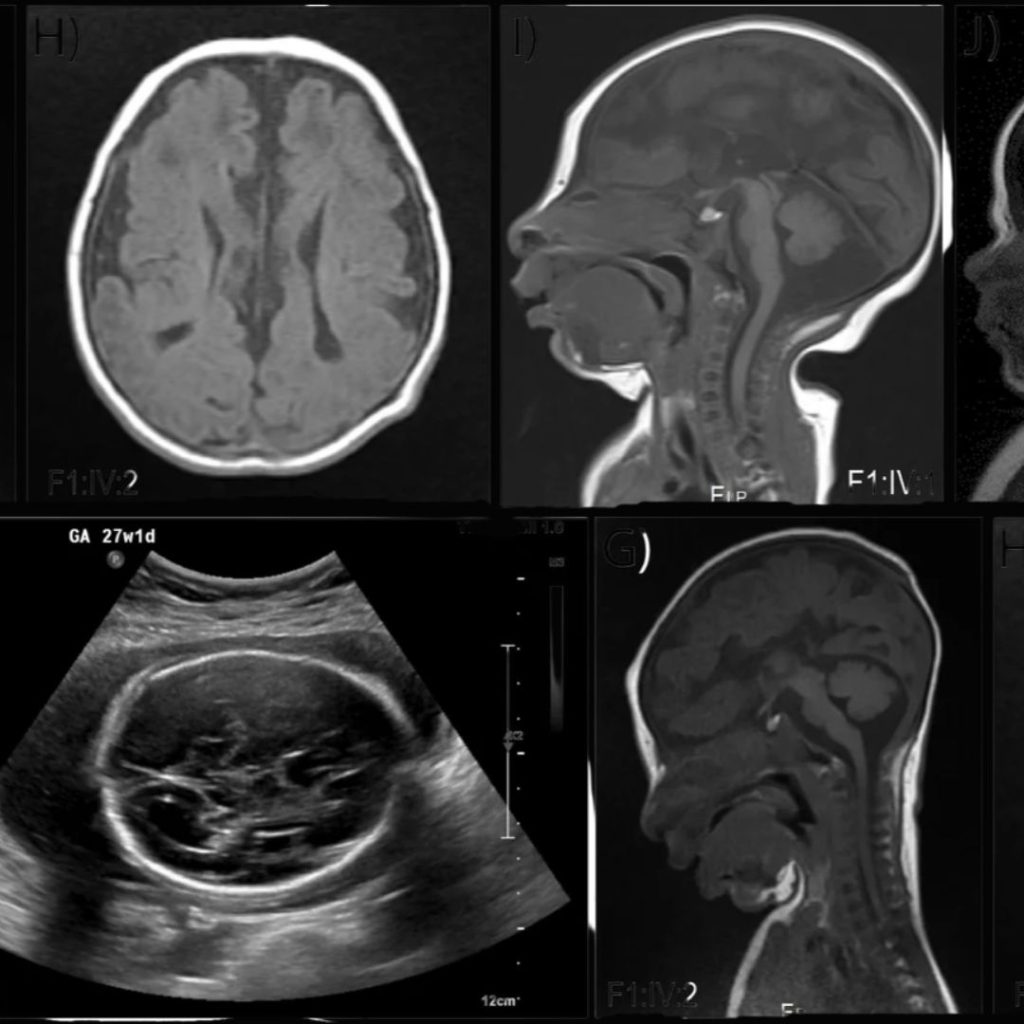
Driving the news: Researchers at King Abdullah University of Science and Technology (KAUST) and King Faisal Specialist Hospital and Research Centre (KFSHRC) traced the disorder to the VPS25 gene. The condition begins in early pregnancy. It causes seizures, severe developmental delays and major brain abnormalities.
Why it matters: For years, some families lost more than one child without answers. Now doctors can spot similar cases worldwide. They can also give families clearer advice about the risk in future pregnancies
How Saudi Teams Cracked the Case
Zoom in: The study appears in Genome Medicine and brings together five unrelated families from Saudi Arabia, Europe and North America. Their children showed strikingly similar symptoms and brain abnormalities. Researchers compared genetic and clinical data from all five families. As a result, they tied the disorder to changes in VPS25. This is the first evidence linking the gene to a human disorder.
Laboratory tests then revealed what goes wrong. Cells carrying these changes release a different number of tiny packages, and those packages hold different contents. Furthermore, the packages lack key proteins that protect nerve cells and keep them healthy.
The paper describes recessive variants. In other words, a child falls ill after inheriting a faulty gene copy from each parent.
The discovery started at home. Genomic programs in Saudi Arabia identified three of the five families. Researchers then matched those cases with families abroad. Meanwhile, KFSHRC clinicians documented symptoms and searched for genetic causes. KAUST scientists, in turn, ran the lab studies that showed how the gene changes disrupt cells.
Families Finally Get Answers
Professor Jasmeen Merzaban, who co-led the study at KAUST, said the finding could help families that spent years searching for an explanation. She added that it gives doctors worldwide a chance to spot similar cases. Moreover, she noted that knowing the genetic changes could support detection during pregnancy through suitable genetic tests.
Professor Fowzan Alkuraya led the clinical genetics side and holds posts at both KFSHRC and KAUST. He stressed that “one family alone may not be enough” to explain a very rare disease. For that reason, he urged researchers to connect Saudi genomic data with international cases.
Alkuraya also said that building genomic resources and encouraging cooperation between research and medical institutions helps uncover inherited diseases. Without that effort, such diseases can stay undiagnosed for years.
Therefore, the impact reaches beyond naming a cause. The discovery improves genetic diagnosis. It also gives families the information they need to make decisions about future pregnancies.
By the numbers:
- 5 unrelated families across Saudi Arabia, Europe and North America.
- 3 of those 5 families came through Saudi genomic programs.
- 1 gene, VPS25, now has a proven link to a human disorder.
- 100,000 genomes: the Saudi Genome Program’s sequencing goal, with more than 63,000 analyzed to date.
- 7,500: disease-linked genetic variants that Saudi scientists have documented, connected to more than 1,230 rare disorders.
- SAR 29.48 billion ($7.86 billion): Saudi research and development spending in 2024, up 30.4% from 2023.
- 56,593: R&D workers in 2024, a 14.7% rise on the previous year.
- 5% of GDP: the Kingdom’s R&D investment target for 2040.
- Over $1 billion (SAR 3.75 billion): raised by KAUST-backed startups, with $925 million (SAR 3.47 billion) in revenue and 6,661 jobs created.
- SAR 21 billion ($5.6 billion): KAUST’s estimated economic impact on the Kingdom for 2024–25.
- 3,942: patent applications from individuals in 2025, up from 2,007 in 2024.
Saudi Arabia’s Research Push Gathers Pace
The big picture: The breakthrough reflects a wider national bet on science. The Kingdom spends more on research each year, and its research workforce keeps growing.
KAUST sits at the center of that push. A Nature Index ranking placed the university in the global top twenty, first in Saudi Arabia and second in the Middle East. Likewise, KAUST topped the Times Higher Education Arab University Rankings for a third consecutive year.
This is also not the first joint success. In 2019, Alkuraya and KAUST teams, including Merzaban’s group, helped identify a new congenital disorder called CHEDDA. In short, the partnership between bedside clinicians and lab scientists keeps paying off.
What’s next: The study does not deliver a cure. Instead, it identifies a new genetic cause that could guide future research into how the disorder develops and what it does to the body.
Researchers now hope to find more families worldwide. More cases would sharpen recognition and diagnosis and deepen understanding of how VPS25 changes affect early brain development. Meanwhile, clinicians have a new gene to consider when they test children with severe brain malformations of unknown cause.