Saudi-Oman Talks: Protecting Hormuz While Accelerating Strategic Logistics Links
Saudi Arabia and Oman have stressed the importance of safeguarding maritime security and ensuring freedom of navigation in the Strait of Hormuz.
The Big Picture: The Saudi-Omani talks took place at a critical time for the region, as the US and Iran traded heavy strikes in response to attacks on vessels in the strategic waterway and President Donald Trump declared the ceasefire with Tehran “over.”
High-Stakes Meeting
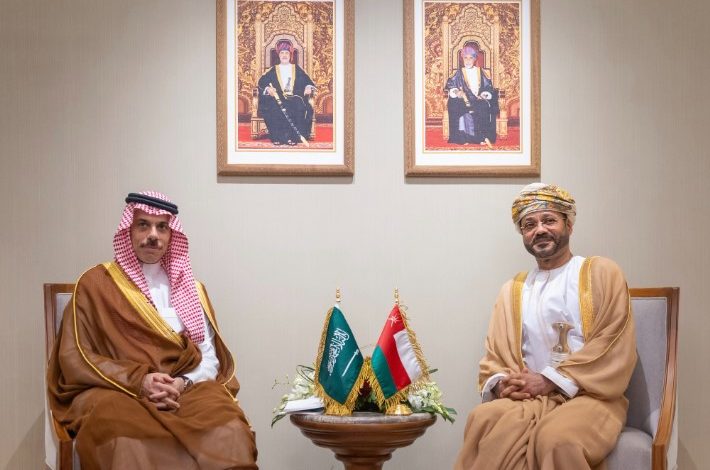
Saudi Arabia’s Foreign Minister Prince Faisal bin Farhan arrived in Muscat on Wednesday, where he met with his Omani counterpart Badr Albusaidi. Their meeting focused on reviewing bilateral relations and discussing ways to deepen cooperation and strengthen joint Gulf action, reported the Saudi Press Agency (SPA).
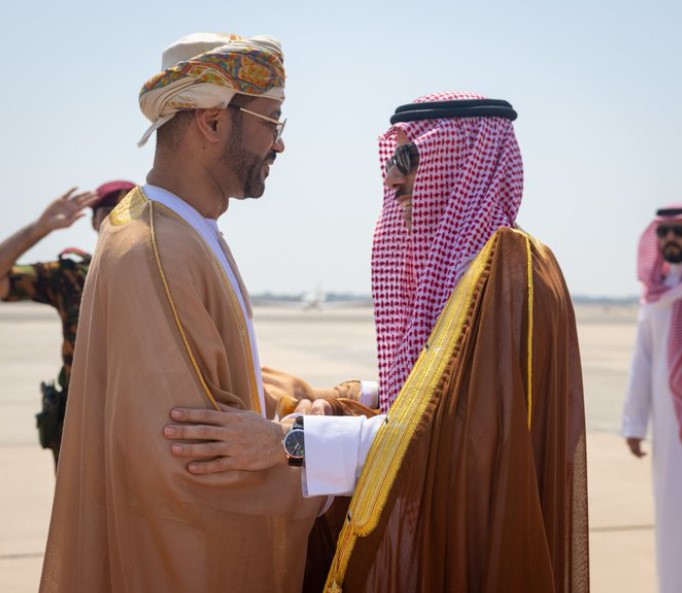
The two ministers held an official session of talks during which they discussed the latest regional and international developments, placing emphasis on issues surrounding the Strait of Hormuz.
Prince Faisal and Albusaidi reaffirmed the importance of safeguarding waterway security, ensuring freedom of navigation, and supporting peaceful dialogue to resolve disputes and enhance regional stability.
Backstory: US Central Command (CENTCOM) launched a fresh wave of strikes on Iranian targets in response to Iranian attacks on three commercial vessels transiting the Strait of Hormuz.
Iran’s IRGC retaliated by launching strikes against Bahrain and Kuwait, claiming that they targeted US military sites in the two Gulf countries.
The Hormuz Chokepoint
According to a statement by Oman’s Foreign Ministry, the Saudi-Omani discussions emphasized the significance of Hormuz to the stability of international trade and energy security.
Backstory: The Strait of Hormuz is a strategic waterway linking the Arabian Gulf with the Gulf of Oman and the Arabian Sea, through which around a fifth of daily global oil and LNG supplies pass.
Since the eruption of the US-Iran war in late February 2026, Iran has partially closed the Strait, illegally blocking transit without its permission. This has disrupted the flow of goods, essential commodities and energy and aid supplies.
While the blockade was lifted following a preliminary deal between the US and Iran on June 18, sporadic clashes erupted around the waterway, with Tehran claiming the right to total control over the critical maritime corridor.
Between The Lines: The US-Iran deal stated that Iran and Oman would hold discussions with other Gulf littoral countries to “define the future administration and maritime services in the Strait of Hormuz.”
The deal also noted that passage through Hormuz would be toll-free “for 60 days only” after its signing, leaving the status of the strategic maritime corridor after that period unclear.
State of Play: While Iran wants to impose “maritime service fees” on ships transiting the Strait of Hormuz – a charge that did not exist before the war, Oman said that it has no plans to impose any transit fees on ships transiting the waterway.
Muscat made clear its position during a joint GCC-US ministerial meeting in Bahrain. Albusaidi assured his Gulf counterparts of Oman’s commitment to “full and constructive” engagement with various parties to secure maritime navigation, clarifying that future arrangements related to the Strait do not entail the imposition of any transit fees.
Saudi-Omani Partnership
The Saudi and Omani Ministers, alongside senior officials from both sides, discussed ways to strengthen joint cooperation and enhance the strategic partnership across various fields.
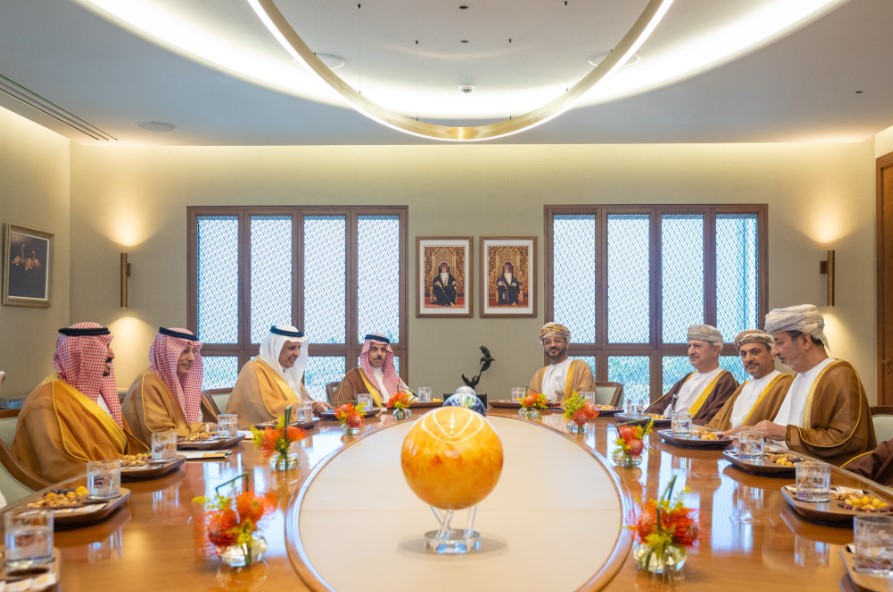
In light of this, they reviewed joint strategic initiatives, transportation networks, and logistics connectivity to support regional integration.
Furthermore, they explored ways to expand economic, trade, and investment cooperation to support integration, enhance the smooth flow of trade and open broader horizons for bilateral and regional partnerships, in line with the Gulf Cooperation Council’s framework for joint action.
The two sides also reviewed partnership initiatives under the Saudi-Omani Coordination Council, leveraging each country’s comparative advantages, aligning the shared goals of Saudi Vision 2030 and Oman Vision 2040, and positioning the private sector to drive these joint projects.
The Context: The Saudi-Omani Coordination was established in July 2021, during Sultan Haitham bin Tariq’s visit to the Kingdom. It aims to set a common vision for deepening and sustaining relations and elevate them to the level of integration in the political, security, military, economic, developmental and human fields.
Logistics Connectivity: Saudi-Oman Highway
The Saudi-Omani discussions focused on the land border crossing project, known as the Saudi-Oman Highway. It is a critical land link connecting the two Gulf countries.
The Details: The 564-kilometer roadway was inaugurated in 2021. It runs from the Batha Haradh intersection, reaching the Shaybah oil field and then extending to the Empty Quarter on the Saudi-Omani borders. Inside Oman, it covers a distance of 161 kilometers from the borders to the Ibri Governorate.
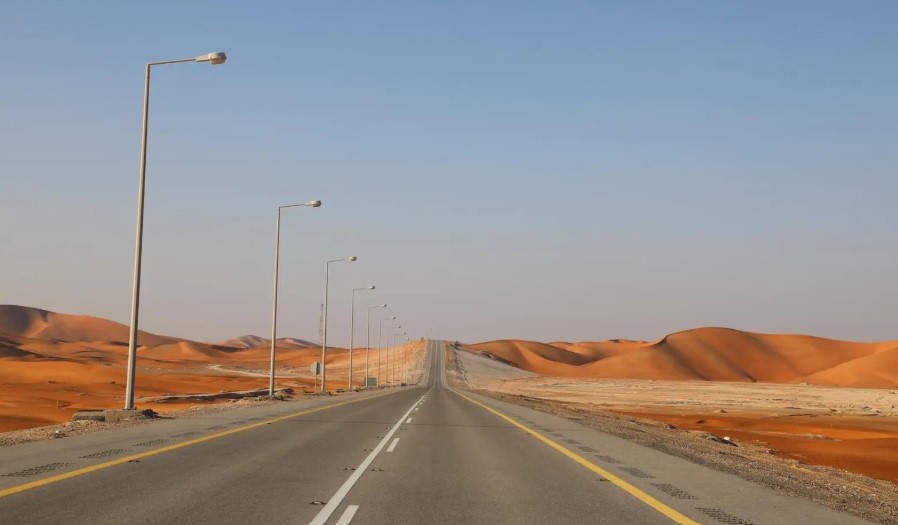
Built to top-tier traffic safety standards, the highway features 30 kilometers of night lighting, 12 million square meters of road markings, and an advanced network of reflective markers and warning signs. Dual-sided rest stops for both commercial trucks and passenger cars were also integrated to ensure driver safety.
The Bottom Line: The Saudi-Oman Highway significantly scales up Saudi-Omani trade and tourism while streamlining travel for pilgrims visiting the holy sites. It serves as a vital economic lifeline, offering Oman direct land access to Saudi Red Sea ports and connecting Saudi Arabia directly to the Arabian Sea.
Crucially, the project advances Saudi Arabia’s National Transport and Logistics Strategy, bolstering its efforts to establish alternative routes to bypass the Strait of Hormuz and cementing the Kingdom’s role as a dominant global logistics hub.