Iran Warns US Strikes Render Ceasefire ‘Meaningless’ as Mediators Scramble for Deal
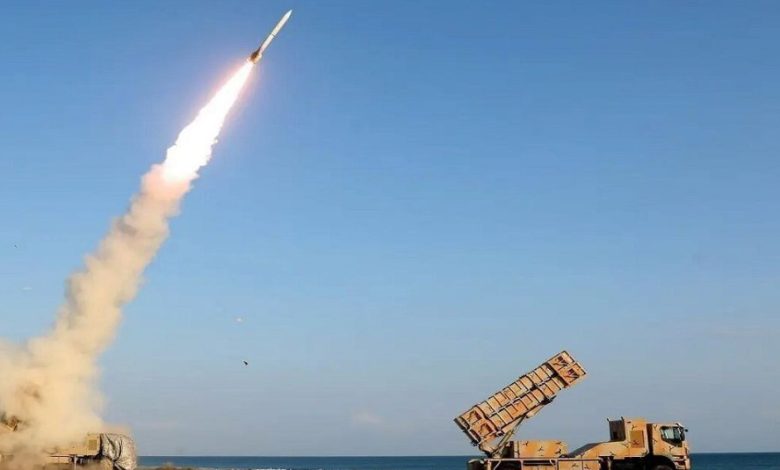
Iran said that the latest US strikes on the country rendered the fragile ceasefire “practically meaningless,” warning that Washington was responsible for the consequences of this attack.
Meanwhile, mediators Pakistan and Qatar are intensifying diplomatic efforts to negotiate an end to the war and secure a preliminary deal between the US and Iran.
Ceasefire Threatened
In a statement on Thursday, Iran’s Foreign Ministry strongly condemned the recent US strikes, blaming President Donald Trump’s administration for the “highly dangerous repercussions of this provocation.”
It noted that the “illegal and criminal attacks perpetrated by the US in recent hours not only constitute a flagrant violation of the UN Charter… but also render the ceasefire of April 8 practically meaningless.”
Similarly, Iranian Foreign Minister Abbas Araghchi said that the US attacks had undermined the ceasefire and that Washington bears responsibility for the dangerous consequences arising from the attacks.
In a phone call with EU’s Foreign Policy Chief Kaja Kallas, Araghchi criticized global inaction in the face of US attacks on Iran, warning that it would result in greater regional and international insecurity.
Tit-for-Tat Attacks
Following nearly two months of relative calm since a ceasefire took place on April 8, the US and Iran traded heavy strikes for two days, jeopardizing the ongoing peace talks.
US Central Command (CENTCOM) said on Thursday it completed additional “self-defense strikes” using precision munitions against multiple targets in Iran, including Iranian military surveillance capabilities, communication systems, and air defense sites.
Meanwhile, Iran’s Revolutionary Guards Corps (IRGC) said it hit 18 US military targets across the region, including the Al-Salem and Ahmad al-Jaber airbases in Kuwait, as well as the Sheikh Isa airbase in Bahrain. It also said it targeted the deployment site of US F35, F15, and F16 fighter jets at Al-Azraq airbase in Jordan.
Renewed Threats
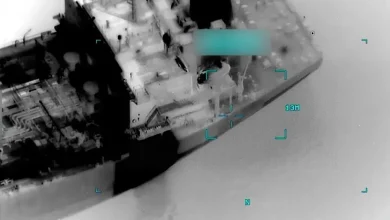
The two sides continued to trade threats on Thursday. Iran’s Khatam al-Anbiya Central Headquarters announced the “complete closure” of the Strait of Hormuz to all shipping, warning that “any vessel traffic” there would be targeted.
However, US CENTCOM dismissed Iranian claims, saying that “commercial ships are continuing to transit in and out of the Strait of Hormuz tonight.”
In a social media post, Trump reiterated his threat to strike Iran “very hard tonight,” threatening to seize the country’s oil. “At some point in the not too distant future, we will be taking Kharg Island, and other oil infrastructure points, and assume total control of their Oil and Gas Markets, much like we have with Venezuela,” he wrote.
In response to US threats, Iran’s Deputy Foreign Minister Kazem Gharibabadi said that the Iranian armed forces “will stand firm against any aggression and, with a decisive, authoritative, and regret-inducing response, defend every inch of the country’s soil.”
“The full consequences of these illegal and dangerous actions will fall upon America and any party that participates in, facilitates, or assists them,” he posted on X.
Last-Minute Diplomacy
Mediators Pakistan and Qatar have stepped up efforts to keep the US-Iran talks on track. A Qatari delegation arrived in Tehran on Wednesday to hold discussions with the Iranians “in coordination with the US,” a diplomatic source told AFP.
The delegation departed Tehran after talks “that lasted into the early hours of (Thursday) morning,” despite the US strikes.
In the meantime, a foreign ministry spokesman for Pakistan – the primary mediator – said that Islamabad had not “lost hope” in a negotiated deal.
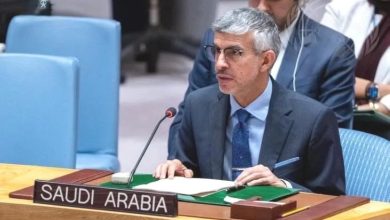
Saudi Arabia also called for de-escalation and the return to constructive negotiations led by Pakistan and Qatar. Similarly, China urged the warring parties “to respond to the mediation efforts of relevant countries, and achieve a comprehensive and lasting ceasefire.”
Preliminary Deal
The US and Iran reached a political understanding and were exchanging messages on details of a preliminary deal, Reuters reported, citing three Iranian sources and a European official. However, some issues remain under discussion, including a mechanism for the release of billions of dollars in frozen Iranian funds.
“Iran wants $6 billion to $12 billion of its frozen funds to be released to Tehran, while Washington wants to release funds in stages for humanitarian goods and rejects returning funds to Iran outright,” one of the sources said.
Moreover, Iran demands an end to Israeli attacks on Lebanon, the lifting of sanctions on Iran and recognition of Tehran’s control over the Strait of Hormuz.
On the other hand, Trump wants Iran to end its restriction over shipping through Hormuz and seeks a deal that ensures Tehran cannot acquire a nuclear weapon.