Hezbollah and Israel have agreed to a partial ceasefire in Lebanon, first announced by US President Donald Trump.
Under the agreement, Israel will hold off its planned attack on Beirut and its suburbs while Hezbollah will halt attacks on Israel.
Limited De-escalation
In a social media post on Monday, Trump announced that Israeli Prime Minister Benjamin Netanyahu refrained from attacking Beirut’s southern suburbs (Dahiyeh) and pulled back troops following a phone conversation between the two leaders.
Similarly, Trump said that he spoke with representatives of Hezbollah, who pledged not to attack Israel or its soldiers.
Following Trump’s announcement, Netanyahu said that the Israeli military will continue operations in southern Lebanon as planned.
“I spoke this evening with President Trump and told him that if Hezbollah does not stop firing at our cities and citizens – Israel will strike terrorist targets in Beirut. This position of ours remains unchanged,” he said in a statement posted by his office on X.
Tense Conversation
US media reported that the phone call between the US and Israeli leaders became heated, as Trump lashed out at Netanyahu over his plan to strike Beirut, which threatened the ongoing negotiations with Iran.
According to Axios, citing sources, Trump at points used expletives, called Netanyahu “crazy” and accused him of ingratitude.
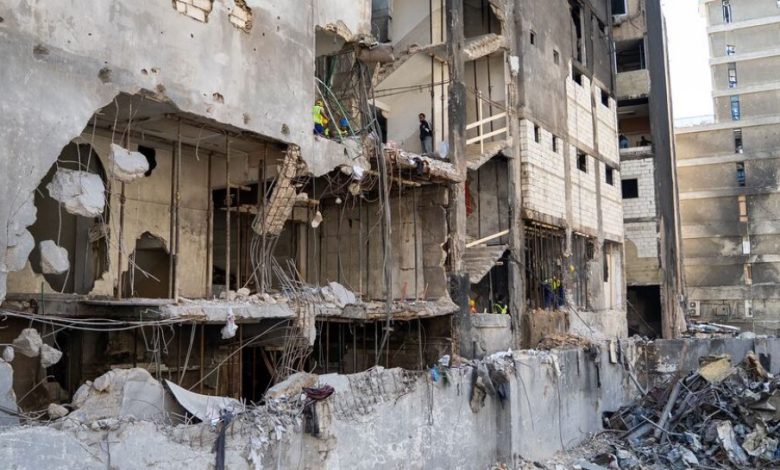
The tense exchange came after Netanyahu announced on Monday that he had ordered the Israeli military to launch strikes against targets in Beirut’s southern suburbs (Dahiyeh) – the stronghold of the Iranian-backed group Hezbollah – citing ceasefire violations.
Earlier, Netanyahu ordered an expansion of incursion into Lebanon, few days after crossing the Litani River. He also announced that Israeli forces captured the 900-year-old Beaufort Castle, also known as Qalaat al-Shaqif, which offers views across Lebanon and into northern Israel.
Lebanese Confirmation
Lebanon’s embassy in Washington confirmed on Monday that Hezbollah had agreed to a US proposal for a mutual cessation of hostilities.
Under the arrangement, Israel will refrain from striking Beirut’s Dahiyeh in exchange for Hezbollah halting its attacks against Israel, the embassy said in a statement. The arrangement will later be extended to encompass all Lebanese territories, it added.
Hezbollah lawmaker Hassan Fadlallah said that the group will support a full nationwide ceasefire as a precursor to an Israeli troop withdrawal. Speaking to Al-Manar, Fadlallah noted the group will spend the next few days watching to see if the cessation of hostilities holds.
However, attacks continued in southern Lebanon on Monday evening. The Israeli military announced early Tuesday that it intercepted two projectiles that crossed from Lebanon into northern Israel, with no injuries reported.
US-brokered Talks
A new round of direct talks between Lebanon and Israel are scheduled for Tuesday and Wednesday in Washington to advance the political track and expand the ceasefire.
The US has mediated to end the fighting in Lebanon in parallel to broader diplomatic efforts to resolve the conflict with Iran, hosting direct talks between Lebanese and Israeli delegations in Washington.
On Friday, the Pentagon hosted military talks between officials from Lebanon and Israel to launch the security track that supports military-to-military communication and coordination.
Lebanon has been dragged into the US-Israeli war with Iran in early March when Hezbollah decided to join the fighting by launching missile and drone attacks on Israel in retaliation for the killing of the Iranian Supreme Leader Ayatollah Ali Khamenei.
In response, Israel launched heavy airstrikes and ground operations into southern Lebanon, seizing control of large swaths of the country. Fighting between both sides has continued despite a US-brokered ceasefire taking effect on April 17.
Iran Talks at Risk
Iran has insisted that a ceasefire in Lebanon is a prerequisite for any deal to end the conflict with the US. “The ceasefire between Iran and the US is unequivocally a ceasefire on all fronts, including in Lebanon. Its violation on one front is a violation of the ceasefire on all fronts,” Iranian Foreign Minister Abbas Araghchi said in a statement.
In response to Israeli plans to attack Beirut’s Dahiyeh, the IRGC-affiliated Tasnim News Agency reported that Iran’s negotiating team is stopping exchanges of messages with the US through mediators.
It also said that Iran and its allied militias in Yemen, Lebanon and Iraq have set an agenda to completely block the Strait of Hormuz and activate other fronts, including the Bab El Mandab Strait, in order to “punish” Israel and its supporters.
However, a regional source told CNN that the talks were back on track. Furthermore, Trump told ABC News he believes a deal to reopen the Strait of Hormuz and extend the ceasefire with Iran is reachable “over the next week.”