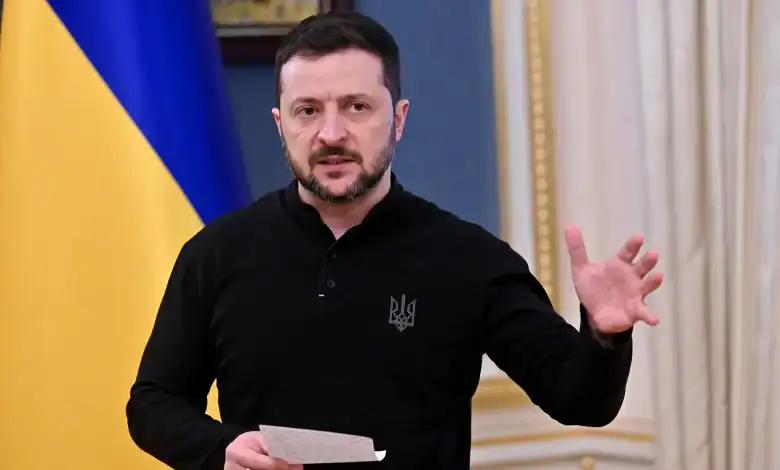
Ukrainian President Volodymyr Zelensky accused Russia on Tuesday of deliberately delaying peace talks to prolong its three-year invasion. This accusation comes as US President Donald Trump advocates for an immediate ceasefire between the two nations. Trump held phone conversations on Monday with both Zelensky and Russian President Vladimir Putin. Meanwhile, Russian and Ukrainian officials met in Istanbul on Friday for their first direct discussions in over three years.
Unfortunately, the Istanbul talks did not yield a truce, prompting Zelensky to criticize Putin for sending “empty heads” to negotiate. “It is obvious that Russia is trying to buy time to continue its war and occupation,” Zelensky stated in a social media post.
Trump characterized his two-hour conversation with Putin, the third this year, as a significant breakthrough. The Republican leader aims to secure a deal to end the war, a promise he made during his election campaign.
Putin’s Response and Ongoing Hostilities
However, Putin rejected calls for a full, immediate, and unconditional ceasefire. Instead, he expressed willingness to collaborate with Ukraine on a “memorandum” outlining a potential roadmap for peace. Russian political analyst Konstantin Kalachev remarked, “The memorandum buys time for Russia.” He emphasized that the cessation of hostilities is not a prerequisite, allowing Russia to continue its offensive actions.
Zelensky mentioned he had no details about the proposed “memorandum” but expressed openness to reviewing Russia’s ideas. Since Russia invaded Ukraine in February 2022, the conflict has devastated large areas of eastern Ukraine, resulting in tens of thousands of deaths and significant territorial control by Russia. Many individuals in Kyiv and Moscow expressed skepticism about the prospects for peace. A retired teacher, Victoria Kyseliova, voiced her lack of faith in Trump, stating, “I never had any faith in him and now I have none at all.”
Vitaliy, a 53-year-old engineer from Kyiv, echoed similar sentiments, asserting that Trump is no “messiah.” He noted that Trump’s diplomatic efforts have not led to meaningful changes.
Defiance in Moscow
In Moscow, there was a sense of defiance and confidence among citizens. Marina, a 70-year-old former engineer, stated, “I believe that we don’t need these negotiations. We will win anyway.” Ukraine and European leaders are pressuring Trump to impose a new package of sanctions on Moscow. This pressure follows Putin’s decision not to attend face-to-face talks with Zelensky in Turkey.
Kyiv accused Moscow’s negotiators of making unrealistic demands during the Istanbul talks, including extensive territorial claims that Ukraine has consistently rejected. Zelensky emphasized the need for Kyiv and its allies to “work hard” to convince Trump of the necessity for additional sanctions. On Tuesday, the European Union formally adopted its 17th round of sanctions against Moscow, targeting 200 vessels from Russia’s so-called shadow maritime fleet.
Moscow Resilience and Future Steps
Kirill Dmitriev, head of Russia’s Direct Investment Fund, criticized Western politicians and media for attempting to disrupt constructive dialogue between Russia and the United States. Despite sanctions, Russia has successfully rerouted vital oil and gas supplies to India and China. Zelensky revealed that he discussed preparations for the next sanctions package with European Commission President Ursula von der Leyen. He identified key areas, including Russian oil, energy trade infrastructure, banks, and financial schemes, as crucial to pressuring Russia and contributing to peace.
Zelensky stated he is closely coordinating every step with European partners following his recent conversation with Trump. Meanwhile, Russia’s key ally, China, expressed support for direct dialogue between the warring sides. Foreign ministry spokeswoman Mao Ning stated, “It is hoped that the parties concerned will carry on with the dialogue to reach a fair, lasting, and binding peace agreement acceptable to all parties.”