The Sudanese army has seized several strategic areas west of Abbasiya Tagali in South Kordofan, following heavy clashes with the paramilitary Rapid Support Forces (RSF) and its ally, the Sudan People’s Liberation Movement-North (SPLM-N), according to reports.
Consequently, the army troops successfully entered Tabsa, Al-Damra, Gardoud Jama, and Al-Mureib, asserting firm control over the locations. Local witnesses confirmed that controlling these key areas west of Abbasiya Tagali effectively prevents further attacks on the city by the RSF and its allies.
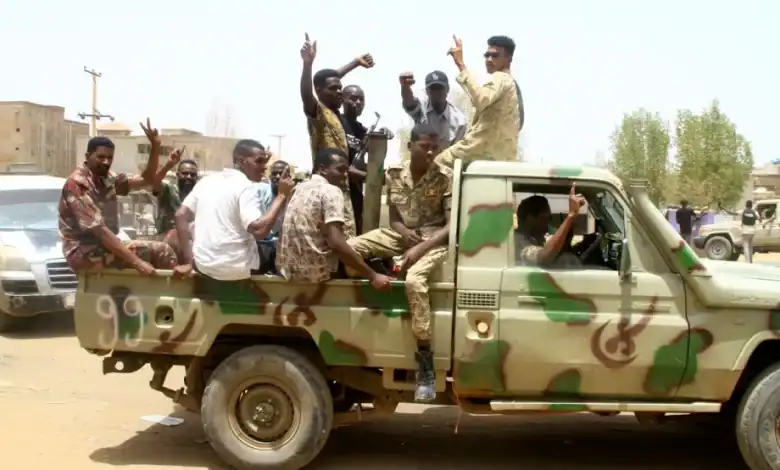
Army personnel quickly posted videos showing jubilant troops claiming their control of Tabsa and al-Damra as celebrating civilians gathered nearby. The Nuba Mountains community platform, a local non-governmental organization, further confirmed that the army successfully took possession of the three areas from the paramilitary RSF. However, neither the Sudanese army, the RSF, nor the SPLM-N immediately offered comment regarding these specific reports.
The Expanding Conflict Zone
The three Kordofan states, North, West, and South, have unfortunately endured weeks of particularly fierce fighting between the national army and the RSF. Consequently, this widespread violence prompted tens of thousands of people to flee their homes, according to distressing reports from local residents. The broader conflict remains highly active across the nation.
Out of Sudan’s 18 states, the RSF presently controls all five states within the Darfur region in the west, excluding some northern parts of North Darfur. Nevertheless, the army still holds those specific areas.
Meanwhile, the national army maintains strong control over most areas of the remaining 13 states across the south, north, east, and center of the country, including the strategic capital city of Khartoum.
Escalating Humanitarian Crisis
The devastating conflict between the Sudanese army and the RSF originally began in April 2023, tragically escalating the situation. Since that critical date, the violence has killed at least 40,000 people, according to official figures.
Moreover, the conflict has internally displaced a staggering 12 million people, according to recent figures released by the World Health Organization (WHO), deepening the country’s humanitarian crisis.