Misk Foundation Partners with UN to Drive Global Youth Leadership, Digital Innovation
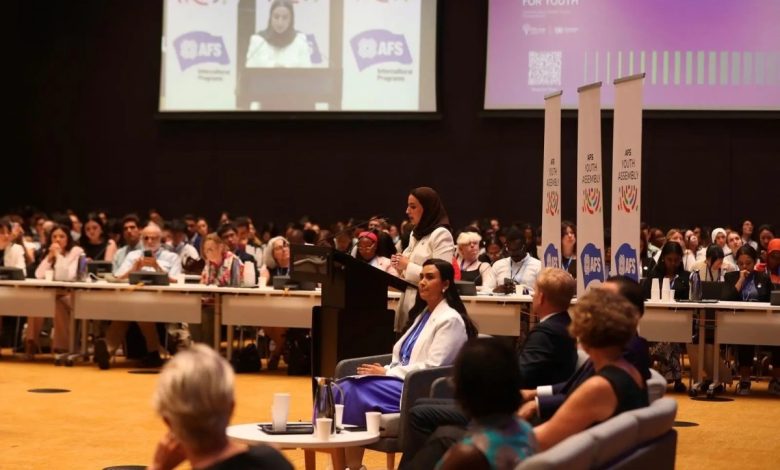
The big picture: Saudi Arabia continuously solidifies its position as a prominent global leader in human capital development and advanced technological innovation. Consequently, the Mohammed bin Salman Foundation (Misk) and the UN Youth Office recently established the Global Youth Network. Officials unveiled the network at the AFS Youth Assembly in Geneva. The timing marked International Youth Day, and it lands as Saudi Arabia pushes hard to make artificial intelligence central to its youth agenda. Both moves fit into a broader Gulf story: young populations increasingly shape how governments spend, train and build for the future.
Why it matters: The Kingdom is fusing two priorities under Vision 2030. It wants young people at the global policy table, and it wants an AI-literate generation driving the economy beyond oil. Together, the efforts show how Riyadh increasingly links soft-power diplomacy with hard technological ambition.
Driving Global Youth Participation
The founding partners announced this groundbreaking coalition in Geneva during the 31st AFS Youth Assembly, coinciding with International Youth Day celebrations. Young representatives from more than 80 nations convened under the central theme “Rise. Reimagine. Rebuild: A World for All” to advance key United Nations Sustainable Development Goals. Furthermore, Misk and the UN Youth Office will officially launch the network during the UN General Assembly in New York in September 2026.
This new initiative builds upon a highly successful institutional partnership between Misk and the United Nations that originally began back in 2018. The global platform brings together independent youth-focused organizations from diverse geographical regions worldwide. Additionally, it offers carefully tailored leadership pathways that empower young citizens to shape international policy formulation directly.
What they’re saying: Badr Al-Badr, Misk’s CEO, said the network will bring youth and decision-makers together to shape international policy. He added that it will translate young people’s visions into practical tools and on-the-ground strategies for global challenges.
Felipe Paullier, who leads the UN Youth Office as assistant secretary-general for youth, said sustainable opportunities will give young people real influence over global decisions. He said the network builds that infrastructure through the UN-Misk partnership.
The network operates through four fundamental strategic pillars:
- Strengthening young leadership capacities in public policy, governance, and civic advocacy.
- Creating direct access pathways to United Nations platforms and international decision-making forums.
- Amplifying diverse youth perspectives and underrepresented global communities effectively.
- Equipping member organizations with specialized operational tools, analytical data, and shared knowledge.

Pioneering Youth and AI Leadership
Beyond global diplomatic engagement, Saudi Arabia actively prepares its young demographic for the rapidly evolving digital economy. The Kingdom places youth empowerment and artificial intelligence at the very center of its comprehensive national transformation strategy. Specifically, the Saudi Data and Artificial Intelligence Authority (SDAIA) collaborates closely with national educational entities to equip young Saudis with world-class technical capabilities in data science and artificial intelligence.
Therefore, Saudi Arabia now integrates foundational artificial intelligence concepts directly into public school education curricula nationwide to nurture digital literacy early. Young Saudi talent consistently demonstrates exceptional innovation on competitive global technical stages. For example, Saudi students achieved first place globally at the World Artificial Intelligence Competition for Youth (WAICY) in 2025, winning 26 prestigious awards. Consequently, these national initiatives effectively convert youth creativity into scalable digital solutions.
Kingdom’s Impact on Youth and Tech
By the numbers:
- 20 million: Total young citizens that founding member organizations represent across various global regions.
- 1 million: Target citizens within SDAIA’s “One Million Saudis in AI” (SAMAI) national upskilling initiative.
- 6 million: Individuals who actively benefited from SDAIA artificial intelligence awareness programs and capacity-building workshops.
- 26: Global awards that talented Saudi students won at the 2025 World Artificial Intelligence Competition for Youth.
Between the lines: Saudi Arabia treats youth engagement and AI development as one project, not two. The Kingdom frames both as pillars of its knowledge-economy push, and its education ministry already ties academic calendar reforms to AI-skills goals. SDAIA has also trained more than 278 government leaders in AI. It expanded its SAMAI workforce initiative into an 11-ministry second phase this year. Officials call both programs long-term bets, arguing that empowered, tech-fluent youth will anchor the Kingdom’s diversification goals well past 2030.
What’s next: The network’s formal UN launch this September will test whether the model delivers real influence for member organizations. Saudi Arabia, meanwhile, keeps building the AI talent pipeline it says will anchor its economy for decades to come.
Ultimately, Saudi Arabia constructs sustainable pathways for future global leaders through youth advocacy and AI education.