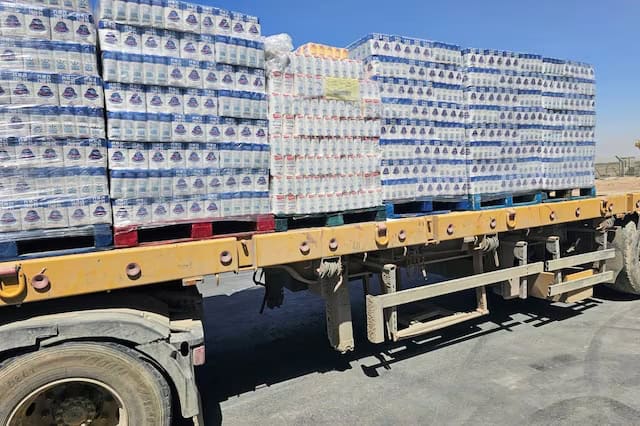
Israel announced on Tuesday that it will allow a gradual and controlled entry of goods into Gaza through local merchants, as global monitors warn of an unfolding famine in the enclave, impacting hostages held by Hamas.
Israel’s Coordinator of Government Activities in the Territories (COGAT) stated that the cabinet has approved a mechanism to expand humanitarian aid. Consequently, supplies will enter Gaza through the private sector, including basic food products, baby food, fruits, vegetables, and hygiene supplies.
“This aims to increase the volume of aid entering the Gaza Strip while reducing reliance on aid collection by the UN and international organizations,” COGAT added.
Challenges and Uncertainties
However, it remains unclear how this aid operation will function given the widespread destruction in Gaza. Palestinian and UN officials emphasize that Gaza needs around 600 aid trucks daily to meet humanitarian requirements.
Recent images of starving Palestinians, including children, have alarmed the world. Additionally, a video released by Hamas on Sunday showing an emaciated captive drew sharp criticism from Western powers.
In response to rising international uproar, Israel announced steps last week to let more aid reach Gaza, including pausing fighting for part of the day in some areas, approving air drops, and announcing protected routes for aid convoys.
Hamas has stated its preparedness to coordinate with the Red Cross to deliver aid to hostages it holds in Gaza. However, this coordination is contingent on Israel permanently opening humanitarian corridors and halting airstrikes during aid distribution.
Controversy Around the Gaza Humanitarian Foundation:
Israel and the United States urged the UN in May to work through the Gaza Humanitarian Foundation (GHF) which employs a US logistics firm run by a former CIA officer and armed US veterans. However, the UN refused, questioning GHF’s neutrality and accusing the distribution model of militarizing aid and forcing displacement.
Palestinians have been killed near GHF sites where limited aid was distributed. The UN estimates that Israeli forces have killed more than 1,000 people seeking food since May, most near the organization’s distribution sites. GHF denies that there have been deadly incidents at its sites. Instead, it claims the deadliest incidents have been near other aid convoys.
According to Gaza health officials, Israel’s offensive since October 2023 has killed more than 60,000 Palestinians, mostly civilians.
Israeli officials report that 50 hostages remain in Gaza, with only 20 believed to be alive. However, Hamas has thus far barred humanitarian organizations from accessing the hostages, leaving families with little or no details of their conditions.