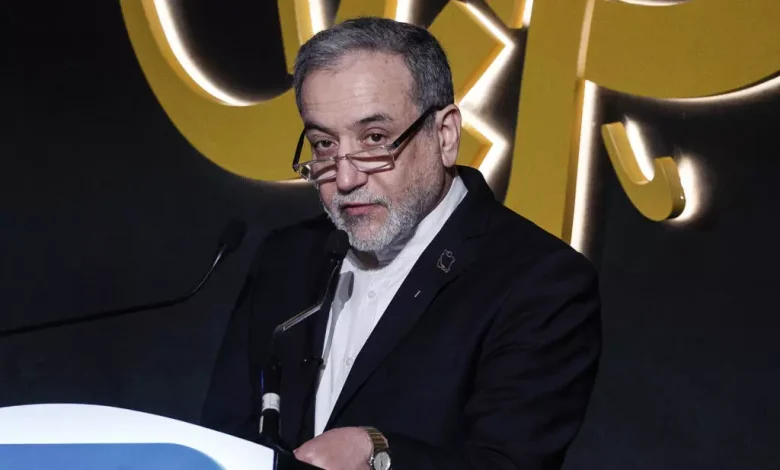
Iranian Foreign Minister Abbas Araghchi firmly rejected any possibility that Tehran would abandon uranium enrichment during negotiations with the US. He emphasized that external threats, including the specter of war, would never compel Iran to surrender this sovereign right.
Araghchi addressed these points Sunday at a Tehran forum attended by AFP reporters, expressing deep skepticism about American intentions. Furthermore, he revealed that Iran currently consults with strategic partners China and Russia regarding the diplomatic process.
Defiance in the Face of Military Posturing
“Why do we insist so much on enrichment and refuse to give up even if a war is imposed on us? Because no one has the right to dictate our behaviour,” Araghchi declared to the assembled audience. He added confidently that US military deployments in the region failed to intimidate Tehran. Specifically, he dismissed concerns about the USS Abraham Lincoln aircraft carrier arriving recently in the Arabian Sea.
Consequently, Iran continues advancing its nuclear program despite escalating Western pressure and sanctions.
The United States and Iran resumed negotiations Friday in Oman, marking their first direct talks since Israel’s brief 12-day conflict with Iran last June. During these discussions, Iran seeks comprehensive sanctions relief in exchange for what Araghchi described as “a series of confidence-building measures concerning the nuclear programme.”
However, Western nations and Israel maintain that Tehran pursues nuclear weapons capabilities—a claim the Islamic Republic consistently denies. “They fear our atomic bomb, while we are not looking for one,” Araghchi explained. “Our atomic bomb is the power to say ‘no’ to the great powers.”
Expanding the Negotiation Agenda
Meanwhile, Israeli Foreign Minister Gideon Saar condemned Iran’s nuclear ambitions on Sunday, labeling the regime “the most extreme in the world” seeking “the most dangerous weapon.” He characterized this pursuit as “a clear danger to peace.”
Meanwhile, both the United States and Israel demand that negotiations address Iran’s ballistic missile development and regional proxy support. Iranian officials steadfastly refuse to include these topics, insisting talks must focus solely on nuclear issues and sanctions removal.
These diplomatic maneuvers occur alongside significant US military reinforcement in the Persian Gulf region. American negotiators Steve Witkoff and Jared Kushner visited the USS Abraham Lincoln Saturday, underscoring Washington’s “peace through strength” posture.
Later, Witkoff stated on social media that the carrier strike group actively “keeps us safe and upholds President Trump’s message.” Despite this buildup, President Trump described initial talks as “very good,” while Iranian President Masoud Pezeshkian cautiously called them “a step forward.”
Doubts Persist as Iran Monitors US Actions
Nevertheless, Araghchi questioned America’s genuine commitment to diplomacy. “The continuation of certain sanctions and military actions raise doubts about the seriousness and readiness of the other side to conduct genuine negotiations,” he warned.
Iran now monitors all developments closely before deciding whether to continue the dialogue. Trump simultaneously signed an executive order imposing tariffs on nations trading with Iran and announced fresh sanctions targeting oil-export vessels.
These tensions unfold against Iran’s severe domestic crackdown following December protests sparked by economic hardship. Authorities acknowledge 3,117 deaths but international watchdogs cite far higher tolls. The US-based HRANA organization has verified 6,961 fatalities, mostly protesters, and documented over 51,000 arrests.
As negotiations proceed delicately, Iran’s leadership signals unwavering resolve; enrichment remains non-negotiable regardless of external pressure or military threats looming over the Arabia Gulf.