All Eyes on King Abdulaziz Public Library’s Rare Ibn Battuta Treasure
From Riyadh’s grand libraries to hidden archives in Saudi Arabia’s historic mosques, Saudi institutions are gaining a new spotlight as guardians of precious manuscripts and rare cultural treasures.
By showcasing rare priceless manuscripts, Saudi Arabia is not only preserving the intellectual legacy of the Islamic world but also breathing new life into it.
How Can One Book Transcend Time and Borders?
Once hidden in archives, these treasures now emerge as vital bridges, linking past renaissances with future generations and deepening cultural understanding that resonates far beyond the Kingdom’s borders.
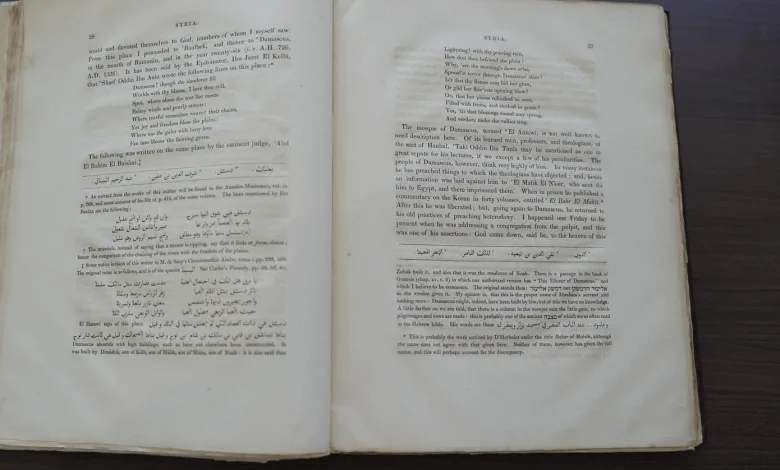
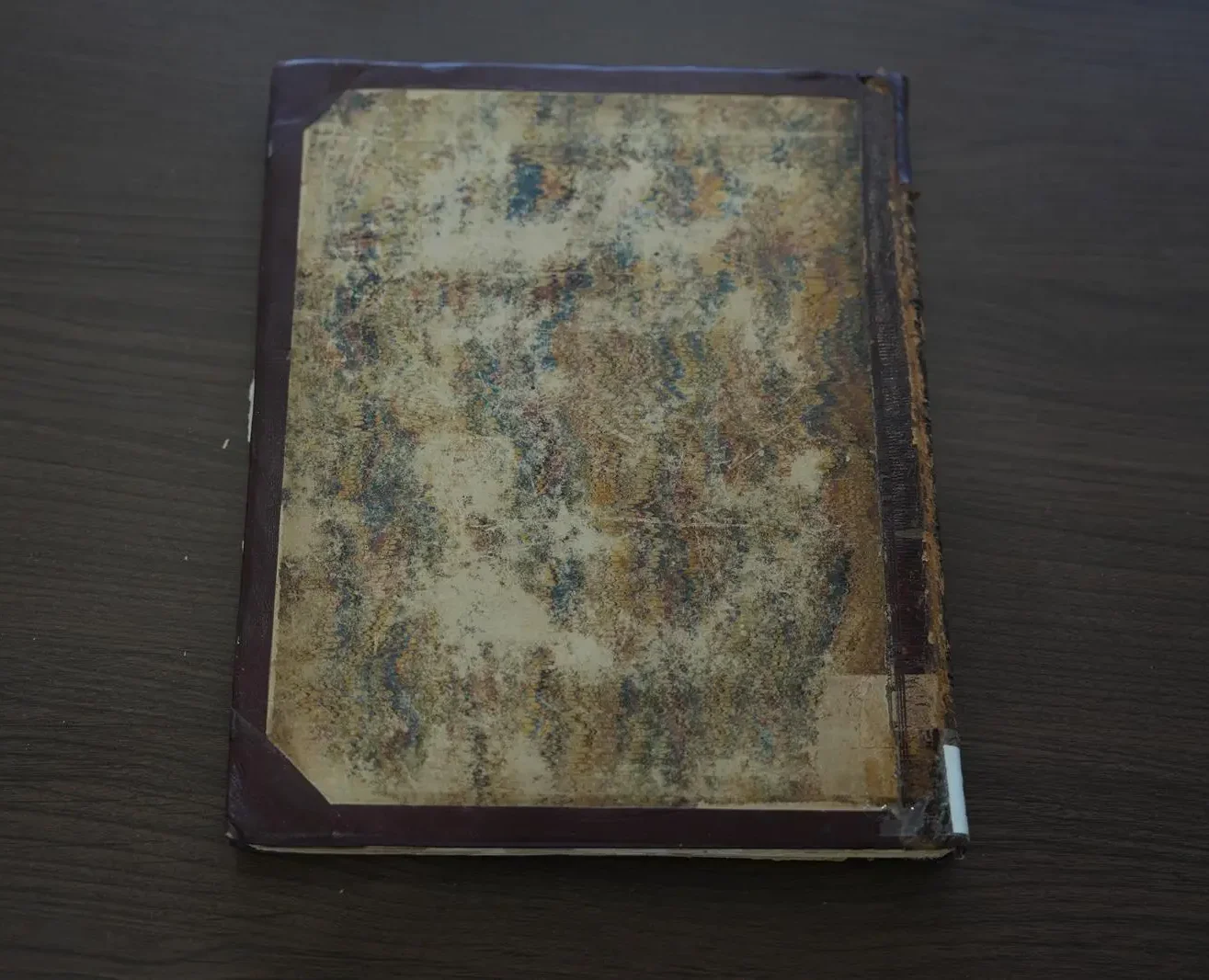
As a testament to this mission, Riyadh’s King Abdulaziz Public Library has unveiled a rare 1829 edition, the first printed English translation of Ibn Battuta’s legendary travels.
This remarkable volume represents one of the earliest attempts to introduce the Moroccan explorer’s exceptional journeys to English‑speaking audiences.
Translated in 1829 by British Orientalist Samuel Lee from an abridged Cambridge manuscript, the 294‑page edition is more than a conventional rendering. Enriched with historical and geographical commentary and supported with references to classical Arabic texts, it offers readers an in-depth historical context, bridging medieval Islamic scholarship with early Western academic engagement.
How Far Would Curiosity Take One Man?
Celebrated as the “Prince of Muslim Travelers,” Ibn Battuta stands among the history’s most remarkable explorers. Being a distinguished 14th‑century scholar, judge, and adventurer, he transformed a single pilgrimage into a lifelong odyssey of discovery. Along the way, he documented the peoples, cultures, and civilizations of the medieval world with profound insights that continue to inspire centuries later.
Between 1325 and 1354, Ibn Battuta embarked on an odyssey that carried him across the equivalent of 44 modern nations, spanning Africa, Asia, and Southern Europe.
His journeys, meticulously documented in The Rihla, surpassed even those of the famed Venetian Marco Polo. This fact securing Ibn Battuta’s place among the greatest and boldest travelers in history and crystalized his legacy as a dynamic voice of the medieval world.
Though history remembers him simply as Ibn Battuta, his full name is Shams al‑Din Abu Abdallah Muhammad ibn Abdallah ibn Muhammad ibn Ibrahim al‑Lwati al‑Tanjhi.
How Did One Pilgrimage Become History’s Greatest Journey?
Eager to trace the beginning of his extraordinary journey? At just 21 years old, Ibn Battuta departed his hometown of Tangier in 1325, intending only to perform the sacred duty of Hajj in Makkah.
However, what began as a pilgrimage soon transformed into an unparalleled voyage of exploration driven by unquenchable curiosity and a thirst for knowledge.
His path carried him far beyond the holy cities, immersing him in new cultures and civilizations.
When the Journey Found Its Voice
Upon returning to Morocco in 1355, the magnitude of Ibn Battuta’s travels quickly captured the attention of Sultan Abu Inan al‑Marini, who commissioned the young scholar Ibn Juzayy al‑Kalbi to record the explorer’s decades‑long odyssey.

Subsequently, Ibn Juzayy shaped the chronicle in the classical Arabic tradition of travel writing, blending evocative description with geographical detail, historical insight, and cultural observation.
Ultimately, the resulting work, The Rihla (“The Journey”), emerged as one of the most acclaimed travel narratives in world literature.
What Makes The Rihla a Timeless Classic?
Composed in Classical Arabic, the travelogue recounts Ibn Battuta’s remarkable journey across the medieval world with significant detail, highlighting the diverse cultures, societies, and landscapes he encountered over nearly three decades.
Best known as The Rihla, Arabic for “the journey” or “the voyage”, the manuscript has emerged as one of the most influential works of travel literature.
Across centuries, The Rihla has transcended linguistic borders, translated into multiple languages that carried Ibn Battuta’s legacy far beyond the Islamic world.
Among its most prominent editions is the 1829 English translation by Samuel Lee, a breakthrough that stands among the earliest milestones in Western engagement with Islamic heritage.
Related Topics:
Holy Quran Museum in Hira District: Cultural Landmark Showcasing Precious Manuscripts
King Abdulaziz Public Library Places Saudi Culture in the Hands of Chinese Readers