The Kremlin on Sunday vehemently dismissed Ukrainian President Volodymyr Zelenskyy’s recent threats suggesting that high-ranking Kremlin officials should identify the nearest bomb shelters, asserting that Ukraine was losing the war and its negotiating position is worsening.
Zelenskiy suggested to Axios that key Russian power centers, including the Kremlin, are potential targets, emphasizing that Kremlin officials “have to know where the bomb shelters are.” This statement aimed to portray a strong image to European allies, who currently support Ukraine.
Deterioration of Ukraine’s Negotiating Position
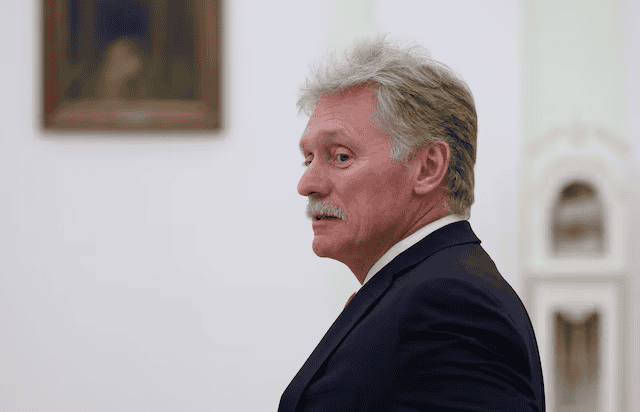
Kremlin spokesman Dmitry Peskov responded on state television, saying, “Zelenskiy is trying to demonstrate to the Europeans that he is a brave soldier.” He added that the situation at the front indicates otherwise. Peskov noted, “With every passing day, the situation for Ukraine is inexorably deteriorating.”
Furthermore, Peskov claimed that the observable situation on the front lines clearly indicated the complete opposite of the Ukrainian leader’s asserted strength, since Ukraine’s overall strategic position was inexorably deteriorating with every single passing day, consequently weakening the nation’s future negotiating stance.
According to the pro-Ukrainian DeepState map project, Russia currently controls approximately 114,918 square kilometers (44,370 square miles) of Ukraine, which represents about 19% of the country. In the past year, Russia has taken an additional 4,729 square kilometers of Ukrainian territory.
‘Better Not Even Talk About It’
When asked about the Kremlin’s perception of an attack on Russian power centers, Peskov stated, “It’s better not to even talk about it,” reflecting the Kremlin’s serious stance on potential threats.
In May 2023, Russia accused Ukraine of attempting to attack the Kremlin with drones. At that time, President Vladimir Putin was not present in the Kremlin during the alleged attack.
As tensions continue to rise, the Kremlin remains firm in its position, asserting that Ukraine’s threats do not change the reality of the ongoing conflict.