
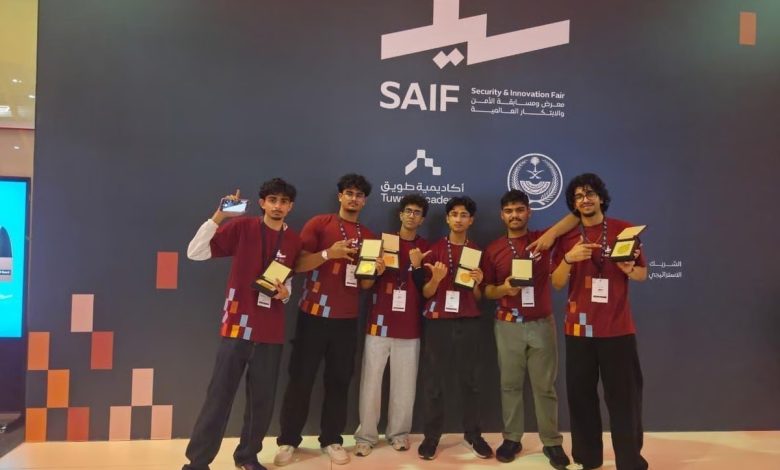
Driving the news: Young innovators from Saudi Arabia’s Eastern Province swept 175 medals at the 2026 Global Security and Innovation Exhibition and Competition (SAIF), showcasing the Kingdom’s surging investment in youth science and technology.
Why it matters: The victory demonstrates how Saudi Arabia’s Vision 2030 education reforms transform public school classrooms into global innovation incubators. Rather than relying solely on traditional rote learning, Saudi schools now train students to build practical technologies that solve real-world security and industrial challenges.
Inside the Eastern Province Sweep
Student delegations from the General Directorate of Education in the Eastern Province dominated the medal podium during the November 2026 showcase. Specifically, 86 student teams from Dammam and surrounding cities presented 181 original projects across multiple engineering and digital tracks.
Consequently, international judges awarded the Eastern Province contingent 44 gold medals, 86 silver medals, and 45 bronze medals. In addition, other Saudi regional delegations posted strong results at the event, with Madinah schools capturing 69 medals and Makkah schools securing 41 medals.
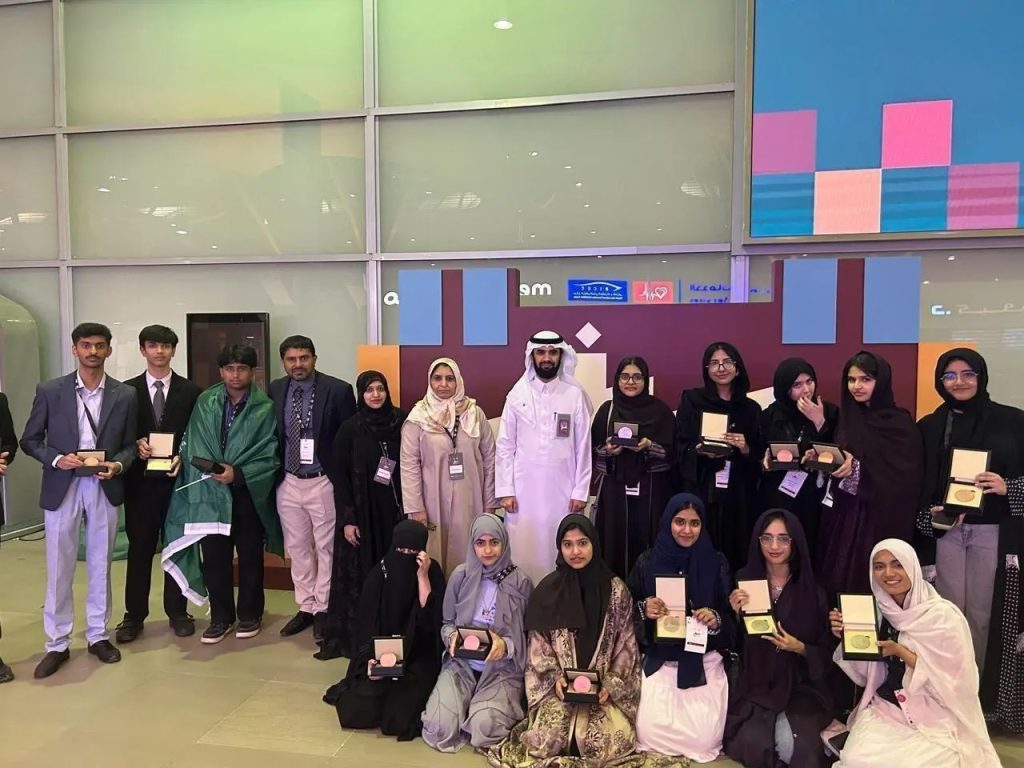
What they said: In an official statement, the Eastern Province Education Directorate noted that the results directly reflect the “scientific, innovative, and competitive capabilities” of the region’s youth. Moreover, education officials affirmed that the triumph extends the Ministry of Education’s strategy to build an ecosystem that stimulates talent and innovation.
“This achievement strengthens institutional, educational, and family integration to discover, nurture, and empower talent, while providing a supportive environment that transforms student ideas into high-quality projects capable of competing internationally,” the directorate stated.
How SAIF 2026 Drives Global Tech Talent
The Saudi Ministry of Interior organized SAIF 2026 in partnership with Tuwaiq Academy and Tahaluf as a flagship component of the Global Security and Technology Summit (GSTS). Organizers designed the platform to connect young inventors directly with industry leaders, government agencies, and venture investors.
By the numbers:
- 175: Total medals won by Eastern Province Education students, including 44 gold, 86 silver, and 45 bronze honors.
- 44: Gold medals won by the students.
- 86: Silver medals won by the students.
- 45: Bronze medals won by the students.
- 181: Innovation projects presented by Eastern Region students.
- 86: Teams that represented the region.
- 55: Countries represented at the fair.
- 14: Innovation fields featured at SAIF.
- 10: Special awards presented by Mawhiba at the event.
- 1,200: Finalist teams from 55 countries competing in Riyadh after selection from more than 120,000 applicants and 30,000 initial project ideas.
- SAR 5 million ($1.33 million): Total prize pool offered across SAIF 2026 to reward practical, high-impact technological solutions.
- SAR 195 billion ($52 billion): Education allocation in Saudi Arabia’s 2027 state budget, prioritizing artificial intelligence (AI) assisted teaching and early talent development.
- SAR 159.3 billion ($42.48 billion): Actual Saudi government spending on education during the first nine months of 2026, marking a 2% year-on-year increase.
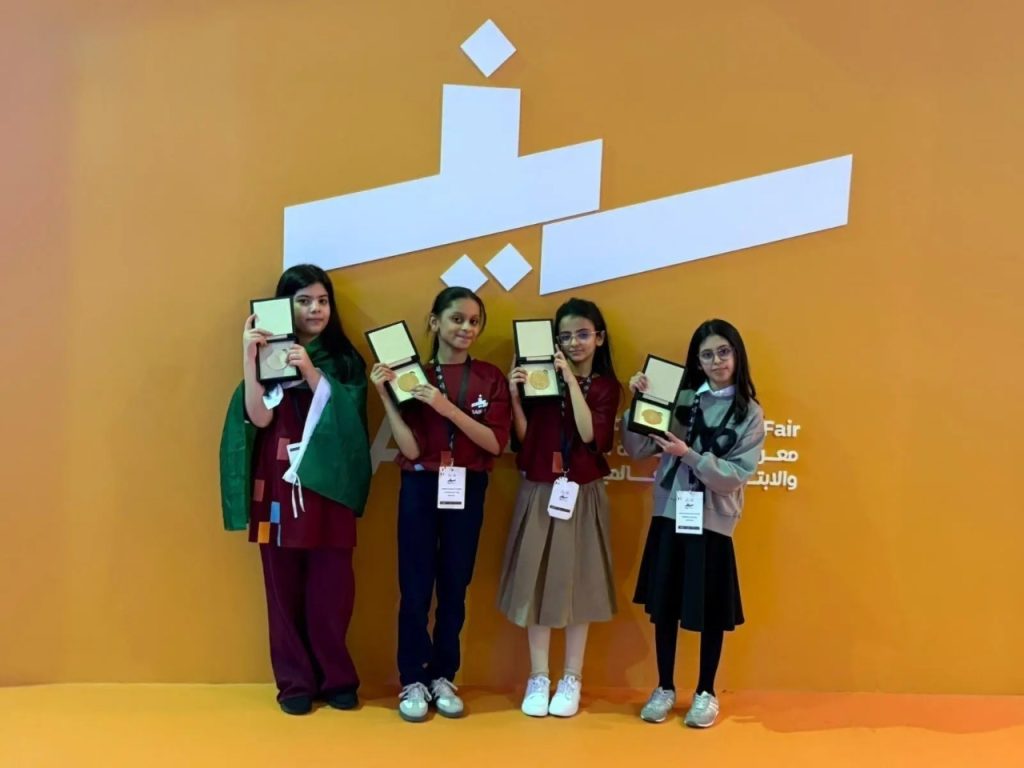
Furthermore, the competition spanned 14 specialized technology fields, including artificial intelligence, cybersecurity, robotics, smart infrastructure, and environmental protection. More than 300 international judges evaluated the prototypes on commercial viability and scientific rigor. Alongside the medals, corporate sponsors such as stc Group, Mobily, and LogRhythm presented 46 special awards, while 30 elite teams advanced to the grand finale.
Saudi Arabia’s Innovation Ecosystem in Focus
The big picture: Saudi Arabia pairs massive fiscal commitments with specialized talent accelerators to build a knowledge-based economy. Under the leadership of Minister of Education Yousef Al-Benyan, the Kingdom continuously upgrades its national curriculum to integrate coding, data science, and applied research.
As Minister Al-Benyan emphasized following the Kingdom’s recent budget announcement, “Investing in education is investing in people”. Therefore, public schools collaborate closely with national institutions like the King Abdulaziz and His Companions Foundation for Giftedness and Creativity (Mawhiba) and Tuwaiq Academy.
These institutions identify promising students as early as age six and provide year-round mentorship, laboratory access, and university partnerships. As a result, Saudi students convert classroom concepts into patent-ready prototypes before graduating from high school.
A Track Record of International Triumphs
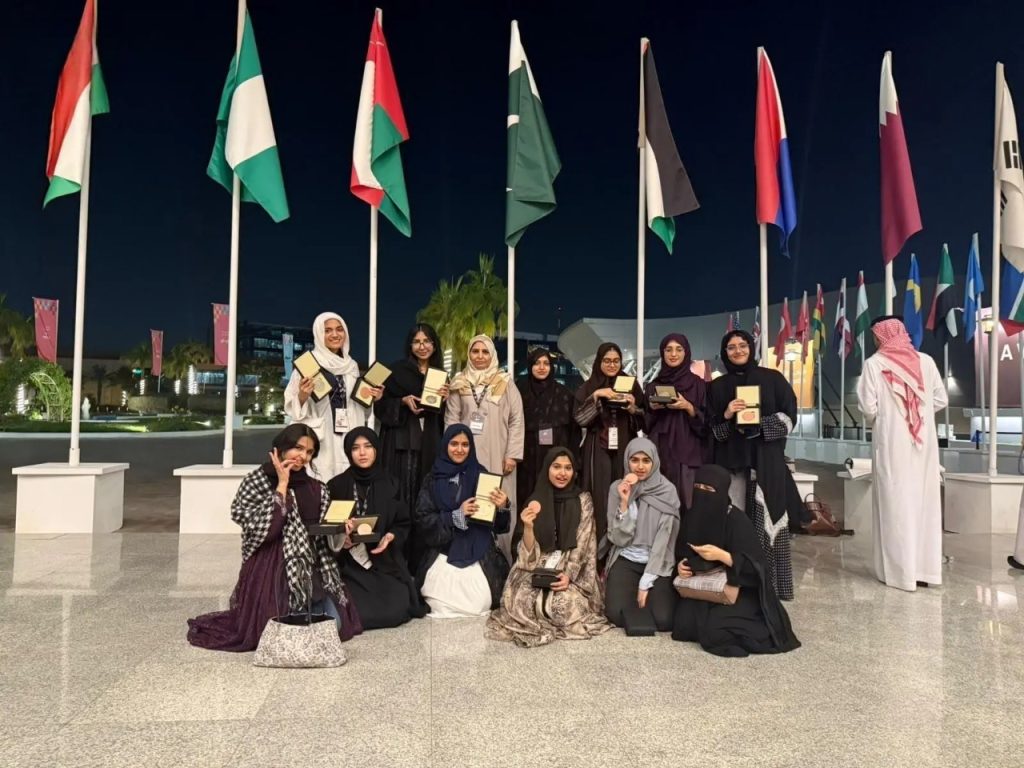
SAIF 2026 builds on an established streak of Saudi victories on the world’s toughest academic stages. For instance, at the Regeneron International Science and Engineering Fair (ISEF) 2026 in Phoenix, Arizona, the Saudi Science and Engineering Team captured 24 international awards.
Similarly, Saudi students won 18 global honors at ISEF 2025, bringing the Kingdom’s cumulative ISEF tally to more than 185 international awards since 2007. Meanwhile, domestic universities also showcased strong research pipelines at SAIF 2026, with Umm Al-Qura University winning 13 medals and the Islamic University of Madinah claiming 5 medals.
What’s next: Following their strong medal haul, top-performing Eastern Province student teams will enter specialized incubation programs. Through these partnerships with Saudi tech accelerators and private-sector sponsors, young inventors will refine their prototypes for commercial deployment and future global exhibitions.