
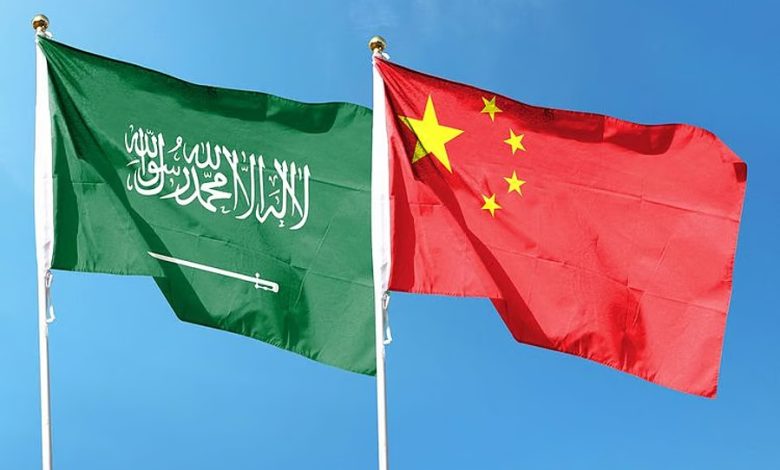
Trade between Saudi Arabia and China reached $115 billion (SAR 431.25 billion) in 2025. Mohammed Al-Ajlan, chairman of the Saudi-Chinese Business Council, shared the figure with Al Arabiya.net. He said bilateral commerce grew 19.3% between 2023 and 2025.
Why it matters: China is the Kingdom’s largest trading partner. Moreover, the relationship is moving beyond simple trade toward joint investment, industry and technology.
Driving the news: Al-Ajlan said about 750 Chinese companies now operate in Saudi Arabia. In addition, 35 of them held licences to open regional headquarters in Riyadh as of March 2025. Chinese firms span several sectors. Huawei and ZTE lead in technology and smart cities. JD Logistics and CIMC work in logistics. CCUI operates in renewable energy.
A partnership Built on Strategic Foundations
The two countries upgraded their ties to a comprehensive strategic partnership in 2022. That framework has produced closer economic links, rising trade and more joint investment. The momentum is clear in the data. Bilateral trade stood at about SAR 403 billion ($107.5 billion) in 2024. Therefore, 2025 added roughly $7.5 billion (SAR 28 billion) to the total.
Officials now describe a new phase. At CIFIT 2026, Saudi speakers said the focus will shift to deeper investment and broader industrial and technological cooperation.
Newer official figures also point to a larger Chinese presence. More than 1,900 Chinese companies operate in the Kingdom, and 43 have set up regional headquarters. Al-Ajlan has stressed the scale of this relationship before. In 2024, he told Al Eqtisadiah that China accounts for about 21% of Saudi trade, which grew 159% over eight years.
Closing the Trade Gap
The council’s seventh-term report, covering 2022 to 2026, names three challenges. First, a trade gap of about $24.2 billion (SAR 90.75 billion) remains. Second, Saudi exports concentrate heavily on oil. Third, Asian rivals compete hard in the Chinese market.
Al-Ajlan said the council will respond with a five-part plan. First, it will localise part of Saudi Arabia’s imports through agreements on hydrogen, electric vehicles, gas and logistics. Second, it will market polymers and chemicals to Chinese buyers and manufacture them locally. Third, it will launch a copper-recycling and wire-manufacturing partnership instead of exporting copper as scrap. Fourth, it will back exporters through its exports committee and the Canton and Import fairs. Finally, it will turn the Shanghai memoranda into real investments within 12 months.
By the numbers:
- Total trade, 2025: $115 billion (SAR 431.25 billion), up 19.3% since 2023.
- Saudi exports to China, 2025: $45.4 billion (SAR 170.25 billion), down 2.4% on lower oil prices.
- Oil’s share of those exports: 82.9%.
- Trade gap: about $24.2 billion (SAR 90.75 billion).
- Non-oil share of exports to China: 17%, with the Kingdom ranking 33rd among non-oil suppliers.
- Saudi share of China’s import market: about 1.76%.
- Value of each 0.1% share gain: about $2.6 billion (SAR 9.75 billion) in extra exports.
- Agricultural forum agreements: about SAR 14 billion ($3.73 billion).
- Chinese direct investment stock, 2024: $2.83 billion (SAR 10.61 billion), up 14%.
- Saudi investment stock in China: $2.13 billion (SAR 7.99 billion).
- Chinese companies: about 750, including 35 with regional headquarters licences by March 2025.
Non-Oil Exports: Room to Grow
Oil still dominates, but non-oil opportunities stand out. Al-Ajlan said each 0.1% gain in the Kingdom’s share of Chinese imports could add about $2.6 billion (SAR 9.75 billion) to exports. Saudi Arabia currently holds about 1.76% of that market.
Zoom in: Non-oil goods make up 17% of Saudi exports to China. Meanwhile, the agricultural forum agreements, worth about SAR 14 billion ($3.73 billion), equal nearly half of a full year’s non-oil exports. As a result, Saudi food and farm producers have a clear opening.
Recent deals support that view. In September 2025, Industry and Mineral Resources Minister Bandar Alkhorayef witnessed 42 investment agreements worth over $1.74 billion (SAR 6.53 billion) between Saudi and Chinese companies in Beijing.
Investment Ties Deepen
Chinese investment is growing steadily. The council’s report put the Chinese direct investment stock at about $2.83 billion (SAR 10.61 billion) in 2024. That marked a 14% rise. Saudi investment in China stands at $2.13 billion (SAR 7.99 billion), although the report did not give the year for that figure.
Chinese investors have also backed flagship projects. They are involved in NEOM, Jubail Industrial City and Jazan City. Furthermore, Public Investment Fund memoranda with Chinese financial institutions reach $50 billion. Saudi officials later cited a broader measure. They said the Chinese investment stock reached about SAR 40 billion by the end of 2025, up 27% year on year. That equals roughly $10.67 billion.
What’s next: Saudi Arabia wants a more balanced partnership with its largest trading partner. Consequently, the council is pushing localisation, value-added exports and faster deal delivery. The next test is delivery. The council has set a 12-month window to convert the Shanghai memoranda into investments. Meanwhile, exporters will look to the Canton and Import fairs to widen their reach in China.
If those plans succeed, the Kingdom could cut its trade gap and diversify what it sells to Beijing. Ultimately, both sides say the goal is a partnership built on shared investment, not just shipments of crude.