
Siemens Energy Plans More Saudi Factories as Kingdom Targets Global Energy Hub Status
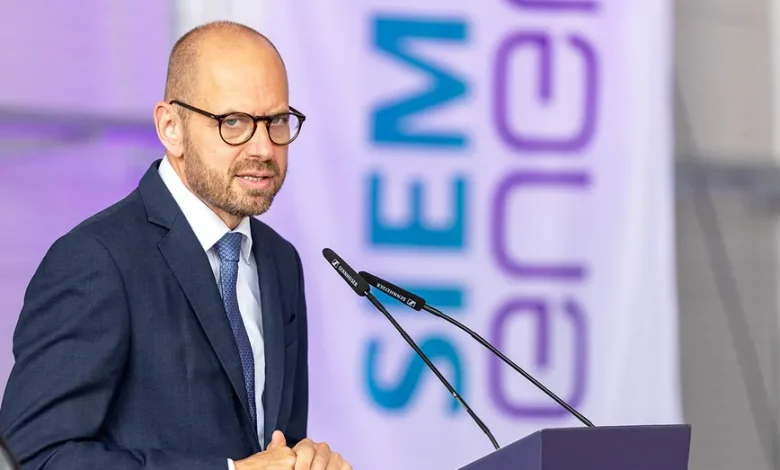
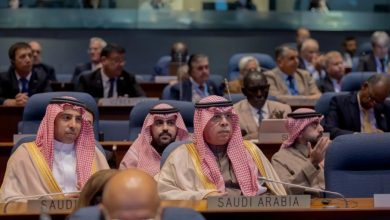
Driving the news: Siemens Energy plans to expand its manufacturing centers across Saudi Arabia to meet local demand and serve export markets beyond the region. Christian Bruch, the company’s president and CEO, outlined the strategy in an interview with Al Arabiya Business on the sidelines of the 25th World Petroleum Congress in Riyadh.
Why it matters: Global manufacturers now treat the Kingdom as far more than a market. Increasingly, they see it as a factory floor for the world’s energy transition, exporting turbines, compressors and electrical equipment to customers worldwide.
Balancing Security, Cost and Sustainability
Bruch said balancing energy security, affordability and sustainability requires a clear strategy and a realistic, long-term execution plan. “You cannot achieve all goals at the same time,” he stressed.
Therefore, energy priorities must follow a deliberate sequence. First comes securing energy supplies. Then comes integrating renewable sources and developing modern power grids.
Moreover, the energy transition does not depend on a single “magic solution,” he argued. Instead, it demands heavy investment in infrastructure and gradual execution built on a workable strategy. The world, he added, often underestimates the complexity of the energy system.
AI Squeezes Equipment Supply Chains
Turning to artificial intelligence, Bruch said AI hype leads many to overestimate its current impact on electricity consumption. AI-linked data centers consume roughly 1.5% of global electricity today. That figure could reach 5% to 6% by 2030, making AI an important demand driver, but not the only one.
In addition, air conditioning and electric-vehicle batteries also push global consumption higher. Consequently, Bruch urged observers to weigh AI’s effect within the broader energy market picture. He also believes the Kingdom can deliver power to data centers faster than the United States.
Furthermore, surging AI-related demand, especially in the United States, has strained supply chains for power generation equipment. Gas turbines and electrical equipment for power plants and data centers face the tightest squeezes.
However, Bruch does not expect these bottlenecks to persist for long. Manufacturers are already adding production capacity in turbines and electrical equipment. As a result, he forecasts the constraints will ease gradually over the next four to five years.
By the numbers:
- 5% today, 5% – 6% by 2030: AI-linked data centers’ share of global electricity consumption, by Bruch’s estimate.
- SAR 562.5 million ($150 million): Siemens Energy’s planned Dammam expansion, adding a 60,000-square-meter large-transformer factory and up to 150 jobs.
- SAR 6 billion ($1.6 billion): Siemens Energy contract powering the Rumah 2 and Nairyah 2 plants, which will add 3.6 gigawatts for about 1.5 million homes.
- SAR 119.2 billion ($31.8 billion): foreign direct investment that flowed into Saudi Arabia in 2024, up 24.2% year on year.
- 75%: The Kingdom’s target for localizing energy sector content by 2030 under Vision 2030.
From Local Demand to Export Hub
The big picture: Regarding the company’s Saudi investments, Bruch confirmed that the Saudi market drove the establishment of Siemens Energy’s first regional manufacturing base in the Kingdom. Yet these facilities now aim well beyond local demand.
Siemens Energy currently exports compressors, turbines and electrical equipment from Saudi Arabia to various markets. Meanwhile, the company is developing additional facilities and manufacturing centers to broaden that reach.
The goal, he said, is to turn the Kingdom into a regional manufacturing hub serving external markets. That effort also strengthens local industrial capabilities and supply-chain resilience. New investments will reinforce Saudi Arabia’s position as a regional center for energy-related industries, matching accelerating global demand for transition equipment and technologies.
That ambition fits a broader national trajectory. Saudi Arabia aims to localize 75% of energy sector content by 2030. The Public Investment Fund, meanwhile, is developing eight renewable projects with a combined capacity of 13.6 gigawatts and investments exceeding SAR 33.75 billion ($9 billion).
The Dammam hub anchors this momentum. Siemens Energy produced the Kingdom’s first locally made gas turbine there in 2016, and a January 2025 expansion enlarged the plant by 35% to 20,000 square meters. The facility today can assemble up to 10 heavy-duty gas turbines and around 40 compression packages annually.
Saudi Arabia’s Rising Role as Global Energy and Manufacturing Hub
Peer manufacturers echo the trend. Emerson, Pirelli and Schneider Electric have all opened production facilities in the Kingdom in recent years, many at King Salman Energy Park near Dammam. International investors are responding to the same signals. Foreign direct investment grew 6.5% in the first half of 2026, Investment Minister Fahad Al-Saif told the Riyadh congress. Similarly, Siemens Energy’s full supervisory and executive boards met in the Kingdom on September 30, 2026, marking their first joint meeting there.
The bottom line: Siemens Energy’s expanding Saudi footprint shows how the Kingdom attracts global manufacturers, then turns them into export engines for the world’s energy transition.