By: Magdy Sadek

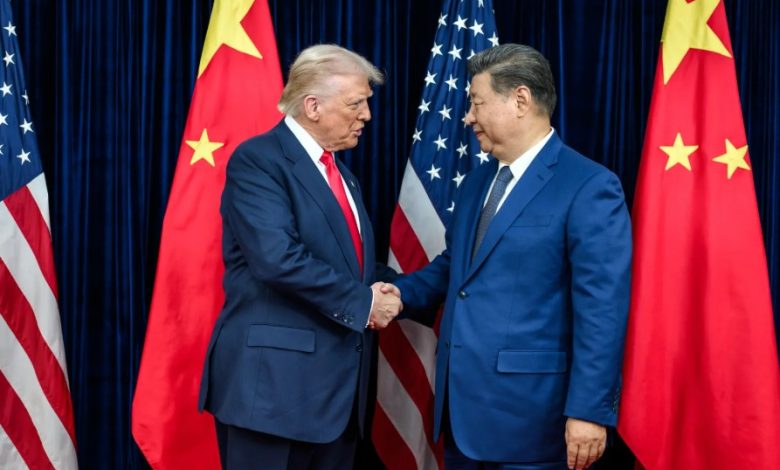
US President Donald Trump’s visit to China is of great significance, marking the first state visit to Beijing since 2017.
Taking place from May 13-15, 2026, the visit comes amid highly complex geopolitical circumstances and accelerating geostrategic realignments across the region.
Needless to say, the war in Iran will take center stage at the negotiating table as both sides seek de-escalation. Furthermore, they will discuss other issues, including Taiwan, tariffs and nuclear weapons.
They will also discuss an extension of a trade truce reached in October 2025 and critical minerals agreement to ensure the stability of supply chains.
According to US newspapers, both sides could announce the formation of a Board of Trade and a Board of Investment to strengthen channels of communications between the two economic superpowers.
While the visit was scheduled for late March or early April, Trump postponed it to focus on US foreign policy issues related to the conflict with Iran.
Hormuz Crisis Impact on China
Given its heavy reliance on the Strait of Hormuz to secure its energy needs, China stands as one of the countries most affected by the vital waterway crisis in 2026.
Recent reports show a decline in China’s crude oil imports by nearly 20% in April to reach their lowest levels in years. Furthermore, natural gas imports dropped by 13%, while Liquefied Natural Gas (LNG) purchases hit an eight-year low due to the disruption of shipments from Qatar.
Chinese refineries also faced a surge in Brent crude prices, which surpassed $120 per barrel. This led to domestic inflationary pressures and a decline in industrial sector profits.
Meanwhile, the number of commercial ships transiting the Strait of Hormuz fell by 94% in early May, causing major disruption to Chinese shipping schedules.
Furthermore, ships associated with Chinese companies encountered a massive surge in war-risk insurance premiums, particularly after reported attacks on tankers with Chinese crews.
The disruption of supply chains and the delayed arrival of petrochemicals and fertilizers have triggered a ripple effect across China’s manufacturing and agricultural sectors.
The International Monetary Fund (IMF) warned that the persistence of the crisis threatens to slash China’s GDP growth due to a decline in global demand for Chinese exports and rising production costs.
Moreover, the People’s Bank of China (PBC) was forced to intervene to support the yuan against the fallout from the war in Iran and the Strait crisis. Hence, some observers have labeled the anticipated summit a “meeting of necessity.”
A Mediator & Influencer
Given the scale of these losses, China’s role has shifted from an observer to an active and influential mediator. In March and April, China, along with Pakistan, proposed an initiative to reopen the Strait of Hormuz and secure a ceasefire in order to secure energy flows, which constitute a lifeline for its economy.
As a result, the anticipated Trump-Xi summit was called “The Hormuz Summit” or “The Return Meeting” as it marks the first visit of a US President to Beijing in nine years.
Historical Meeting Takeaways
Defusing the Middle East crisis could be one of the key outcomes of the anticipated meeting. China could press Iran to ensure secure navigation through Hormuz in exchange for Chinese-brokered US promises to ease some trade or technological restrictions imposed on Beijing.
It is also likely that the US and China will announce the extension of their October trade truce, which has averted new tariffs. This could provide global financial markets with a significant boost.
An agreement on critical minerals – needed for tech industries –is also expected in return for the sustained flow of US microchips into the Chinese market under specific conditions.
Ultimately, the question is: does this summit represent the beginning of restoring trust in maritime corridors and shipping lines, and a return to using traditional routes, leading to a reduction in transport, shipping, and insurance costs?
The Art of the Deal vs. Strategic Patience
The US adopts Trump’s “art of the deal” strategy, while China adopts strategic patience. Unlike any Western State, Beijing has cards to pressure Tehran, owing to Iranian economy’s heavy reliance on oil sales to China.
Trump wants to end the war, which broke out in February 2026, to achieve a diplomatic victory before the midterm elections, or at least to stabilize energy markets. On the other hand, China needs the Strait of Hormuz reopened to ensure the flow of oil at reasonable prices.
However, the US President is unlikely to waive his recently-imposed tariffs, particularly the 10% global rate, without a significant political or economic concession in return.
Trump is always looking for a “historic photo op.” Thus, if Xi Jinping provides an exit from the Iran crisis that portrays Trump as the “global peace maker,” he could offer tactical concessions regarding the tariffs issue.
Additionally, the US press described Trump’s trip as “A State Visit Plus.” This kind of Chinese protocol-driven appreciation often resonates well with Trump. Indeed, Trump’s brand of pragmatism overlooks ideological divides, as he remains willing to pivot his stance should a “deal” yield tangible economic gains for the US.
Trump’s Visit & Saudi Arabia
Trump’s visit to China constitutes a major turning point for the Gulf countries, particularly Saudi Arabia, given the close connection between regional stability and the outcomes of the Beijing meeting.
The Kingdom has emerged as one of the best-prepared Gulf countries to handle the repercussions of the crisis, thanks to the ambitious Saudi Vision 2030, spearheaded by Crown Prince and Prime Minister Mohammed bin Salman.
This demonstrates the political wisdom of the Saudi leadership in managing the crisis since its onset, focusing on diplomatic solutions – which is what the world anticipates after Trump-Xi summit.
If China responds to diplomatic efforts, it may need to increase its oil imports from Saudi Arabia, the UAE, and Kuwait – a major boost for the Gulf market share in China.
China as a Global Game-Changer
Through its geopolitical narrative, China seeks to present itself as a “more stable and just” alternative to US dominance. It does not focus so much on competing with American military power as it does on rewriting international rules by means of economic connectivity, multipolarity, and development linked to the “Belt and Road Initiative.”
The Chinese vision centers on the “right to development,” whereas the US narrative is based on “values” and “political freedoms.”
China does not simply want to lead the world according to the same US rules; rather, it seeks to change these rules to be more compatible with its own political system and strategic interests.