

A wave of drone strikes targeted multiple vessels and territories across the Gulf on Sunday, following a stern warning from Iran that its period of military restraint against the United States has concluded.
The UAE reported that its air defense systems successfully intercepted two drones launched from Iranian territory. Simultaneously, authorities in Kuwait confirmed that their armed forces detected and “dealt with” several hostile aircraft at dawn.
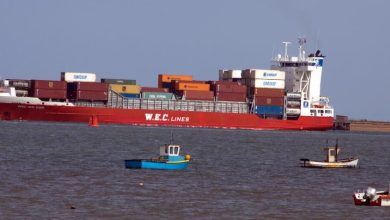
The maritime sector faced direct hits as well, as Qatar’s defense ministry confirmed that a drone struck a freighter arriving from Abu Dhabi northeast of Mesaieed port. Meanwhile, South Korea reported that unidentified aircraft hit the cargo vessel HMM Namu in the Strait of Hormuz.
The United Kingdom Maritime Trade Operations (UKMTO) center noted that a bulk carrier reported a projectile strike. “There was a small fire that has been extinguished, there are no casualties. There is no reported environmental impact,” the agency stated.
Tehran Issues Retaliatory Warnings
While no group claimed immediate responsibility, Iranian state media linked the strikes to US interests. The Fars news agency claimed the vessel struck near Qatar “belonged to the United States.” Ebrahim Rezaei, spokesman for the Iranian parliament’s national security commission, issued a clear ultimatum via social media. “Our restraint is over as of today,” he warned. “Any attack on our vessels will trigger a strong and decisive Iranian response against American ships and bases.”
These events follow a Friday incident where US fighter jets disabled two Iranian-flagged vessels. In response, the Islamic Revolutionary Guard Corps (IRGC) threatened heavy attacks on American regional centers. “Any attack on Iranian tankers and commercial vessels will result in a heavy attack on one of the American centres in the region and enemy ships,” the IRGC said.
Diplomatic Efforts Stalled
The violence threatens a month-old ceasefire as Washington awaits Tehran’s response to a peace negotiation offer. Foreign Minister Abbas Araghchi expressed deep skepticism regarding American intentions. “The recent escalation of tensions by American forces… [has] added to suspicions about the motivation and seriousness of the American side in the path of diplomacy,” Araghchi told the ISNA news agency.
The Strait of Hormuz remains a central flashpoint, as Iran continues to seek economic leverage by controlling this vital waterway, which carries one-fifth of global oil exports. Although US officials label these efforts “unacceptable,” Qatar continues to act as a primary intermediary to broker a permanent peace.