The Middle East has seen a dramatic year in 2025, marred with wars, conflicts and peace initiatives that will shape the regional landscape well into 2026.
While a ceasefire agreement has been reached to end the war in Gaza, peace remains elusive as both Hamas and Israel trade accusations of deal violations.
Beyond Gaza, the raging war in Sudan shows no signs of abating, posing a severe humanitarian challenge amid stalled mediation efforts.
A renewed confrontation between Iran and Israel remains highly likely, while Yemen has become a flashpoint.
Elusive Peace in Gaza
The ceasefire agreement between Hamas and Israel in Gaza was a watershed moment for the Middle East and the entire world.
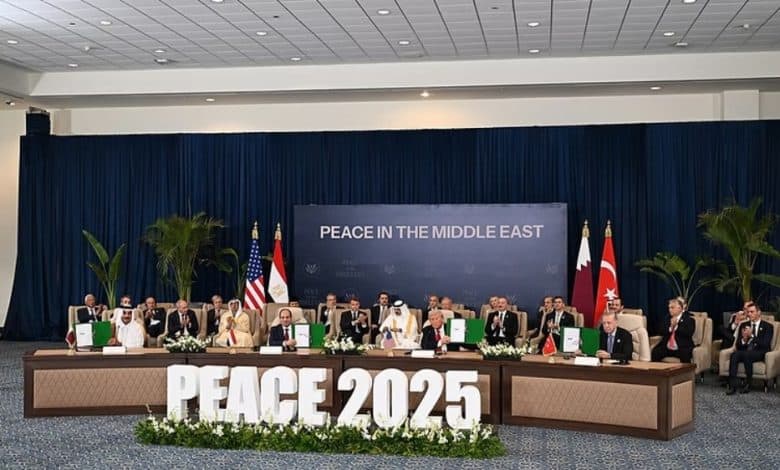
On October 13, 2025, the US President, Donald Trump, declared that the “war in Gaza is over,” signing the “Trump Declaration for Enduring Peace and Prosperity” in Sharm Al-Sheikh alongside the Egyptian President Abdel Fattah Al-Sisi, Qatar’s Emir Sheikh Tamim Al-Thani, and Turkish President Recep Tayyip Erdoğan.
Hamas and Israel agreed to a ceasefire deal that includes the return of all the remaining hostages, an end to hostilities, Israeli military withdrawal to designated lines, and a massive surge in humanitarian aid flow to the Strip.

While the first phase of the deal is nearing completion, pending the return of the last hostage body, advancing to the next phase remains stalled as both sides trade accusations of ceasefire breach and Hamas refuses to give up its arms.
The second phase of the agreement involves the formation of the Board of Peace, the deployment of the International Stabilization Force (ISF) – expected in early 2026 – and the disarmament of Hamas.
Iran-Israel War
On June 13, 2025, Israel launched a surprise attack on Iran to eliminate its nuclear program and prevent it from acquiring a nuclear weapon.
As a result, both countries exchanged intensified aerial and missile attacks for 12 days, sparking fears over a fully-fledged war and putting the region and the entire world on high alert.
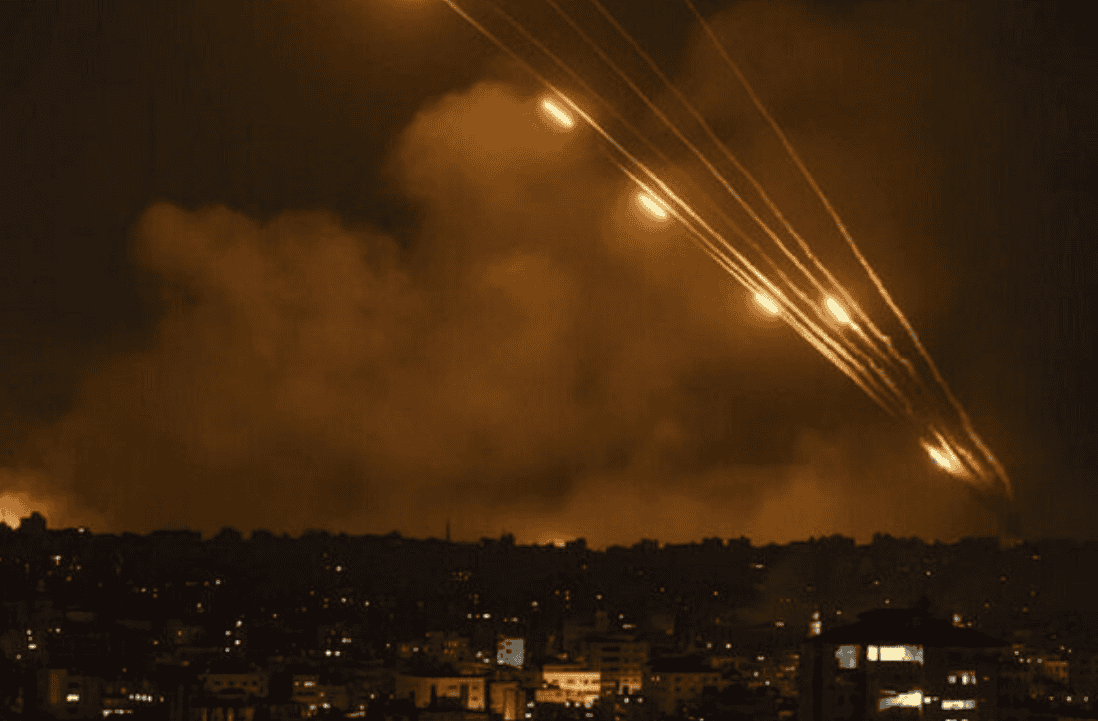
Then on June 22, the US intervened in the conflict by striking three nuclear facilities in Iran, namely Fordo, Natanz and Isfahan, using bunker-buster bombs. Iran responded by targeting US’ Al Udeid Air Base in Qatar with a barrage of ballistic missiles.
On June 24, Trump announced a ceasefire between Iran and Israel, ending their 12-day war.
However, the two countries have since been accusing each other of planning a new attack, signaling readiness for a renewed confrontation.
Israel is wary that Iran is rebuilding its ballistic missile capabilities and could launch a surprise attack. Iran, on the other hand, said that it was in a full-scale war with the US, Israel and Europe.
Following a meeting with the Israeli Prime Minister, Benjamin Netanyahu, on December 29, 2025, US President Donald Trump signaled US support for Israel in launching new strikes on Iran to prevent Tehran from rebuilding its missile capabilities.
Qatar in the Crosshairs
Despite its central role in facilitating peace initiatives in the region, Qatar has faced two major security challenges during 2025. On June 23, Iran launched a wave of ballistic missiles targeting the US Al Udeid Airbase in Qatar, in response to US strikes on Iranian nuclear facilities.
Tehran confirmed that the missile salvo was not directed at Qatar itself, which it called a “friendly and brotherly” nation. However, Doha and its GCC partners strongly condemned the attack as a flagrant violation of Qatar’s national sovereignty and airspace.
The second attack occurred in September, when Israeli airstrikes hit a residential compound housing a number of Hamas leaders in Doha, as they gathered to discuss a US proposal for a ceasefire in Gaza.

The Israeli attack marked a turning point in the region’s security landscape and was met with a unified diplomatic response, in a strong show of unity and solidarity. Arab and Islamic leaders stressed solidarity with Qatar, pledging support for any measures Doha takes to respond to this aggression.
Sudan Conflict
El-Fasher’s Fall
The war in Sudan reached a critical turning point following the fall of El-Fasher, the capital of North Darfur state, to the Rapid Support Forces (RSF) in late October 2025. This development triggered an urgent wave of international diplomatic efforts to prevent further regional destabilization
The paramilitary group has unleashed a wave of atrocities against civilians, pushing thousands to flee while many others remain trapped in the city.
Mediation efforts to bring peace and end the war have proved futile as the Sudanese Armed Forces (SAF) declines any truce while the RSF remains in the country. Meanwhile, the paramilitary forces try to seize more territories, consolidating their grip on the Darfur region in the west and making inroads to Kordofan in the south and the capital, Khartoum.

Foreign meddling remains another hurdle to peace efforts in Sudan. The Sudanese government, UN experts and humanitarian organizations accuse the UAE of supplying the RSF with weapons and mercenaries – allegations that Abu Dhabi denies.
In November 2025, US President Donald Trump said he would personally intervene to stop the conflict in Sudan at the request of the Saudi Crown Prince, Mohammed bin Salman.
Although the Chairman of Sudan’s Sovereign Council and SAF Commander-in-Chief, Abdel Fattah Al-Burhan, commended the efforts of Saudi Arabia, the US and Egypt – all members of the Quad mechanism to bring peace to Sudan – he rejected the involvement of the UAE in the group. He also welcomed Türkiye as a potential mediator to resolve the crisis.
New Peace Initiative
Recently, Sudan’s SAF-aligned government presented a comprehensive peace initiative to the UN Security Council, calling for a comprehensive ceasefire monitored by the UN, the African Union (AU) and the Arab League (AL).
It requires the withdrawal of the RSF from the areas they control, in line with the terms of the Jeddah Declaration, and the disarmament of the paramilitary group under international supervision and with guarantees against arms recycling.
The war in Sudan broke out in April 2023 between the SAF and the RSF, killing thousands and displacing around 12 million people amid spreading famine and cholera outbreaks.
It has also driven the country into effective partition, with the SAF controlling the center, north and east, while the RSF holds the entire Darfur region and parts of Kordofan in the south, with each side declaring a government.
Escalation in Yemen
Israel-Houthi Confrontation
Throughout 2025, Yemen has seen rounds of escalation between the Iranian-backed Houthi militias and Israel. Against the backdrop of Gaza war and Houthi attacks on shipping in the Red Sea, the US and Israel launched an air and naval campaign against the group to destroy its infrastructure and pressure it to halt its attacks.
A major escalation happened on May 4, when the Houthis claimed responsibility for a “hypersonic ballistic missile” attack on Israel’s Ben Gurion Airport.
In response, the Israeli military struck dozens of Houthi targets in Yemen, including the vital Hodeidah port.

A day later, Trump announced a truce with the Houthis to end US airstrikes in exchange for stopping attacks on shipping in the Red Sea, but this did not include halting attacks on Israeli targets.
During the Iran-Israel war, the Houthis briefly joined by launching ballistic missiles toward Israel in coordination with Iran.
Israel’s military campaign against the Houthis continued, including the assassination of senior Houthi officials such as the group’s Prime Minister, Ahmed Ghaleb Nasser al-Rahawi, who was killed in an Israeli airstrike in August.
Hadramout and Mahra Tensions
In December, Yemen has seen another escalation in its southern and eastern provinces. The Southern Transitional Council (STC) forces carried out unilateral military actions to expand its presence in eastern Yemen, taking control of strategic sites in Hadramout and Mahra, and pushing the internationally recognized government from its headquarters in Aden.
These moves have prompted several calls from Saudi Arabia and the Saudi-led Arab Coalition to Restore Legitimacy in Yemen for the STC to withdraw its forces from Hadramout and Mahra and hand over power to the Nation Shield Forces and local authorities to maintain regional stability.
On December 30, at the request of the president of the Presidential Leadership Council (PLC), the Coalition Air Force conducted a limited airstrike targeting weapons and military vehicles offloaded from two vessels in Mukalla Port, coming from Al-Fujairah port in the UAE.