The UN Resident and Humanitarian Coordinator in Sudan, Denise Brown, has warned of the UN’s limited capability to respond to the catastrophic humanitarian crisis in Sudan, particularly in El-Fasher.
In late October 2025, the Rapid Support Forces (RSF) captured El-Fasher, the capital city of North Darfur state and the Sudanese army’s last stronghold in the Darfur region, after an 18-month siege, unleashing a wave of mass killings and sexual violence and raising fears over hundreds of thousands of trapped civilians.
Humanitarian Catastrophe in Darfur
Brown was on a visit to Darfur last week, where she met with survivors from El-Fasher. In a phone interview with ABC News, she highlighted the severe shortfall in aid supplies the UN could deliver to those in need.
“We do not have enough food, we do not have enough of anything. The international community has to step up,” she said.
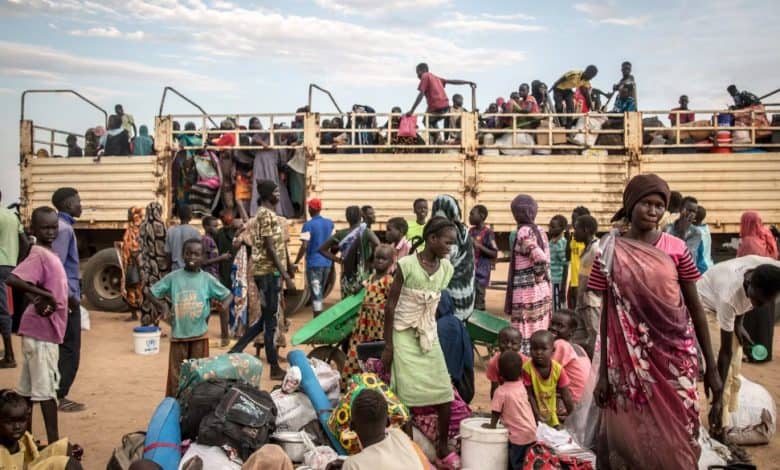
Since the RSF seized El-Fasher, at least 80,000 people have fled, mostly on foot, to a displacement camp in Tawila, a nearby town located 65 km away, according to estimates by humanitarian agencies. The camp was already hosting around 600,000 displaced people.
The UN also fears that tens of thousands of civilians may be still trapped inside El-Fasher, where the RSF is believed to commit atrocities, including summary executions, mass killings, and rapes. Moreover, the International Food Security Phase Classification (IPC) confirmed famine in El-Fasher.
Lack of Funding
The UN Humanitarian Coordinator in Sudan pointed to the lack of funding from countries and donors, which curtails the agency’s ability to respond to the crisis.
“We are 28% funded,” Brown said. “We’re one of the best funded humanitarian responses in the world, at 28%, and there have been cuts across the board by donors. So it’s a cumulative effect of those cuts,” she added.
Brown noted that money will help in mitigating the humanitarian crisis in Sudan, although it will not end the conflict.
Furthermore, she stated that the UN is currently failing to provide adequate care and psychological support to women and girls who survived sexual violence in the Tawila camp.
She added that while the UN has documented hundreds of cases of sexual violence, including gang rape, across Darfur, she believes this represents only “the tip of the iceberg.”
Humanitarian Access Needed
Brown, alongside the UN Under-Secretary-General for Humanitarian Affairs and Emergency Relief Coordinator, Tom Fletcher, tried to meet with the RSF leaders in Darfur last week, in an attempt to secure a full humanitarian access across Sudan.
In the light of this, Brown said: “We need safe passage. We want a small team, no presence of any armed militia.” She added that the UN and aid agencies “need to go to the sites which we have identified as important. We need to be able to evacuate the injured and access to detainees.”
However, their request was turned down. “And so far, the answer is no,” she told ABC News.
Trafficking Concerns
As the humanitarian crisis deepens in El-Fasher, independent human rights experts appointed by the UN have raised concerns over reports of widespread trafficking, sexual violence and the recruitment of children.
“We are deeply concerned at the alarming reports of human trafficking since the takeover of El-Fasher and surrounding areas by the Rapid Support Forces (RSF),” the experts said.
“Women and girls have been abducted in RSF-controlled areas, and women, unaccompanied and separated children are at elevated risk of sexual violence and sexual exploitation,” they warned.
The experts urged all parties to the conflict to immediately halt atrocities against civilians and called on the UN Human Rights Council’s members to take urgent and concerted action to implement the Council’s resolutions on Sudan.
Mediation Efforts
The war in Sudan, which broke out in April 2023, has triggered what the UN called “the world’s most devastating humanitarian and displacement crisis.”
It has also split the country in two, as the SAF controls the center, north and east, while the RSF holds the entire Darfur region and parts of Kordofan, with each side declaring a government.
During a visit to Washington, the Saudi Crown Prince and Prime Minister, Mohammed bin Salman, asked US President Donald Trump to intervene to bring the conflict in Sudan to an end. “And we’re going to start working on Sudan,” Trump vowed.
In response, the Chairman of Sudan’s Sovereign Council and Commander-in-Chief of the Sudanese Armed Forces (SAF), Abdel Fattah Al-Burhan, thanked both leaders, welcoming their peace initiative as an “honest” one.
However, he rejected a ceasefire proposal backed by the Quad group – which includes the US, Saudi Arabia, Egypt and the UAE, calling it the “worst yet” for eliminating the SAF while keeping the RSF in their positions.
He also denounced the presence of the UAE in the Quad group, as Abu Dhabi faces accusations of backing the RSF with weapons and mercenaries – a claim it has repeatedly denied.
Meanwhile, the SAF-aligned Sudanese government reiterated its readiness to engage in a “serious and responsible” negotiating path aimed at ending the conflict.
However, it demanded the full withdrawal of the RSF and its affiliated mercenaries, as well as the surrender of their arms to the SAF. The government also underscored Sudan’s commitment to implementing the terms of the Jeddah Declaration, backed by Saudi Arabia and the US.