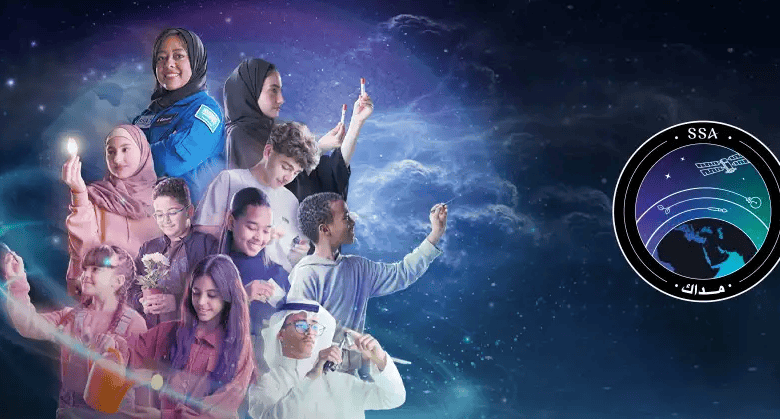
The Saudi Space Agency (SSA) announced on Tuesday the successful execution and safe return of scientific experiments conducted in microgravity by 10 student winners from Saudi Arabia and several Arab countries, as part of the “Space Madak” competition. This pioneering initiative aimed to empower youth across the Arab world by enabling them to carry out space-based experiments that combine the disciplines of art, engineering, and plant science.
Pioneering Initiative
Launched in partnership with the Mohammed bin Salman Foundation (Misk) and the Ilmi Center for Science Discovery and Innovation, a Misk affiliate, the competition aimed to foster Arab creativity and inspire deeper engagement with the future of space exploration. The mission featured 10 diverse student-led experiments, including scientific research and creative projects, submitted by students from Saudi Arabia and other Arab nations.
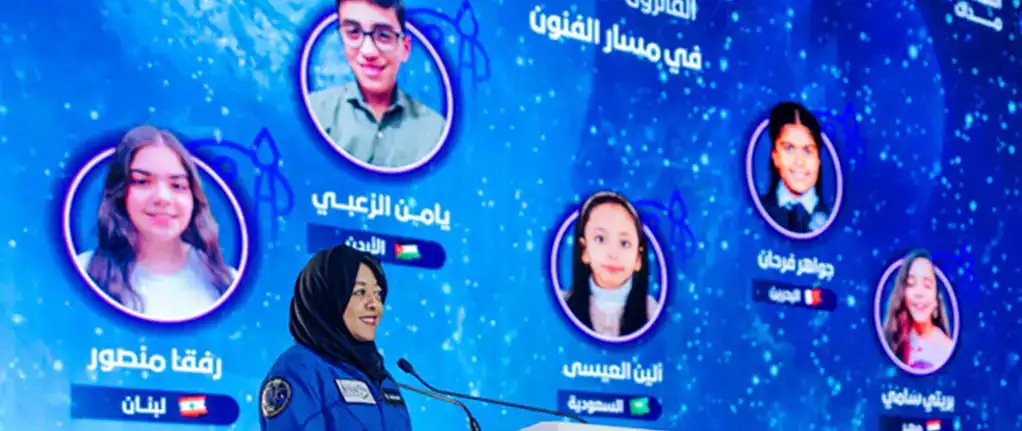
The experiments were carried out aboard the International Space Station (ISS) and returned to Earth following the conclusion of the AX-4 mission. The selected projects underwent rigorous scientific and artistic evaluation by experts from the Kingdom and abroad. Selection criteria included the quality of the idea, feasibility in a space environment, and potential to inspire future innovation.
Conducting the Experiments
Veteran astronaut Peggy Whitson conducted the experiments during her stay aboard the ISS, under the direct supervision of Saudi astronaut Rayyanah Barnawi and with technical oversight from the Saudi Space Agency’s scientific teams. Barnawi, the first Saudi female astronaut, has previously conducted 14 experiments aboard the ISS as part of her mission.
“Space Madak,” the first competition of its kind in the Arab world, significantly enhanced student engagement in the space sector. Through its three tracks — arts, plants, and engineering — the competition offered educational and practical opportunities that support the development of national and regional scientific capabilities. Over 80,000 students from across the Arab world participated in the competition, showcasing a wide range of innovative ideas.
Impact and Future Goals
The SSA confirmed the success of the scientific experiments conducted by Arab students aboard the ISS. These experiments included projects in the fields of art, engineering, and plant science, which astronaut Peggy Whitson conducted under the supervision of Rayyanah Barnawi. The project aimed to enhance student participation in the space sector and promote innovation in the Arab world. This achievement is part of the Saudi Space Agency’s efforts to enhance the Kingdom’s presence in international space programs and provide a stimulating environment that contributes to supporting the knowledge economy, in line with the goals of Vision 2030.
The successful return of these experiments marks a significant milestone in Arab space exploration. It underscores Saudi Arabia’s commitment to scientific innovation and developing emerging talent in the growing field of space sciences. Additionally, the mission aligns with the goals of Saudi Vision 2030, which seeks to prepare a new generation to contribute effectively to the future of the space sector and drive the country’s scientific and technological progress.