
From Lava Caves to Rare Raptors: Saudi Arabia Protects a One-of-a-Kind Volcanic Landscape
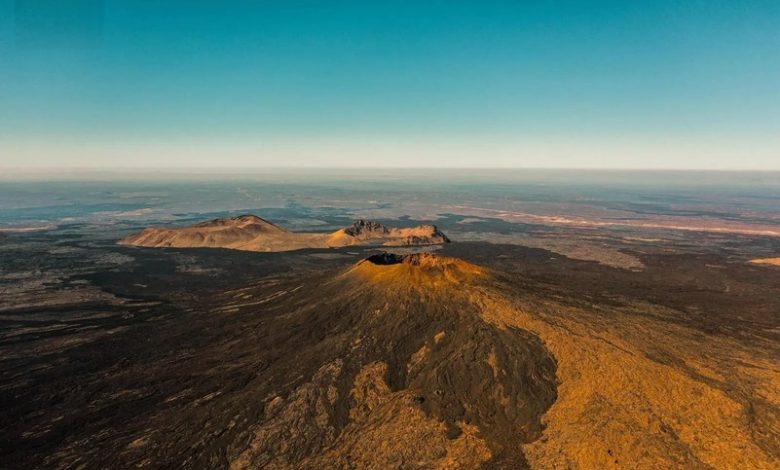
Driving the news: Saudi Arabia has registered the Harrat Al Rass Al Abyad Nature Reserve in the national and global databases of protected areas. The Royal Commission for AlUla (RCU) announced the move on Tuesday, in coordination with the National Center for Wildlife.
Why it matters: The listing puts a rare volcanic landscape on the world conservation map. It also shows how the Kingdom turns environmental pledges into protected land.
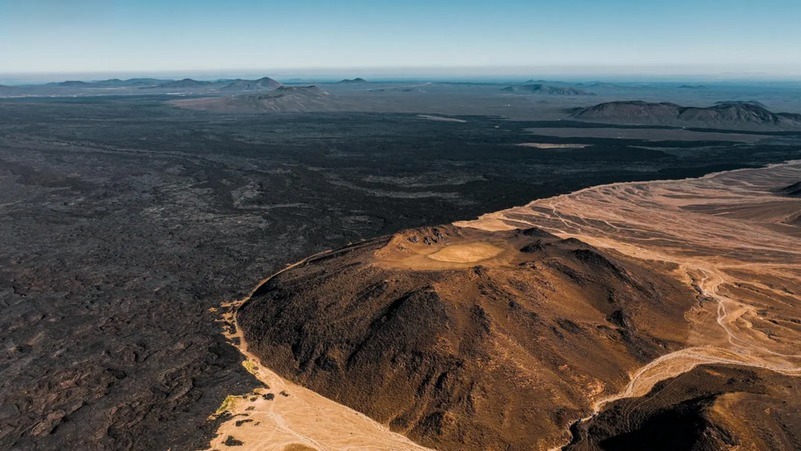
The big picture: The reserve sits in Khaybar governorate in the Madinah region. It lies inside Harrat Khaybar, one of the largest volcanic fields on the Arabian Peninsula. It covers 600 km² and ranks as the sixth site in the Commission’s protected area network. Together, those six sites span 12,107 km².
A Landscape of White Volcanoes and Black Lava
Black basalt fields dominate the terrain. Yet three rare white volcanoes rise from them: Jabal Al Bayda, Jabal Al Abyad and Jabal Al Mansaf. A volcanic rock that geologists call comendite gives them their pale colour. Researchers value the site because it records the region’s volcanic history.
Below the surface, Umm Jirsan Cave runs for about 1,481 meters. It ranks among the longest lava tubes in the Kingdom.
By the numbers:
- 600 km²: the reserve’s area
- 12,107 km²: the total area of the Commission’s protected network
- 6th: the reserve’s rank in that network
- 1,481 meters: the approximate length of Umm Jirsan Cave
- 59: bird species recorded so far
- 99: plant species recorded so far
- 14: mammal species recorded so far
- 18: reptile species recorded so far
- 2024–2029: the reserve’s management plan period
- 30%: the share of Saudi land and sea the Saudi Green Initiative aims to protect by 2030
Wildlife and Habitat
Early surveys already show strong biodiversity. Teams recorded the endangered Egyptian vulture among the bird species. They also documented suitable habitats for the Nubian ibex. Meanwhile, field teams keep cataloguing species so they can set protection priorities.
The reserve falls under Category III of the International Union for Conservation of Nature (IUCN) classification. That category protects natural monuments and the habitats around them. The Commission built its 2024–2029 management plan on environmental, geological and cultural assessments. It carried out that work with the IUCN.
Furthermore, the Commission is now meeting the requirements for two more honours. The first is the UNESCO Global Geoparks program. The second is the IUCN Green List, which recognises well-managed protected areas.
Saudi Arabia’s Widening Conservation Push
This registration fits a clear pattern. The Commission joined the IUCN as a government member in 2022. It has since worked with the Union to design a connected network of protected areas. In addition, the Kingdom launched the Sharaan Nature Reserve in 2019, together with a global fund for protecting the Arabian leopard.
Other sites have won international recognition as well. UNESCO added the Harrat Uwayrid reserve to its Man and the Biosphere program. Similarly, the Commission has drafted grazing-licence rules for several reserves. Under those rules, applicants must hold Saudi nationality and have lived in AlUla for at least a year. Their livestock must carry tags and pass health checks.
The bottom line: Each new listing strengthens the Kingdom’s case that it can protect nature at scale. The registration also supports a ten-year strategy to restore ecosystems across the region. As a result, the Saudi Green Initiative’s 2030 target now rests on more protected land than before.
What’s next: RCU will continue expanding its 10-year ecosystem restoration strategy across AlUla and Khaybar. Ultimately, these efforts secure rare volcanic heritage for future generations while cementing Saudi Arabia’s role as a regional leader in nature conservation.