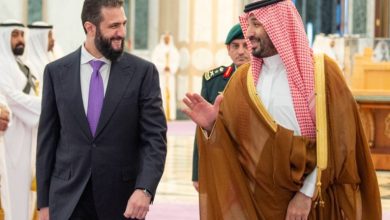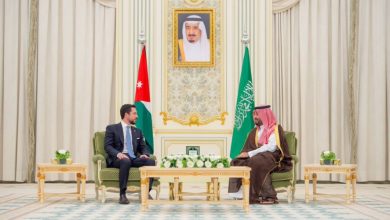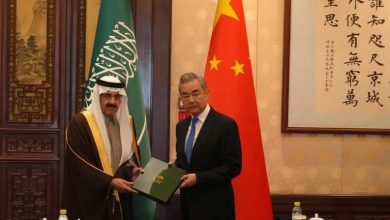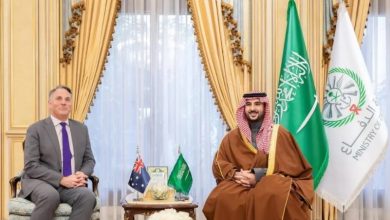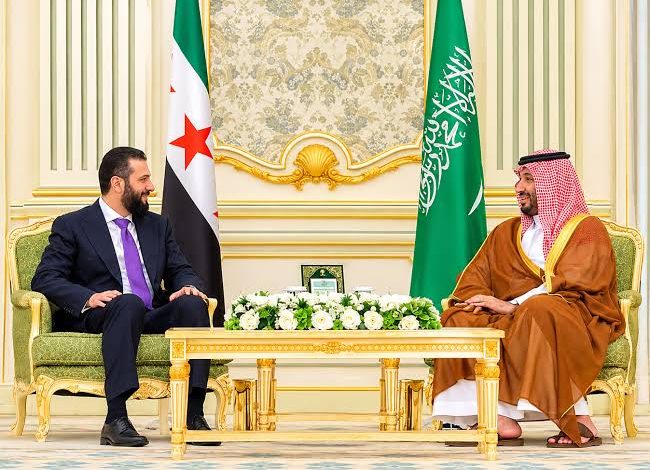
Saudi Arabia and Syria signed a defence cooperation agreement in Riyadh on Wednesday, as the Kingdom confronts rising missile and drone threats.
Driving the news: Crown Prince and Prime Minister Mohammed bin Salman and Syrian President Ahmed Al-Sharaa witnessed the signing after formal talks. Syria’s Foreign Ministry called the accord the “most notable” of several deals, but it did not disclose the terms. The visit also marked Al-Sharaa’s second trip to Riyadh in less than a month.
Why it matters: The agreement ties Damascus more closely to Saudi Arabia’s expanding security network. Moreover, it shows Riyadh building partnerships across the region as threats grow along its borders and sea lanes.
Riyadh and Damascus Map out Closer Cooperation
The two leaders reviewed regional developments and warned of the serious consequences of any military escalation. In particular, they highlighted risks to regional and international security, shipping safety, energy supplies and the global economy.
They also praised the “great convergence” in their positions on regional and international issues. In their view, this reflects deep coordination and consultation between the two countries.
Furthermore, both leaders stressed the need to step up efforts to cut tensions, contain crises and settle disputes peacefully through dialogue and diplomacy. They also demanded an immediate halt to all actions that threaten maritime navigation in the Red Sea, the Bab Al-Mandab Strait and the Strait of Hormuz.
The defence deal was not the only agreement. The two governments also signed memoranda on industrial cooperation, agriculture and environmental protection. In addition, the Saudi Fund for Development and Syria’s Finance Ministry signed six concessional loan agreements.
Riyadh has backed Damascus since Al-Sharaa took power after the overthrow of Bashar Al-Assad in December 2024. In September 2025, the Kingdom also provided grants of crude oil and funds covering part of public-sector salaries for three months.
By the numbers:
- SAR 1.51bn ($403M): total value of the six concessional loans from the Saudi Fund for Development to Syria’s Finance Ministry.
- SAR 393.8M ($105M): building, rehabilitating and equipping 25 civil defence centers.
- SAR 375M ($100M): rehabilitating and equipping hospitals and health centers.
- SAR 337.5M ($90M): rehabilitating power-generation units at the Aleppo thermal plant.
- SAR 225M ($60M): repairing up to 10,000 damaged homes.
- SAR 112.5M ($30M): upgrading drinking-water metering, including 300,000 smart meters.
- SAR 67.5M ($18M+): digital transformation of Syria’s Finance Ministry.
- 3 nations: Saudi Arabia, Turkey and Pakistan signed the Makkah Joint Defence Agreement on 7 August 2026.
- 10 years: the period during which no signatory may withdraw from that pact.
- 300 tanks: part of a November 2025 US-Saudi package that also includes future F-35 deliveries.
- 6 attacks: the number of strikes the Houthis claimed against Saudi oil facilities, airports and a military site on 30 October.
Saudi Arabia’s Expanding Web of Defence Pacts
The big picture: The Syria agreement joins a growing list of security arrangements. First, the Kingdom deepened its partnership with Washington. In November 2025, the Crown Prince and President Donald Trump signed a US-Saudi Strategic Defense Agreement. Washington also named Saudi Arabia a major non-NATO ally. Trump said the move took military cooperation to “even greater heights.” The status brings defence-trade benefits, but it does not carry a formal security commitment.
Second, Riyadh strengthened its ties with South Asia. Saudi Arabia and Pakistan signed a mutual defence agreement in 2025.
Third, the Kingdom signed the Makkah Joint Defence Agreement with Turkey and Pakistan. The pact treats an armed attack on one member as an attack on all. The three states later named it the Makkah Defence Alliance at a meeting in Istanbul. Ankara insists the pact is not aimed at any particular country. Meanwhile, Turkey has sent the agreement to its parliament for ratification.
Syria now eyes that circle. Last Saturday, Foreign Minister Asaad Al-Shaibani told the Manama Dialogue: “Discussions are currently under way to evaluate Syria’s entry into the [Makkah] alliance.” The new bilateral accord is separate from the three-nation pact.
Growing Threats Put the Kingdom’s Defences to the Test
These pacts arrive as Yemen’s Iran-aligned Houthi group steps up attacks on the Kingdom. On 24 October, the group claimed strikes on Aramco facilities in Yanbu, a refinery in Rabigh and the East-West oil pipeline. Six days later, it claimed attacks on Ras Tanura, Abqaiq and airports in Riyadh and Dammam. Regional media reported that Saudi air defences intercepted several missiles.
The human toll is real. Earlier, the Saudi government said three people died in attacks on two airports. A separate September barrage injured more than 70 people. The Houthis also announced a maritime blockade of the Kingdom and began hitting its ships.
Riyadh has responded firmly. The Foreign Ministry stated that the Kingdom will not tolerate any attack on its territory or resources. In addition, the Saudi-led coalition said it struck Houthi missile facilities.
The Makkah alliance has also moved from paper to practice. In early October, the three states held an emergency meeting in Riyadh and agreed to activate deterrence measures and rapidly deploy forces to the Kingdom. Defence Minister Prince Khalid bin Salman said the meeting “confirms the activation of collective deterrence against aggression, and against anyone standing behind it.” The alliance itself emerged from conflicts that the US-Israeli war on Iran triggered.
What’s next: Turkey’s parliament will review the Makkah pact, while Damascus continues to weigh membership. Meanwhile, Al-Sharaa has invited the Crown Prince to visit Damascus. Observers will also watch how quickly the Saudi-funded projects in energy, health, housing and water move from signature to delivery.