President Donald Trump accused China of interfering in the 2020 US election and blamed intelligence officials for hiding it, escalating tensions with Beijing weeks before a planned summit with Chinese President Xi Jinping.
Why it matters: The claim directly contradicts a declassified 2021 US intelligence assessment, which found, with “high confidence,” that Beijing avoided meddling because it wanted a stable relationship with Washington. Consequently, Trump’s speech reopens a settled dispute and could complicate ties with China just as both sides prepare for Xi’s 24 September visit to the White House.
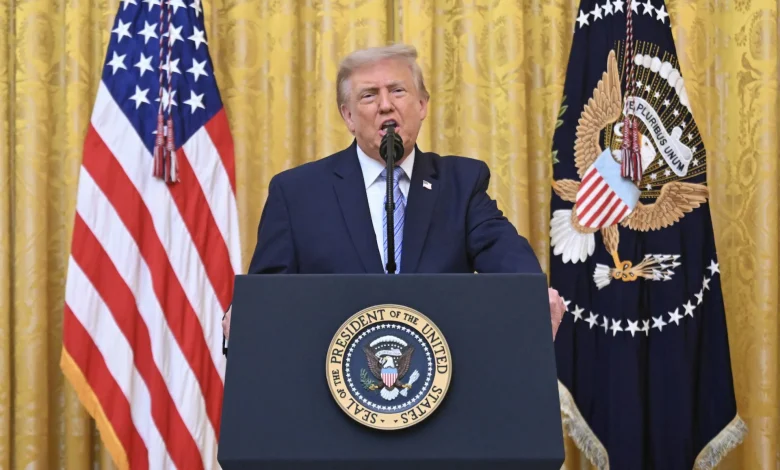
What Trump said: Speaking from the White House’s East Room on Thursday night, Trump said his administration had declassified documents proving China ran a five-part campaign against him. “Over a period of years, starting during the 2020 election cycle, the People’s Republic of China carried out what is believed to be the largest compromise of election data in history,” he said, adding that Beijing acquired 220 million US voter files containing names, addresses, phone numbers and party affiliations.
Trump also claimed China worked to influence the 2018 midterms and that unnamed “deep state” officials suppressed the intelligence to protect themselves. As a result, he has directed the Office of the Director of National Intelligence, the Justice Department, the FBI and the CIA to investigate the alleged cover-up and pursue criminal charges where warranted.
Separately, Trump cited a claim that 278,000 non-citizens had registered to vote, and he renewed pressure on Senate Republicans to pass the Save America Act, which would tighten voter ID rules. Senate Majority Leader John Thune has so far declined to bring the bill to a vote, arguing it lacks sufficient support.
Beijing and Democrats Push Back
China’s embassy in Washington rejected the allegations shortly after the speech. “China has all along adhered to the principle of non-interference in others’ internal affairs,” it said, adding that Beijing has “never and will never interfere” in US elections and calling the vote “an internal matter of the U.S.”
Democrats were equally blunt. The Democratic National Committee accused Trump of “lying about the 2020 elections to give himself cover” ahead of the midterms, while House Minority Leader Hakeem Jeffries said Trump had “chosen to spew deliberate and dangerous lies” because “the economy is a disaster.”
Notably, the 2021 intelligence assessment did include a minority dissent: the National Intelligence Officer for Cyber concluded Beijing did try to “undermine” Trump’s re-election bid, even though the broader report ruled out interference in vote-counting systems specifically. That distinction between stolen voter data and compromised election infrastructure has become a key point of contention among analysts reviewing Trump’s claims.
The bigger picture: The address marks a striking shift for Trump, who visited Beijing in May and had until now taken a softer line toward China in his second term. Bloomberg reported the speech threatens to unsettle that recent thaw just as both governments finalize plans for Xi’s Washington summit.
Media and Legislative Fallout
Two major US networks, ABC and NBC, declined to air the address live, instead carrying it on their streaming platforms. Trump responded by accusing them of participating in “a plot” and suggesting regulators should revoke their broadcast licenses, a threat that could draw pushback even from free-speech-minded conservatives.
Meanwhile, Trump has withheld his signature from a bipartisan veterans’ housing bill in protest at Thune’s refusal to advance the Save America Act, raising the political stakes of an already tense standoff between the White House and Senate Republicans.