Rubio Visits Bahrain for Talks as US-Iran Diplomacy Intensifies
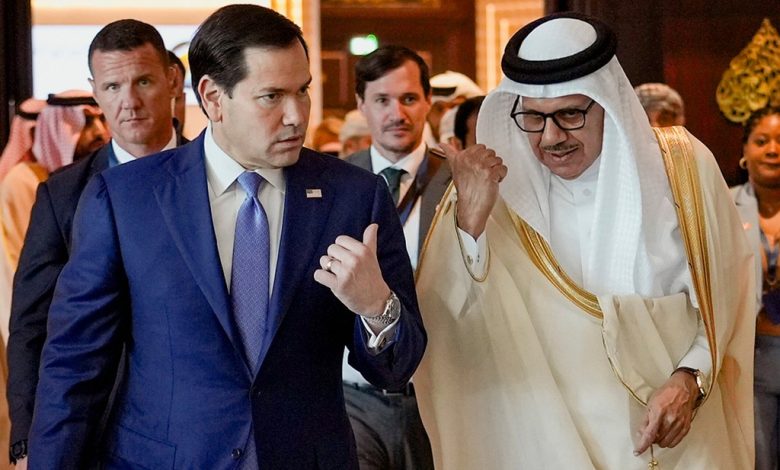
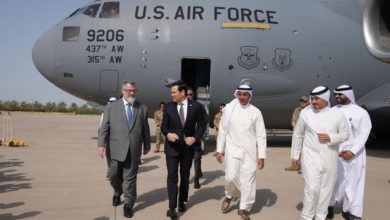
US Secretary of State Marco Rubio arrived in Bahrain on Thursday for a Gulf Cooperation Council (GCC) ministerial meeting, capping a three-country Gulf tour aimed at reassuring regional allies that Washington will protect their interests during ongoing negotiations with Tehran.
The visit comes as diplomacy accelerates following the signing of a memorandum of understanding (MoU) between the US and Iran that effectively ended the regional war, which began on 28 February with US-Israeli strikes on Iran. However, the Strait of Hormuz question continues to divide Washington and Tehran.
Gulf Allies Seek Reassurances
Rubio met with the leaders of Kuwait and the UAE on Wednesday before travelling to Manama. During his Kuwait stop, he pledged full alignment with Gulf states throughout the negotiating process. “We’re going to be completely aligned with our partners in the Gulf,” he told reporters, adding that Washington would not do “anything that undermines the security of our allies.”
Gulf leaders have broadly supported efforts to end the US-Israeli war with Iran, though many remain disconcerted by specific terms of the MoU, particularly the prospect of a $300 billion reconstruction fund for Tehran, which they fear Iran could use to rebuild its military and fund regional proxy groups. The MoU’s silence on Iran’s ballistic missile program has also alarmed Washington’s Gulf partners.
President Donald Trump told reporters at the White House on Wednesday that the US was “doing great” in negotiations with Iran, even as he asked Congress for nearly $88 billion in supplemental funding to cover the spiralling cost of the war, just one day after lawmakers called on him to end the conflict unless they explicitly authorise further military action.
Hormuz Remains the Central Sticking Point
The Strait of Hormuz, through which a significant proportion of the world’s oil and gas passes, sits at the heart of the diplomatic dispute. Rubio insisted in Kuwait that the US remains committed to toll-free navigation. “I know of no country on the planet that supports tolling or fees for the use of the strait,” he said. Trump separately declared any shipping fees “unacceptable.”
Iran, however, has repeatedly stated its intention to retain joint control of the strait with Oman and charge what it calls maritime service fees. Iran’s Revolutionary Guard also warned against alternative shipping routes through the strait, underscoring Tehran’s determination to hold its ground.
Meanwhile, Qatar’s prime minister travelled to Oman to open parallel talks on Hormuz access involving Gulf states, Iraq, and Iran. Diplomats told AFP that Gulf countries would push for unrestricted freedom of navigation, while they expect Iran to seek an environmental and security service fee. Separate Gulf-Iran reconciliation talks are also expected to convene in Saudi Arabia, though no date has been set.
Iran’s chief negotiator Mohammad Bagher Ghalibaf framed the MoU as a win for Tehran. “That is why the Islamabad Memorandum of Understanding became a declaration of America’s defeat,” he said, a characterisation Washington firmly rejects.