France Prepares UN Resolution for Hormuz Mission as US Draft Faces Veto Threat
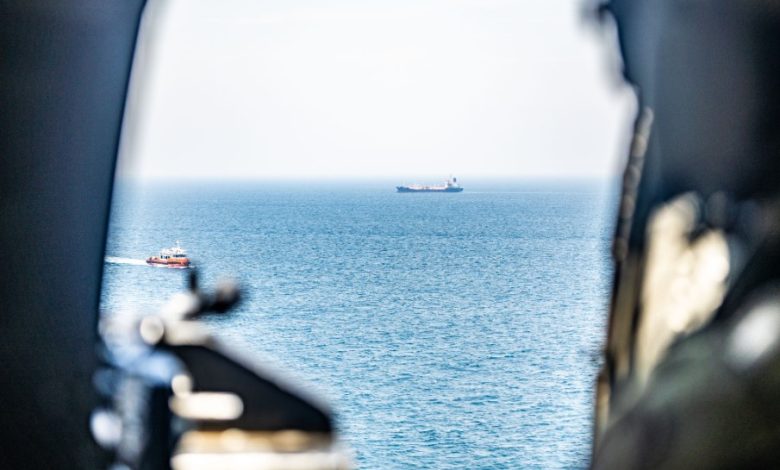
France has prepared a UN Security Council (UNSC) resolution for establishing an international mission to restore freedom of navigation in the Strait of Hormuz.
The French draft comes as a critical vote on a competing US-Bahraini draft stalls under the immediate threat of a Russian and Chinese veto.
Since the outbreak of the war with the US and Israel in late February, Iran has blocked passage through the critical waterway without its permission, disrupting international shipping and sparking a surge in energy prices.
French Resolution
The French Foreign Ministry said on Friday that Paris has drafted a UNSC resolution to create an international mission for Hormuz and could submit it if conditions allow, reported Reuters.
“We are working on an international mission to restore freedom of navigation. We have also prepared, as a permanent member, a draft resolution that could be discussed if the conditions are right,” France’s Foreign Ministry spokesman Pascal Confavreux said.
France-UK Initiative
French President Emmanuel Macron announced that Paris will soon propose a UN initiative aimed at bolstering joint efforts with the UK to restore freedom of navigation in the Strait of Hormuz. The mission would launch once conditions allow and following consultations with Washington and Tehran.
The UK and France have launched a multinational defensive mission to protect commercial shipping through the maritime corridor and conduct mine clearance operations when conditions permit.
Both countries said they were “pre-positioning” warships in the region. The UK deployed its HMS Dragon destroyer to the Middle East and France moved its Charles de Gaulle Aircraft Carrier Group into the southern Red Sea and the Gulf of Aden.
Moreover, Italy said it would move two minesweepers closer to the Strait, in preparation for a multinational defensive mission once a deal to end the war in Iran is reached.
Australia also said it would join the UK-French mission, contributing a Wedgetail E-7A surveillance aircraft.
Hormuz Standoff
The Strait of Hormuz is a strategic shipping route linking the Arabian Gulf with the Gulf of Oman and the Arabian Sea, through which around a fifth of daily global oil supplies and LNG supplies pass.
The ongoing conflict has disrupted passage through the Strait, as Iran has blocked transit through the critical waterway without its permission, while the US has enforced a naval blockade on Iranian ports.
US President Donald Trump launched an initiative to guide commercial ships through the Strait of Hormuz, called “Project Freedom,” but paused it later amid negotiations to reach a deal with Iran.
However, the strategic waterway remains one of the main sticking points in the ongoing diplomatic efforts to secure a peace deal and end the war.
US-Bahraini Resolution
The French proposal comes as a US-Bahraini resolution on the Strait of Hormuz stalls in the UNSC. The draft has been under discussions for more than two weeks, with vote postponed several times amid concerns that China and Russia could block it.
The US-Bahraini text demands Iran stop attacks against vessels in the Strait and Gulf States, refrain from mine-laying in the waterway, and halt efforts to impose tolls on commercial ships transiting the shipping route. However, China and Russia vetoed a similar draft in April, citing bias against Tehran.
According to Reuters, citing two European officials, the US has secured the support of 140 countries in a bid to avoid a veto, but France has so far refused to back the US proposal.
“There is a draft resolution between the U.S. and Bahrain currently under discussion. This forms the basis of the current discussions. The date for the vote has not yet been announced,” Confavreux said.
Seeking Global Consensus
Washington is seeking international backing to its text. US Secretary of State Marco Rubio told reporters on Friday that the draft resolution had “the highest number of co-sponsors of any resolution ever” at the UNSC.
Speaking ahead of a meeting of NATO foreign ministers in Sweden, Rubio said that it “would be lamentable” if the UNSC resolution on the Strait of Hormuz didn’t pass. “Unfortunately, a couple of countries on the Security Council are thinking about vetoing it,” he said.
“We are doing everything we can though to achieve the sort of global consensus that’s necessary to prevent this from happening. Let’s see if the United Nations still works,” Rubio added.
After meeting NATO allies, Rubio said the US and its partners must “have a Plan B” if Iran refuses to reopen the Strait of Hormuz.