Trump Pledges $10 Billion for New “Board of Peace” as Allies Join Gaza Relief Effort
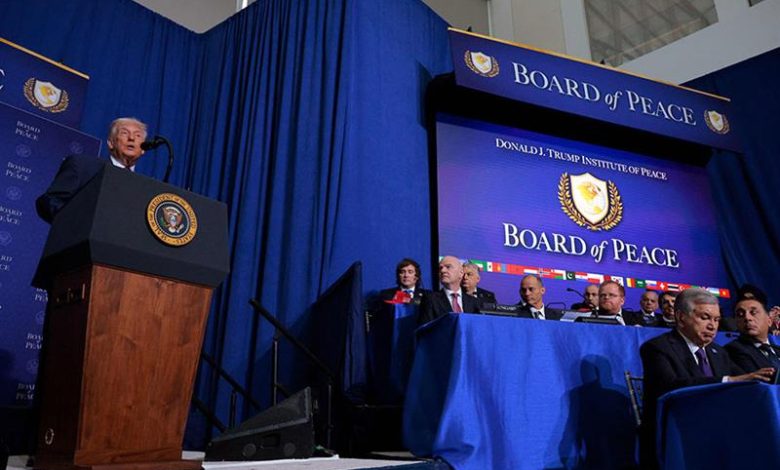
President Donald Trump announced $10 billion in US funding for his “Board of Peace” initiative during its inaugural meeting on Thursday. While Western democracies largely snubbed the event, nine other nations pledged an additional $7 billion toward a relief package for war-battered Gaza.
“I want to let you know that the United States is going to make a contribution of $10 billion to the Board of Peace,” Trump told the gathered world leaders. Kazakhstan, Azerbaijan, the UAE, Morocco, Bahrain, Qatar, Saudi Arabia, Uzbekistan, and Kuwait joined the effort with their own financial commitments.
“Every dollar spent is an investment in stability and the hope of a new and harmonious region,” Trump remarked while thanking the donors. However, the combined $17 billion represents only a fraction of the $70 billion required to rebuild the Palestinian territory after two years of devastating conflict.
Challenging the Global Order
The Board of Peace originated as part of a 20-point plan to end the Gaza conflict. Now, Trump envisions a more ambitious remit to resolve global disputes. Consequently, this expanded vision has triggered fears that the US president wants to create a direct rival to the United Nations.
Trump pushed back against these criticisms, suggesting his board would actually help make the UN viable in the future. “Someday I won’t be here. The United Nations will be,” Trump stated. “I think it is going to be much stronger, and the Board of Peace is going to almost be looking over the United Nations.”
While over 40 countries sent officials, many European nations, including the United Kingdom and Germany, attended only as observers. Trump dismissed the hesitation from traditional allies with characteristic bluntness. “Almost everybody’s accepted, and the ones that haven’t, will be,” he predicted. “And some are playing a little cute – it doesn’t work. You can’t play cute with me.”
US Ambassador to the UN Mike Waltz defended the board’s unconventional structure against the “chattering class” of critics. He argued that “the old ways were not working.” Despite the controversy, the administration maintains that the board remains a legitimate organization dedicated to rebuilding Gaza through action rather than mere talk.