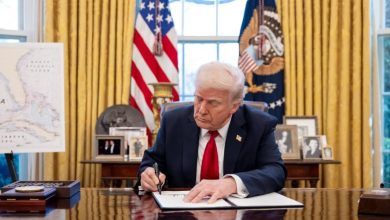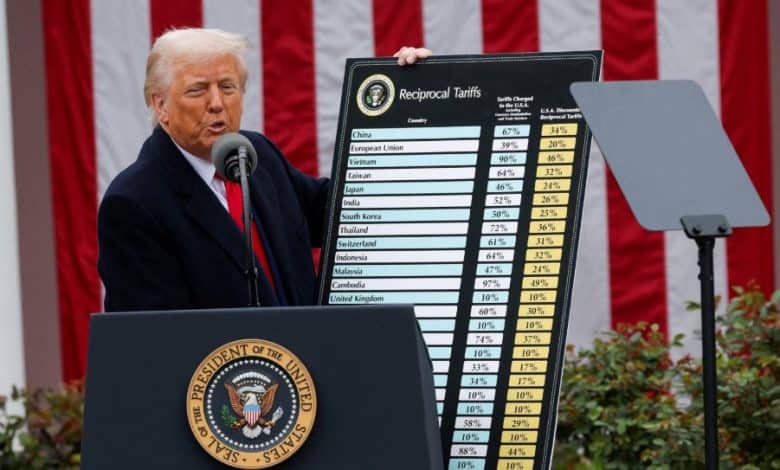
The “reciprocal” tariffs announced by the US President, Donald Trump, on imports coming from over 90 countries worldwide have come into force.
At 12:01 am Thursday in Washington, the sweeping tariffs took effect, minutes after Trump claimed on Truth Social that billions of dollars were now flowing into the US as a result of his import taxes.
Trump first announced the duties in April, pausing many of which later to give countries a chance to strike deals with Washington as the tariffs announcement caused global economic turbulence.
Since then, Trump adjusted the rates for several countries before setting a negotiating deadline of August 7, according to BBC. Both India and Brazil have taken the hardest blows, with 50% tariffs on each.
India’s duties, which will take effect on August 27, are tied to purchasing oil from Russia, while Brazil’s levies are linked to the prosecution of former President, Jair Bolsonaro.
Tariffs on other countries range from 10% to 41%, with negotiations under way to secure trade deals with Washington.
War-torn Syria faces a 41% levy. South East Asian export-dependent economies are among the most affected, as Laos and Myanmar each face 40% tariffs.
Switzerland also faces a 39% levy, one of the highest rates. Tariffs on Canada and China are 35% and 30%, respectively.
Moreover, Trump warned he would impose a 100% tariff on foreign-made semiconductor chips, to press tech companies to increase investments in the US.
Countries such as the UK, Japan and South Korea struck deals with the US to secure a reduced tariff rate. Similarly, the European Union (EU) reached a framework agreement, imposing a 15% tariff rate on European exports to the US.
Meanwhile, China is holding talks with the US to extend its 90-day tariff pause due to expire on August 12, 2025.