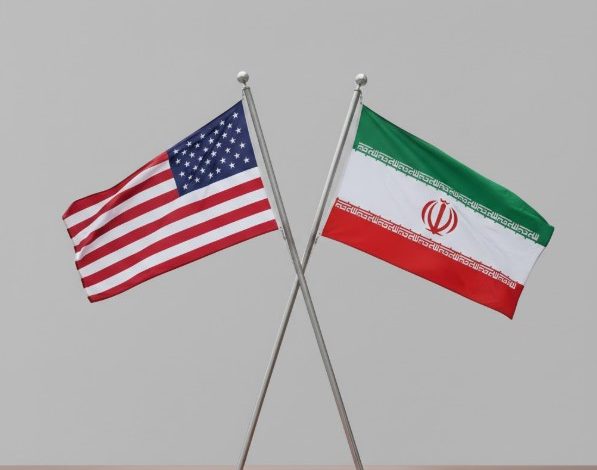
The US and Iran are expected to hold talks aimed at de-escalating the ongoing conflict, with Pakistan emerging as a potential venue for the summit.
The proposed talks follow an intensive diplomatic push by regional powers to end the war, even as Washington and Tehran offer conflicting accounts about the potential negotiations.
Talks in Pakistan
Several media reports highlighted Pakistan as a potential host for a US-Iran summit later this week. According to Anadolu Agency, citing Pakistani Foreign Ministry sources, a US delegation will arrive in Islamabad “in a day or two” for possible talks to end the ongoing war.
An Israeli official confirmed the news to Channel 12, saying that mediating countries are trying to hold a meeting between the US and Iran in Islamabad.
Furthermore, the Financial Times reported that Pakistani army chief Asim Munir spoke with US President Donald Trump on Sunday, according to two people briefed on the call.
On Monday, Trump postponed strikes against Iran’s power plants for five days, touting “productive conversations” with Iran. Trump had earlier threatened to “hit and obliterate” Iran’s power infrastructure if it failed to reopen the Strait of Hormuz within 48 hours.
Regional Mediation
The expected talks follow intensified diplomatic efforts led by Egypt, Pakistan and Türkiye to de-escalate the situation. Axios reported, citing a US source, that Cairo, Islamabad and Ankara have been passing messages between Washington and Tehran over the past two days.
“The mediation is ongoing and making progress. The discussion is about ending the war and resolving all outstanding issues. We hope to have answers soon,” the source said, adding that the Foreign Ministers of the three countries held separate talks with Trump’s Special Envoy Steve Witkoff and Iranian Foreign Minister Abbas Araghchi.
Who Lead the Talks?
Although Trump said the US has been negotiating with a senior Iranian official without revealing his identity, several media reports said the official is the speaker of the Iranian parliament, Mohammad Bagher Qalibaf.
An Israeli official told Axios that Witkoff, Kushner and possibly US Vice President JD Vance will represent the American side, while Qalibaf will lead the Iranian delegation alongside and other officials.
Moreover, Trump confirmed later on Monday that Witkoff and Kushner were involved in the talks. “We have had very, very strong talks. We’ll see where they lead. We have points, major points of agreement, I would say, almost all points of agreement … we’ve had very strong talks, Mr. Witkoff and Mr. Kushner had them,” he told reporters in Florida.
Iran’s Position
Following Trump’s remarks on the talks, Iranian state media denied any direct or indirect communications with the US. Even Qalibaf himself dismissed the claims about negotiations as “fake news to manipulate the financial and oil markets and escape the quagmire in which the US and Israel are trapped.”
Later, Iranian Foreign Ministry spokesperson Esmaeil Baqaei said that Tehran had received a message from “some friendly countries” indicating a “US request for negotiations at ending the war,” according to IRNA news agency.
Furthermore, a senior Iranian Foreign Ministry official told CBS News that Tehran had received a message from the US through mediators to pave the way for talks between the two sides. “We received points from the US through mediators and they are being reviewed,” the official said on Monday.
US Optimism
Speaking to reporters on Monday, Trump said that the US and Iran had “major points of agreement” and could reach a deal soon to end the war.
“With Iran, we’ve been negotiating for a long time, and this time, they mean business. We’re giving it five days, and then we’re going to see where that takes us. And I would say at the end of this period, I think it could very well end up being a very good deal for everybody,” he said.
According to the US President, both sides agreed on 15 points. These include Tehran abandoning its nuclear ambitions, US taking possession of Iran’s highly enriched uranium, Iran restraining its missile program and reopening Hormuz.
Meanwhile, the White House declined to give details about the expected discussions. “These are sensitive diplomatic discussions and the US will not negotiate through the press,” Press Secretary Karoline Leavitt said in a statement.
“This is a fluid situation, and speculation about meetings should not be deemed as final until they are formally announced by the White House,” she added.
Israel’s Reaction
Despite being aware of indirect communications between Washington and Tehran, Trump’s announcement about negotiations surprised Tel Aviv. “We did not know things were moving that fast,” an Israeli official told Axios.
However, Vance discussed the components of a possible agreement with Israeli Prime Minister Benjamin Netanyahu on Monday morning, according to a source familiar with the matter.
In light of this, Netanyahu noted that he had spoken with Trump. “The President believes there is a chance to leverage the military achievements of the war to get all the objectives of the war through an agreement. Such an agreement will safeguard our interests,” he said in a video.
Similarly, Trump said he had informed Israel on the ongoing talks with Iran. “Israel will be very happy with what we have. Peace for Israel. Long-term peace. Guaranteed peace,” he stated.